by | Aug 4, 2026 | Senza categoria
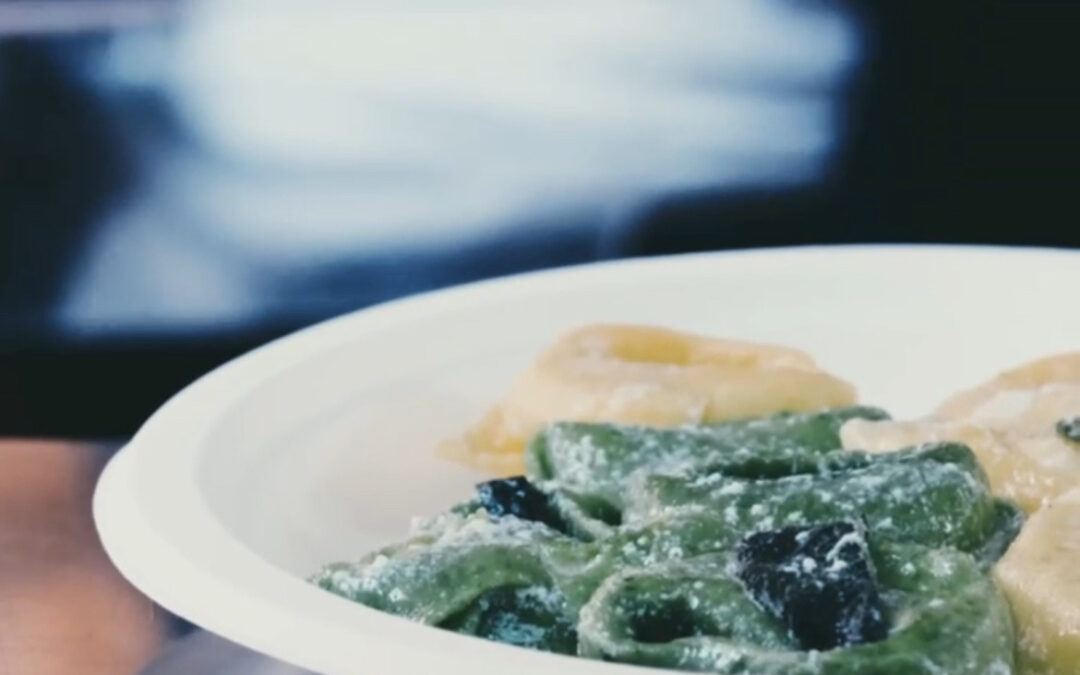
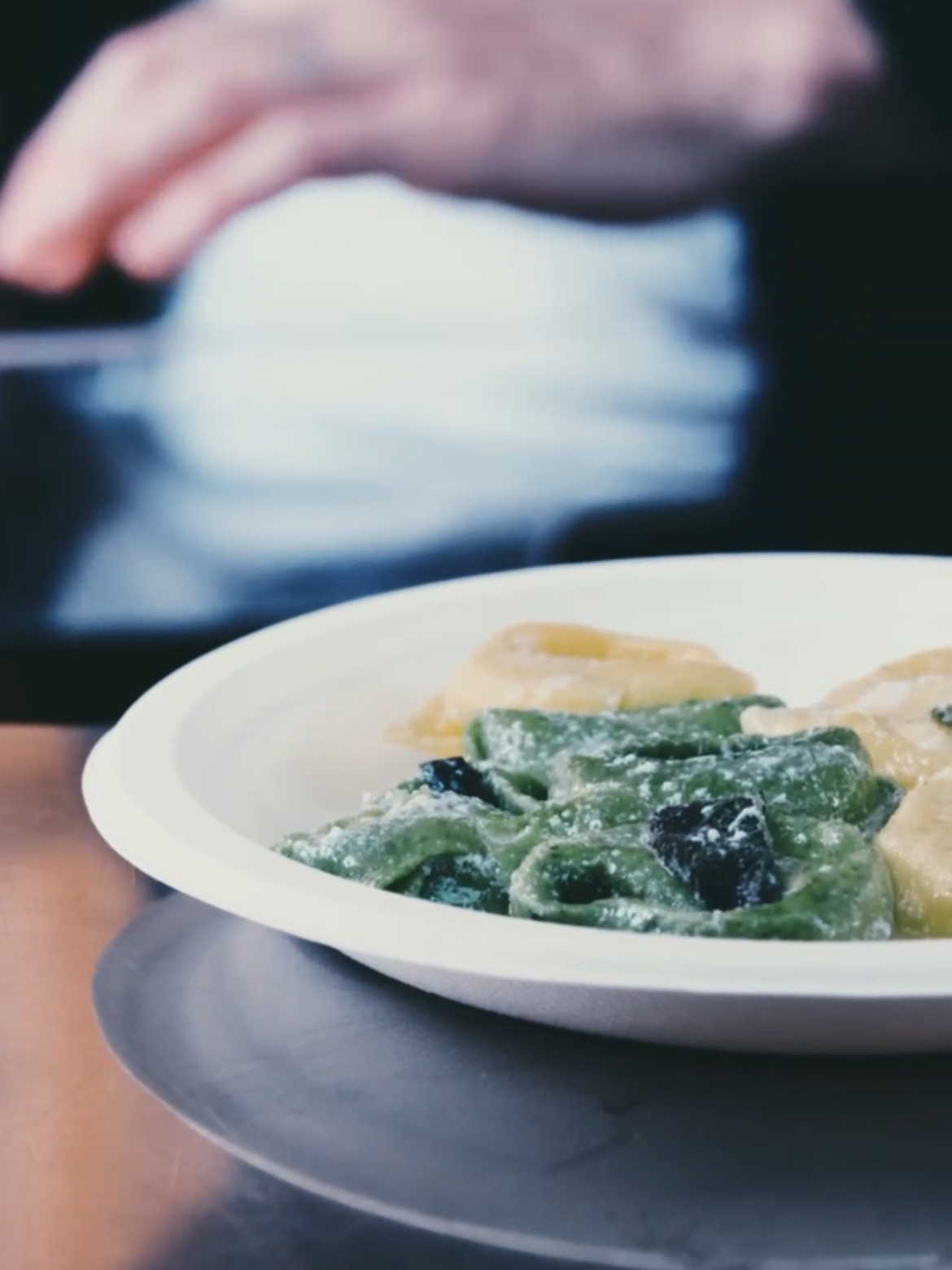 The lid lifts, the scent of warm butter and sage wafts out, and the sfoglia should still be glossy. This is where butter and sage tortelloni takeaway is truly judged: not by the photo, but by how they arrive at the first bite. Because fresh filled pasta is generous, but it doesn’t forgive distractions. If there’s too little sauce, it dries out. If there’s too much, it drowns the filling. If the container is wrong, the steam does the rest.
For a lunch break, a dinner on the sofa, or a dish to take home without turning on the stove, tortelloni are a serious choice. They aren’t the usual quick meal disguised as local cuisine: they are sfoglia, filling, and sauce reduced to the essentials. Fewer special effects, more precision.
Why butter and sage works so well
Butter and sage isn’t meant to make the dish simpler. It’s meant to leave room for what matters. In tortelloni, the star is the filling: ricotta, cheese, vegetables, or the balance intended by the recipe. A bold tomato sauce or a heavy ragù can be excellent, but they completely change the tone. Melted butter, on the other hand, coats the pasta and accompanies it without hogging the microphone.
Sage brings a herbal, slightly resinous note that cuts through the sweetness of the butter and the softness of the filling. When balanced well, you smell it before you even taste it. When there’s too much or it’s burnt, it leaves an intrusive bitterness and turns a clean sauce into an avoidable mistake.
There’s also a practical reason. The butter sticks to the sfoglia and helps the tortelloni stay pleasant during the short takeaway time. It won’t save them for hours, of course: fresh pasta must be treated with respect. But, compared to more watery sauces, it holds up better during the journey between the counter and home.
Butter and sage tortelloni takeaway: what makes the difference
A good takeaway starts long before the bag is handed over. It starts with the sfoglia. It must be thin but resilient, capable of holding the filling and remaining distinct to the bite. A pasta that’s too thick feels heavy and absorbs the sauce; one that’s too fragile risks breaking open, especially when moved around in a hot container.
Then comes the cooking. The tortelloni shouldn’t wait too long in the water and shouldn’t come out mushy. Al dente, in the case of fresh filled pasta, doesn’t mean hard: it means intact, soft, with a structure that doesn’t give up at the first touch of the fork. In takeaway, this detail is twice as important, because the residual heat continues to cook the pasta even after the container is closed.
The sauce must be added with a steady hand. The butter should be melted and fragrant, not separated into a greasy puddle at the bottom. The sage must be present, not just decorative. A grating of cheese can complete the dish, but it depends on the filling and the eater’s taste. If the filling is already savory, it’s better not to overdo it.
Finally, the container. It seems like a behind-the-scenes detail, but it decides a lot. It must hold the heat without turning the tortelloni into a soggy mess of condensation. The seal must be reliable, but the dish shouldn’t be sealed and forgotten for half an hour. The best takeaway is the one that travels a short distance and arrives at the table immediately.
How to take them home without ruining them
The most useful rule is simple: tortelloni are not an errand to leave for last. If you’re picking up dinner, go get them when you’re ready to head back. A ten-minute trip is one thing; forty minutes between shops, buses, and phone calls is another.
Keep the container horizontal. Don’t tuck it vertically into a backpack, don’t rest it on a tilted car seat, and don’t squash it under a bottle. Tortelloni need to stay comfortable: it’s a small demand, but a completely reasonable one.
Once home, open the container as soon as possible. Not to let them get cold, but to prevent the steam from continuing to dampen the sfoglia. If you need to set the table, do it before you leave or in two minutes flat. Plates, forks, water, and table: then you eat.
If the journey was longer than expected, a quick toss in a pan can help. Pour the tortelloni with their sauce into a wide pan, add a tablespoon of hot water, and heat over low flame for a very short time, moving them gently. Don’t use high heat: the butter risks separating and the filling might give way. The microwave remains an emergency solution, not the first choice, because it heats less evenly and can make the pasta soft at the edges.
The right time to order them
Butter and sage tortelloni are perfect when you want a complete dish without the heaviness of a random dinner. At lunch, they work if you have the actual time to sit down and eat them hot. In a ten-minute break, it’s better not to treat them like a sandwich: haste does justice to neither the sfoglia nor the filling.
In the evening, they have a different pace. They are a dinner that tastes like home but doesn’t require a grocery run, a pot to wash, and forty minutes of preparation. For two people, they can be the center of the table with a simple side dish. For a larger dinner, they sit well alongside seasonal vegetables, good bread, and something to drink that doesn’t overpower the dish.
Even for those visiting Bologna, they are a more interesting choice than chasing the most photographed dish. Bolognese cuisine isn’t a competition of portions or a list of symbols to check off. It’s care for the raw ingredients, well-repeated gestures, and recipes that don’t need to shout. A properly made tortellone tells this whole story in one bite.
Butter and sage, yes. But with what expectation?
It’s worth being clear: anyone looking for an explosive, spicy, or very salty flavor might find this dish more delicate than they imagined. That is precisely its strength. The contrast isn’t aggressive, the sauce doesn’t hide anything, and the filling remains the protagonist. It’s a dish for those who recognize the difference between simplicity and banality.
The type of tortellone also matters. A ricotta and spinach filling finds a natural partner in butter and sage. A bolder filling, with aged cheeses or bitter vegetables, might call for less sage or a different amount of butter. There isn’t one dose that fits all: there’s the balance of the recipe, and you can taste it.
At Ragù Bologna, the fresh pasta is homemade, just as things that carry a tradition on their shoulders should be. Not for postcard nostalgia, but because the sfoglia, filling, and sauce need to speak to each other. Takeaway doesn’t change this rule: it only changes the place where you sit down to eat.
When you open the package, don’t wait for the perfect moment. Put the tortelloni on the plate, make room for the sage, and eat them hot. Welcome home, even if home for tonight is a bench, a desk, or the kitchen table.
by Marco Vastola | Aug 4, 2026 | Senza categoria
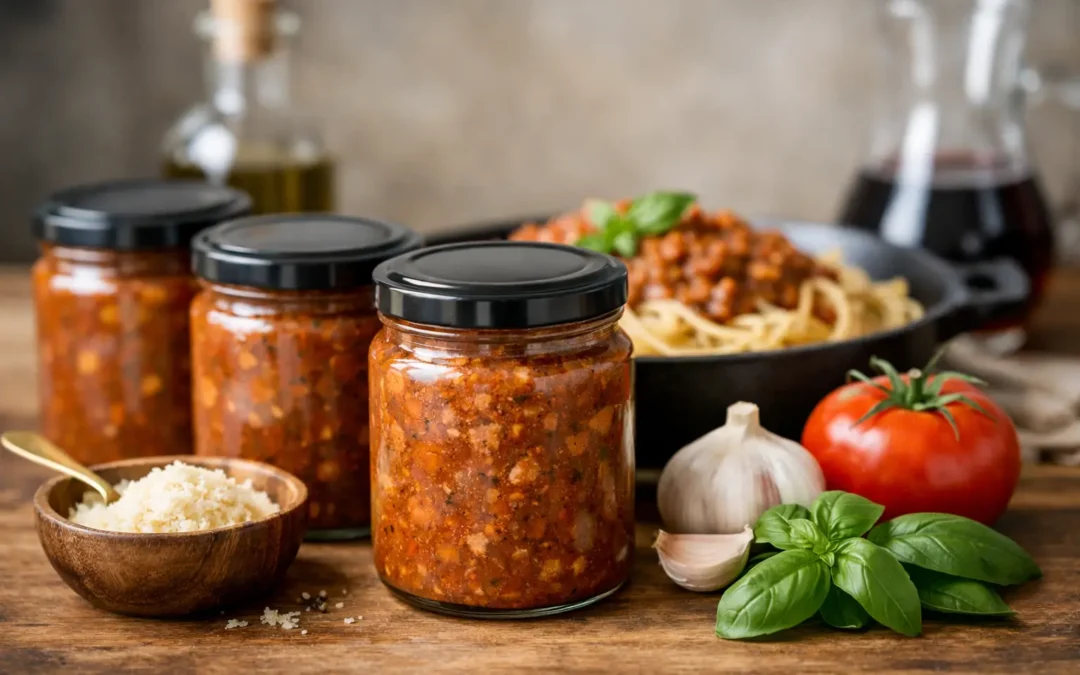
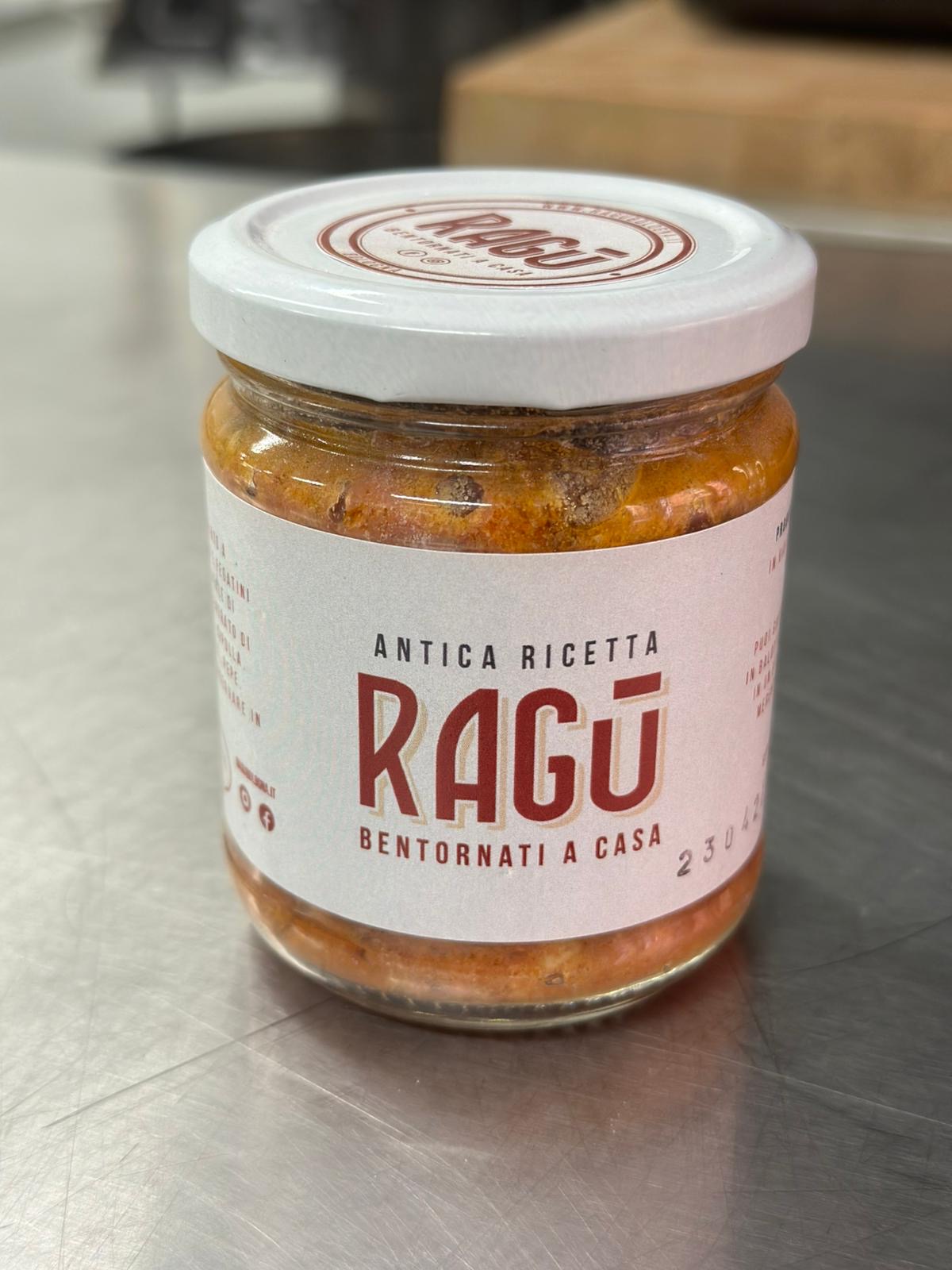 Buying artisanal Bolognese ragù doesn’t mean choosing a jar with a nice label. It means bringing home a piece of serious cooking: patient soffritto, well-worked meat, slow cooking, and a balance that needs no special effects. In Bologna, ragù isn’t a shortcut for dressing pasta. It’s a precise, familiar, everyday matter.
When there’s no time to cook it from scratch, a well-made artisanal ragù can save dinner without turning it into a compromise. But you need to know what to look for, how to store it, and above all, which pasta to serve it with.
What Makes a Bolognese Ragù Artisanal
The word artisanal alone isn’t enough. A credible ragù is recognized first by its method. It starts from a base of finely chopped vegetables, lets the meat develop flavor without rushing, and finds in tomato a measured presence, not a dominant one. The result should be rich but not heavy, compact but not dry, fragrant with cooking and not added aromas.
Meat is central. Bologna tradition calls for a beef-based preparation, with possible pork components depending on recipe and kitchen interpretation. There’s no need to look for an identical formula in every workshop: each hand can have its own balance. What matters is that the meat remains recognizable, that it isn’t covered by excess tomato purée, and that it isn’t reduced to an indistinct consistency.
Time also plays its part. A ragù doesn’t improve because it cooks for a magic number of hours, but because it’s watched as it changes: the soffritto softens, the meat binds to the base, the liquids concentrate. Haste leaves flavors separate. Careful cooking brings them into agreement.
Buying Artisanal Bolognese Ragù: What to Read
The label is a good starting point, not a philology exam. Look for a clear ingredient list, with meat and vegetables in the first positions, and a composition that makes sense. If tomato opens the list and meat appears after many thickeners or correctors, you’re probably looking at a different type of sauce.
A good preserved product can contain the elements necessary to guarantee its safety and shelf life. That’s not the problem. The difference lies in transparency: understandable ingredients, declared origin when available, readable storage methods and expiration date. A workshop that works well doesn’t need to hide the contents behind vague formulas.
Also observe the quantity. A two-portion jar can be perfect for a quick dinner, while a larger format makes sense if you already know the ragù will end up on tagliatelle, lasagne, or polenta. Once opened, though, treat it like fresh food: refrigerator, clean container if necessary, and consumption within the indicated times.
Price deserves honest consideration. An artisanal ragù costs more than an industrial sauce because it contains meat, manual labor, cooking time, and more limited production. That doesn’t mean high price always guarantees quality, but a price that’s too low can hardly support serious raw materials and long cooking times.
Color and Consistency Tell Something
Bolognese ragù shouldn’t be bright red. It tends toward a warm, brownish-red color, due to the meat, soffritto, and long cooking. A slight fatty layer may appear on top: it’s not an automatic defect—in fact, it can be the sign of a sauce that hasn’t been artificially homogenized. Just stir gently before heating.
The consistency should coat the spoon. If it looks like tomato soup with a few bits of meat, it won’t do its job on the pasta. If it’s too thick, don’t correct it with cold water directly in the jar: recover it in the pan with a spoonful of pasta cooking water, a little at a time.
The Right Pasta Isn’t a Detail
In Bologna, ragù and tagliatelle are a pairing with precise logic. The porous, wide pasta sheet catches the sauce, while its consistency supports the meaty part of the ragù. Spaghetti with ragù can be enjoyable, sure, but it doesn’t tell the same story: the ragù tends to slide off and the bite loses balance.
Fresh tagliatelle remains the most natural choice. Cook them in well-salted water, drain when still elastic, and finish them in the pan with the ragù. No need to drown them. The sauce should cling to the pasta, not float in the plate. A splash of pasta water helps create that binding that makes everything seem freshly made.
Artisanal ragù also has other very serious destinations. In lasagne it becomes part of an ensemble made of pasta sheets, béchamel, and cheese. On soft polenta it finds a more rustic dimension. With tortelloni or stuffed pasta, however, use it sparingly: a delicate filling deserves space and doesn’t always call for an important sauce.
How to Heat It Without Ruining It
A pan remains the best method. Pour the ragù into a small pot and heat over low flame, stirring occasionally. It shouldn’t boil violently: gradual heat keeps the meat tender and prevents the fat from separating too much.
If the ragù comes from the fridge, taking it out a few minutes early can help, but it’s not mandatory. If it’s particularly compact, add a little pasta cooking water. Don’t use cream to make it creamy: it changes the character of the dish and covers the work already done in the kitchen.
A generous portion for two people depends on the pasta and appetite, but generally it’s better to start with restraint and toss well. Bolognese ragù should dress, not hide the pasta. If some is left over, no drama: the next day it can become a warm sandwich with artisanal bread, the base for quick lasagne, or a filling for savory piadina.
When to Choose Ready-Made Ragù to Take Home
There are days when you want Bologna cooking but not to shop, chop vegetables, and watch over a pot for hours. A well-made jarred ragù makes sense right here: during a last-minute organized lunch break, for dinner with friends, after a trip, or as good pantry stock.
It’s a particularly useful choice also for those visiting Bologna who want to take away a concrete flavor, not a generic souvenir. A properly preserved product travels better than fresh pasta and, once home, delivers a simple gesture: open, heat, dress. Quality isn’t only in the moment of purchase, but in the ability to recreate that dish with ease.
At Ragù Bologna, ragù is born from the same idea that guides everyday cooking: homemade preparations, local flavors, and no need to disguise tradition as a trend. It’s food to take and enjoy when needed, at lunch, dinner, or whenever home calls for something good.
One Last Touch Before Serving
Warm the plates. It’s a small detail, but it changes dinner: the tagliatelle stay hot longer, the ragù maintains its consistency, and the aroma reaches the table the right way. Then serve without building too much around the dish. A bit of Parmigiano Reggiano, if you like, and the rest is done by the ragù.
Because an artisanal Bolognese ragù doesn’t seek easy applause. It seeks a fork, well-made pasta, and someone who truly stops to eat.
by | Aug 3, 2026 | Senza categoria
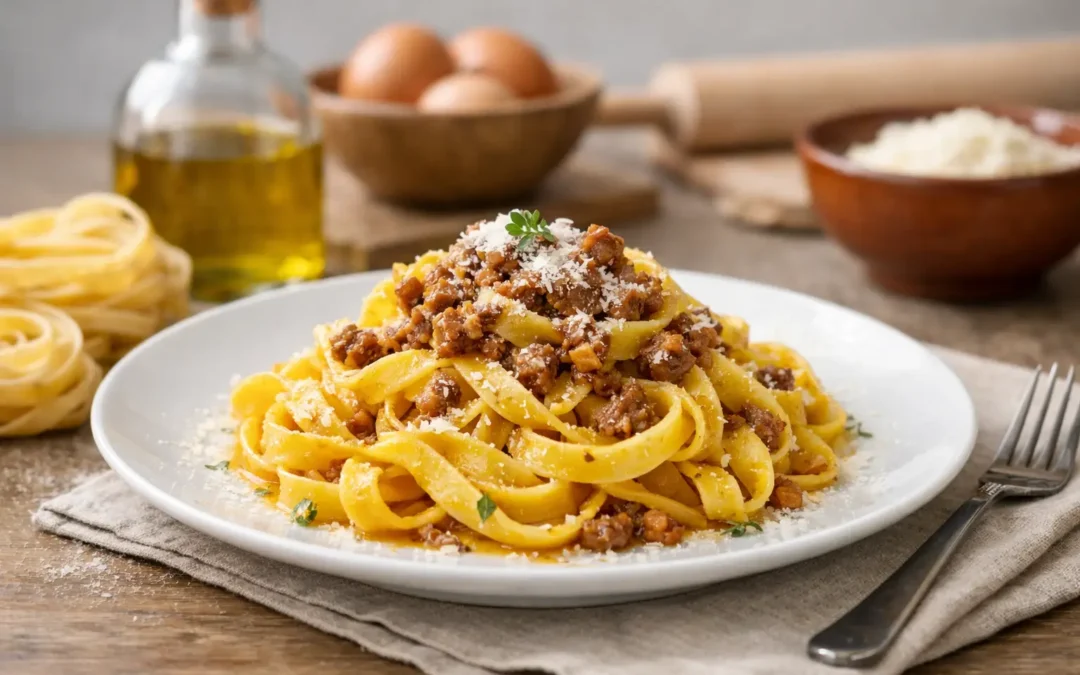
Ordering tagliatelle alla romagnola and expecting an identical recipe in every trattoria is the quickest way to be surprised. In Romagna, as in home kitchens, the name tells the story of a territory before it fixes a formula. And that’s the beauty of it: fresh sfoglia, generous sauce, and no desire to put on a show.
These aren’t tagliatelle al ragù bolognese with a different label. They’re another family of dishes, close in ingredients and egg pasta culture, but free to change from one city to another, even from one home to another.
What Tagliatelle alla Romagnola Really Are
This expression generally refers to egg sfoglia tagliatelle dressed with a rich, homestyle meat sauce, often more immediate and less codified than Bolognese ragù. The pot might include ground meat, sausage, pancetta or prosciutto, tomato, soffritto vegetables and, depending on the season or family tradition, peas, mushrooms, or a touch of cream.
The key word here is exactly that: family tradition. In Emilia-Romagna, recipes don’t sit still in a display case. They pass through the hands of whoever rolls the sfoglia, the contents of the pantry, and the character of the cook. So be wary of anyone presenting a single version as absolute law.
There are, however, some recognizable signs. The pasta must be fresh, porous, able to catch the sauce. The sauce must bind to the tagliatella, not float beside it. And the result must taste like real cooking: full-flavored, but without covering everything with tomato, cream, or spices.
The Difference from Bolognese Ragù
In Bologna, the reference is clear: tagliatelle al ragù. Bolognese ragù requires time, balance, and precise construction between soffritto, meat, fat component, wine, tomato, and milk. It’s not simply ground meat in sauce. It’s a sauce that cooks slowly, concentrates, and finds an enveloping consistency.
Romagnolo versions can use a similar base, but often move with greater freedom. Sausage can become the star, prosciutto can add savory depth, peas can add sweetness. In some cases the sauce is redder and livelier; in others it’s almost a white meat sauce. There’s no rigid boundary, because the two traditions share the same great Emilian-Romagnolo pantry.
The difference isn’t a contest over who’s more authentic. It’s a question of accent. Bolognese ragù seeks depth and measure; tagliatelle alla romagnola more easily tell the story of variation, the season, cooking done with what’s on hand but done well.
The Sfoglia Matters as Much as the Sauce
When talking about sauce, there’s a risk of forgetting the central point: without a serious sfoglia, there are no tagliatelle worth having. Flour and eggs seem simple until you try to roll out pasta that’s thin, elastic, and even, that won’t break during cooking and won’t turn mushy on the plate.
The right tagliatella isn’t a decorative ribbon. It must have body, bite, and surface. It’s that natural roughness of fresh pasta that holds the sauce. If the sauce stays at the bottom, the problem isn’t just in the ladle: often it’s in the sfoglia or the finishing.
Even the cut matters. A tagliatella that’s too narrow gets lost in the ragù; one that’s too wide can feel heavy with a very rich sauce. The format should be chosen to accompany the sauce, not to make a taller photo.
How to Recognize a Properly Made Dish
No special effects needed. Just ingredients treated with respect. The meat must be browned, not boiled in tomato; the soffritto must disappear into the sauce without burning; the pasta should be drained while still lively and finished in the sauce with a bit of its cooking water.
Watch out for a common misconception: abundant doesn’t mean heavy. A good meat sauce should leave you wanting another forkful, not silence your palate after three bites. Even the cheese should be measured: Parmigiano Reggiano yes, but as part of the balance, not as a blanket over every flavor.
In Bologna we’re proud of our tagliatelle al ragù, but the Emilian-Romagnolo table is bigger than a single dish. Tagliatelle alla romagnola deserve to be ordered for what they are: a regional pasta, straightforward and generous. Fewer shouted definitions, more fresh sfoglia and properly made sauce.
by | Aug 3, 2026 | Senza categoria
When you’re looking for takeaway dinner Bologna center, you’re not just looking for something to eat quickly. You want to end the day with a dish that has a precise flavor: fresh pasta, a properly made sauce, bread to mop up every last drop. You want to bring Bologna home without the tourist version, without shortcuts.
In the center, there’s no shortage of options. The point is choosing a dinner that holds up during the journey, arrives well at the table, and doesn’t ask for compromises between speed and quality. For us, the answer starts with something simple: Bolognese cuisine is already perfect for takeaway, if it’s actually prepared in the kitchen.
Takeaway Dinner in Central Bologna: What Really Matters
A good takeaway dinner isn’t the one that fills the bag. It’s the one that, once opened at home, keeps its character, temperature, and texture. The pasta sheet shouldn’t give way, the ragù shouldn’t be a generic sauce, the tortellini shouldn’t float without identity in broth or cream.
Central Bologna has different rhythms on the same evening. There are those leaving the office late, those coming back after classes, those with guests in their apartment, and those who want to eat dinner on the sofa without ordering the usual sandwich. In all these cases, you need a straightforward option: recognizable dishes, well-thought-out portions, ingredients that don’t need lengthy explanations.
The difference comes from the preparation. A freshly rolled pasta sheet, a balanced filling, a carefully assembled lasagna, and a ragù cooked with patience aren’t romantic details. They’re what you taste in the first bite, even when dinner is eaten twenty minutes after purchase.
Fresh Pasta Is a Practical Choice, Not Just Traditional
There’s a common misconception: choosing fresh pasta for takeaway would be a luxury reserved for Sunday lunch. Actually, it’s one of the most practical solutions for a proper dinner. It heats easily, satisfies without becoming heavy, and pleases people with different tastes.
Tagliatelle al ragù is the most obvious case. It doesn’t ask for special effects: it asks for pasta with the right texture and a rich ragù, where meat, vegetables, and time have done their work. It’s a dish that speaks clearly. If it’s good, it doesn’t need filters.
Then there are tortellini and tortelloni, to choose based on the evening. Tortellini are the most classic gesture, the one that feels like a set table and family. Tortelloni have a more generous step, perfect when you want to dedicate a few extra minutes to dinner. Lasagne, on the other hand, solves the dilemma for those who want a complete and comforting dish, ready to do its part without debate.
Naturally, it also depends on where and when you’ll eat. If you have to walk through the center, lasagna or tagliatelle are reliable choices. If you get home and can set the table calmly, tortellini and tortelloni become a small ritual. The best takeaway doesn’t impose one way of eating dinner: it adapts to your evening.
Not Just a First Course: Building a Dinner That Makes Sense
Bolognese cuisine doesn’t end in the pasta container. A well-thought-out takeaway dinner can start with something to share, continue with a substantial first course, and close with artisan bread to leave nothing on the plate. You don’t need ten courses. You need the right pairings.
If there are two of you, it often works to choose different dishes and taste each other’s. Tagliatelle for those who want ragù, tortelloni for those seeking a filling, a lasagna to split if hunger is serious. If you’re in a group, it’s better to focus on formats that arrive well at the table and allow everyone to eat together, instead of adding up random orders.
Meat can also find space, especially when it’s prepared with care and not treated as a service add-on. And house-made sauces help transform a quick dinner into something more personal: not an emergency meal, but a deliberate choice.
The advantage of takeaway is exactly this: you don’t have to cook, but you can still decide how to eat. You can set the table nicely, pour drinks, invite someone at the last moment. Or take everything and go home quietly. Quality doesn’t need a reservation to exist.
Ragù Is Not a Detail
In Bologna, ragù is a serious matter, even when you get it for dinner after a long day. It’s not a red shortcut on top of pasta and it’s not a condiment to hide with Parmesan. It’s a preparation that requires balance, quality ingredients, and patience.
That’s why good ragù is also an excellent indicator when choosing where to order. Looking at the menu helps, but what really matters is understanding if there’s a real kitchen behind the dishes: who prepares the pasta sheets, who cooks the sauces, who treats the bread and meats with the same attention given to the main dish.
At Ragù Bologna, this idea translates into cuisine made in-house, from pasta to sauces, with recipes that don’t chase the trend of the moment. Fewer hashtags, more ragù. Not out of nostalgia, but because certain things keep working when they’re done with precision.
Dinner Ready, But Not Standardized
The risk of takeaway is standardization. Same containers, same flavors, a dinner that could have been prepared anywhere. In the center, where the offering is wide and time is short, it’s easy to choose the quickest solution without asking if it’s really what you want to eat.
A Bolognese takeaway dinner should instead maintain its own character. The format can be urban, practical, and quick, but the content must have roots. It means recognizing a handmade tagliatella, tasting a well-constructed filling, finding real texture in the bread and not an accessory.
This also applies to those visiting Bologna for a few days. A takeaway dinner can be an authentic experience as much as a restaurant table, sometimes even more so. It lets you eat at your own pace, perhaps in your apartment after a walk, without turning every meal into a mandatory stop. You just need to choose a place that doesn’t confuse authenticity with scenery.
And to Drink? The Glass Plays Its Part Too
A complete dinner deserves something more than the drink taken out of habit. The choice depends on the dish and the occasion: a quick dinner can stay essential, while an aperitif that becomes dinner calls for a more playful pairing.
Draft cocktails make sense right here. They bring a contemporary idea of drinking well into takeaway, with original recipes and selected ingredients, avoiding unnecessary amounts of glass and transport. It’s not a whim: it’s a smarter way to serve a drink, without taking anything away from the pleasure of the glass.
No need to complicate everything. A good first course, a well-made cocktail or a thoughtfully chosen drink, and the evening changes tone. The center stays outside the door, with its noise and its rush. At the table, what matters remains.
The Right Dinner for Your Bologna
To choose well, start with the evening you want to have. If you’re looking for comfort, go for lasagne or tagliatelle al ragù. If you want a more convivial dinner, combine fresh pasta, bread, and something to share. If you need to stock up for home, artisan packaged preparations let you rediscover that flavor even when you don’t have time to stop by the shop.
Real convenience isn’t eating in five minutes. It’s knowing that, even on the busiest evening, you can bring home a dish made with respect. Set the table however you like, eat where you’re comfortable, and let the ragù do the rest.
by | Aug 2, 2026 | Senza categoria
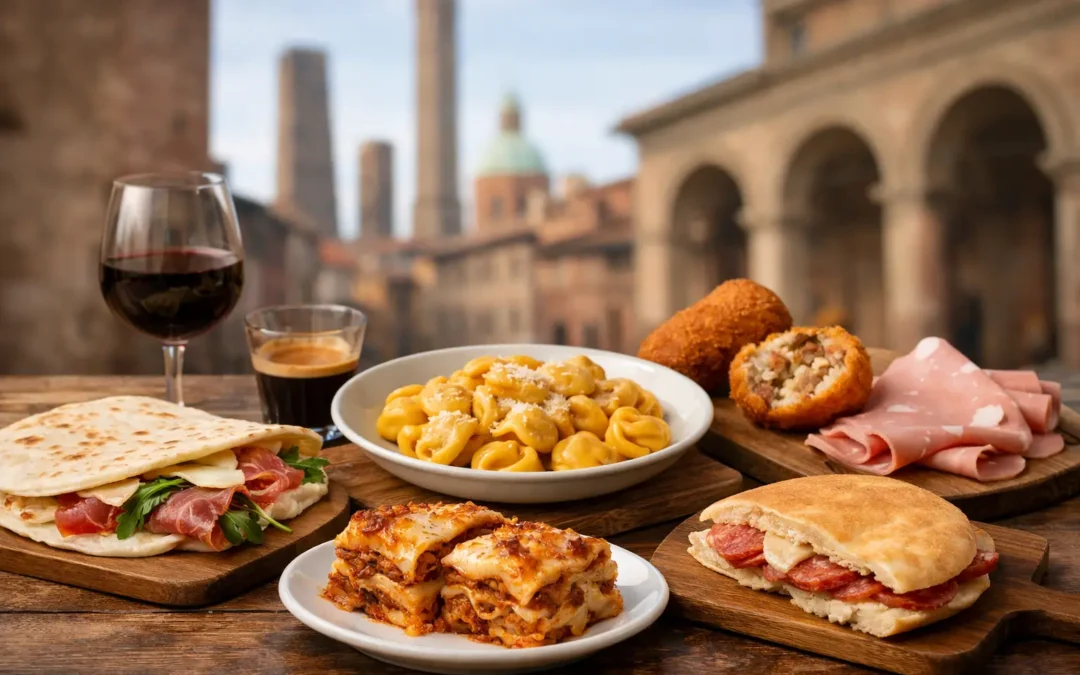
In Bologna, a quick traditional lunch isn’t a sad sandwich eaten in front of your computer. It’s a dish that comes from the region, made with recognizable ingredients and with the right amount of time to be prepared well. The real challenge isn’t finding something to eat quickly: it’s choosing a lunch that has the flavor of the city even when your break is short.
Between offices, classes, errands, and days spent downtown, speed matters. But so does leaving satisfied, with the feeling of having really eaten. In Bologna this combination has always existed: fresh pasta, filled pastas, ragù, bread, and carefully prepared meats are a practical cuisine, able to be generous without becoming complicated.
What Makes a Quick Lunch in Bologna Traditional
It’s not enough to put the word “Bolognese” on a menu. A lunch is traditional when it starts from techniques and recipes that have real weight here: fresh-rolled pasta sheets, ragù cooked with patience, balanced filling, bread made to accompany and not just to fill.
Speed, in this case, doesn’t mean shortcuts. It means kitchen organization. A kitchen team that produces in-house can serve a dish in a few minutes because the longer work was done beforehand: kneading, rolling the pasta sheet, preparing the sauce, cooking the base, measuring the seasonings. It’s the difference between an assembled meal and a dish ready to eat, but born from artisanal preparation.
For those who live in or pass through Bologna, the point is simple: at lunch you can choose local without sitting in a restaurant for two hours. You just need to focus on preparations that maintain identity and consistency even in takeaway format.
Fresh Pasta: The Most Direct Choice
Tagliatelle al ragù are the natural reference point. Not because they’re a postcard, but because they tell the story well of what a quick lunch done seriously can be: porous pasta sheet, full-bodied ragù, a hot and complete portion. The time to eat them is short, the time to prepare a proper ragù is not. And that’s exactly where you see the quality.
Fresh pasta holds up well at lunch when it’s cooked and dressed to order. The tagliatelle need to stay present, without dissolving into the sauce; the ragù should coat them, not drown them. If lunch is eaten while walking or at your desk, a practical container helps, but it won’t save poorly cooked pasta. First comes the cooking, then the packaging.
Even lasagne are a perfect answer on colder days or when you need something more substantial. They have an obvious advantage: they’re a complete dish, layered, comforting. The trade-off is that they can be more demanding if meetings, stairs, or biking await afterward. Delicious, yes, but choose them knowing they really fill you up.
Tortellini and Tortelloni: When Your Break Deserves Attention
Tortellini and tortelloni aren’t just Sunday dishes. In a well-managed break they can transform a normal lunch into a decidedly better moment. Tortellini, with their compact filling and thin pasta sheet, demand precision: they’re small, but they’re not a detail.
In broth they’re a more traditional and delicate choice, ideal when you want to eat something warm without feeling too heavy. With a cream or richer sauce they change register and become a fuller lunch. It depends on the time, the work waiting afterward, and how hungry you really are.
Tortelloni, often more generous in size and filling, work for those seeking a less rushed break while staying in the city’s rhythm. Ricotta, greens, butter, and sage are a classic that doesn’t need special effects. Fewer hashtags, better pasta sheets.
Bolognese Street Food, But with Substance
Not all breaks allow for a fork, table, and twenty free minutes. Sometimes you need to eat while walking, between a class and an appointment, or take something to the park or on the train. This is where street food formats come in: practical, but not anonymous.
A good sandwich or a walk-and-eat option needs balance. The bread can’t crumble at the first bite, the filling shouldn’t be an impossible mountain to manage, and the flavor needs to stay clean. If there are selected meats, house-made sauces, and well-worked dough, speed takes on another level.
For those with ten minutes, street food is often the smartest solution. For those with a half-hour break who want to sit on a bench or return to the office calmly, fresh pasta remains unbeatable. There’s no universally better choice: context matters, and above all, don’t confuse haste with compromise.
How to Choose Lunch Based on Your Day
A lunch break is never the same as another. If the afternoon is packed, better to have a balanced, warm, and straightforward portion, without excess. Tagliatelle al ragù or a well-constructed street food option let you get back to work without the classic post-heavy-lunch slump.
If instead it’s Friday, you’re out with friends, or you want to give the day a different edge, lasagne, tortelloni, or tortellini are a more generous choice. In Bologna, food isn’t just a break between two commitments: it can be the best part of your pause, even if it’s short.
For students and workers, takeaway becomes truly useful when it maintains consistent quality. You don’t need to search every day for the new place or the most photogenic dish. You need to know where to find fresh pasta, real sauces, and portions designed for urban rhythm. Trust is built this way: from a lunch that delivers what it promises.
What You Drink Matters Too
A quick lunch doesn’t necessarily require just any drink. Water, wine by the glass when time allows, or a light and well-thought-out drink can change the tone of your break. The point isn’t to drink more, but to drink better and in a way that’s consistent with what you’re eating.
In the contemporary format of Ragù & Draft, for example, the tradition of the dish meets draft cocktails prepared with selected ingredients. It’s an option suited especially to a longer lunch, an informal meeting, or an aperitivo that starts earlier than usual. The ten-minute break remains pasta, bread, and go. The one with a bit more breathing room can allow itself a different pairing.
The Value of Takeaway Done Right
Taking away a traditional lunch doesn’t mean settling for a reduced version. It means being able to choose local cuisine even when there’s no time for table service. To make it work, you need attention to temperatures, containers, portions, and delivery times. But above all you need a kitchen that’s not afraid to show itself for what it is.
A well-preserved ragù can be taken home and become dinner for someone who doesn’t want to cook. A portion of lasagne can solve an evening. Artisanal bread and a house-made sauce can transform a quick lunch into a small ritual. The best takeaway doesn’t try to imitate the restaurant: it builds a different experience, freer, without losing precision.
Next time your break seems too short, choose something that’s already done the hard work before arriving on your plate. In Bologna, eating quickly can still mean eating with respect. Welcome home.
by | Aug 1, 2026 | Senza categoria
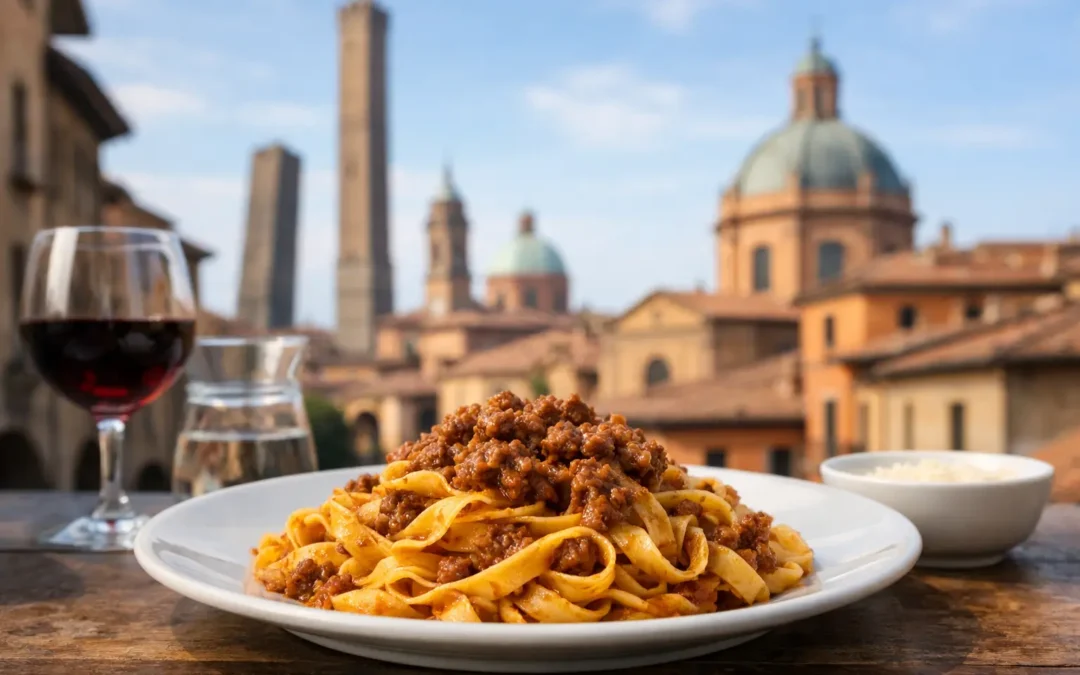
Anyone looking for where to eat tagliatelle al ragù in Bologna isn’t just looking for a first course. They’re looking for pasta with a bite, a ragù that smells like home cooking, and a portion that can set the day right. For lunch between classes, a break from work, or after a walk downtown, well-made tagliatelle are a very real answer. Fewer special effects, more ragù.
In Bologna, the dish is famous, of course. But that’s exactly why calling it traditional isn’t enough. The difference is made by the hands of the person rolling the dough, the time given to the sauce, and the respect for a balance that doesn’t need shortcuts.
Where to eat tagliatelle al ragù without getting it wrong
The first clue is the pasta dough. Bolognese tagliatelle are born from the essential meeting of flour and eggs, but that simplicity allows for no distractions. They must be porous, elastic, never mushy, and never thick just to hide sloppy work. When seasoned, the ragù must stick to the pasta: not slide to the bottom of the container, nor separate into a pool of grease.
Then there’s the sauce. Bolognese ragù isn’t just tomato with ground meat thrown in at the last minute. It’s a slow preparation, built in layers: the aromatic base, well-chosen and processed meat, just the right amount of tomato, and the time needed for everything to come together. It must have depth, not aggression. The tomato accompanies; it doesn’t lead.
A reliable place doesn’t need to mask the dish with mountains of cheese or decorative leaves. A little Parmigiano Reggiano, if you want it, completes it. But first, the spoonful of ragù must speak. The aroma must be full and clean, the texture enveloping, the flavor recognizable from the first bite.
The moment the dish arrives also matters. Tagliatelle al ragù are at their best when served freshly tossed, with the pasta still “alive” and the sauce hot. In takeaway, this requires extra care: a suitable container, quick timing, and a kitchen that knows how to prepare a dish to be eaten immediately without sacrificing quality.
The real question: fresh pasta or just a fancy name?
The word “artisanal” can be used too easily. To see if there’s substance behind it, look at the overall offering. A workshop that prepares its own pasta, sauces, and bread tells a specific story: controlling every step instead of assembling ready-made products.
Fresh pasta isn’t just a romantic notion. It has a different texture, absorbs the sauce differently, and requires precise cooking. If made to perfection, it retains that slight roughness that catches the ragù and delivers a compact bite. If overcooked, it loses character. If drained too early, it stays disconnected from the sauce. These are details, but in Bologna, the details are the dish.
The width of the tagliatella also matters. You don’t need to measure it with a ruler before eating, but you do need to recognize a sensible proportion. A strip that’s too thin tends to break and disappear under the sauce; one that’s too wide and heavy risks making everything a struggle. The right tagliatella carries the ragù without being dominated by it.
The ragù shouldn’t be rushed
A good ragù doesn’t look for flavor shortcuts. It shouldn’t be sweetish, watery, or excessively red. The color can vary because it depends on the recipe and the cooking, but the consistency must remain thick and natural. The meat must be present, not reduced to anonymous grains; the sautéed base must blend in, not impose itself.
Slowness here isn’t a pose. It’s technique. Cooking calmly allows the ingredients to lose their sharp edges and find a common language. This is why a well-reduced ragù tastes like home without being heavy. It fills you up, but doesn’t tire you out by the third bite.
Tagliatelle al ragù in Bologna: lunch, dinner, or takeaway?
It depends on what you need, and that’s good news. Tagliatelle al ragù are a complete lunch when you’re short on time but don’t want to eat poorly. They’re a comforting dinner when you get home late. They’re also an excellent choice to take away, provided the place has truly thought about the takeaway service and doesn’t consider it an improvised addition.
For a lunch break, look for a place that works with rhythm but not with haste. Speed is useful, especially downtown, but it can’t turn the kitchen into an assembly line. A well-made portion arrives quickly because there’s organization behind it: ready fresh pasta, properly cooked ragù, direct service.
For dinner to take home, pay attention to one simple point: the dish must retain heat and texture for the time it takes to reach the table. The ragù must envelop the pasta without clumping it. If you want to add cheese, it’s better to do it at the last minute. And if today’s lunch stayed on your mind, having an artisanal ragù to take home to your pantry is an honest way to extend the pleasure without improvising.
At Ragù Bologna, the pasta and sauces are prepared in-house with exactly this idea: real local cuisine, ready to follow the city’s rhythm. Not a hasty copy of a trattoria, but an urban format that defends flavor even when you only have twenty minutes or need to eat at home.
How to order a dish that’s worth the break
You don’t need to interrogate the restaurant. A few questions and a bit of attention are enough. Ask if the pasta is fresh and where it’s prepared. Observe the dish when it arrives: the ragù should be distributed among the tagliatelle, not taking up half the container. Taste before adding cheese or pepper. If the seasoning is balanced, it won’t need correcting.
A good pairing can be simple. Water, a cold drink, or a carefully chosen glass of wine leaves room for the dish. If, on the other hand, you want to turn lunch into a more relaxed moment, a well-crafted aperitivo offering can stand alongside Bolognese cuisine without disguising it. Tradition doesn’t mean immobility: it means knowing what shouldn’t be touched and where you can have fun.
There’s also the matter of actual hunger. Tagliatelle al ragù are generous by nature, so it’s best to choose the rest of the meal based on the moment. At noon, they can be enough on their own. In the evening, perhaps after a long day, they can be accompanied by a light appetizer or finished with something simple. The important thing is not to fill the table out of habit: a well-made dish deserves space.
Watch out for false promises
Be wary of ragù that arrives steaming in two minutes but looks like it was just heated up, of pasta that breaks at the first turn of the fork, and of menus that use the word “Bolognese” as a decoration. It’s not snobbery. It’s respect for a dish that has a specific history and continues to live because it knows how to be good, direct, and everyday.
At the same time, there’s no need to chase a mythological and unchanging version. Every kitchen has its own touch, every family guards a nuance. The point isn’t to find the only possible tagliatella. The point is to find those who work with recognizable ingredients, the right timing, and no desire to fool the diner.
The next time you stop in front of a menu, choose tagliatelle al ragù with a simple criterion: they should make you want to sit down, even if you’re short on time. If the pasta and sauce are well-made, Bologna is already on your plate.