 In Bologna, it’s not enough to order “a typical dish.” You need to know what you’re looking for: a well-rolled pasta sheet, ragù cooked with patience, a balanced filling, clear broth. When searching for the best Emilian dishes in Bologna, the difference isn’t made by the number of menu options: it’s made by respect for recipes, timing, and quality ingredients.
Emilian cuisine is generous, but it’s not heavy by definition. It’s artisanal precision hidden behind a forkful that seems simple. And Bologna is the right place to start, as long as you let go of the idea that you’ll find the same experience everywhere.
The Best Emilian Dishes in Bologna, No Shortcuts
There are dishes that tell the story of a city better than any guidebook. In Bologna, the first is fresh pasta, but stopping there would be reductive: there are broths, meats, vegetables, cured meats, bread, and fried foods that speak the same gastronomic dialect.
A good criterion is this: look for consistency. If the pasta sheet is the star, it must have thickness, structure, and porosity. If there’s ragù, it shouldn’t cover everything with tomato. If tortellini in broth arrive, the broth isn’t a service detail but half the dish. Real tradition doesn’t need special effects. Fewer hashtags, more ragù.
Tagliatelle al Ragù
They’re the absolute benchmark. Bolognese tagliatelle must be wide, just rough enough, and able to hold the sauce without falling apart. Ragù alla bolognese, the kind made properly, isn’t a quick red sauce: it starts with soffritto, works the meats, and finds balance between tomato, milk, and long cooking.
The proof is in the spoon. The ragù must cling to the pasta, rich but not watery, intense without becoming aggressive. And no, spaghetti alla bolognese isn’t the symbol of the local table: here the right pairing is tagliatelle and ragù.
Tortellini in Brodo
Small, filled, precise. Tortellini are an act of patience before they’re even a dish. The traditional filling brings together meat, mortadella, prosciutto crudo, Parmigiano Reggiano, egg, and nutmeg. Proportions change from kitchen to kitchen, but the result must be clear: flavorful, compact, never indistinct.
Then there’s the broth, often underestimated by those ordering in a hurry. A well-made meat broth is clean on the palate, deep and warm without being greasy. Tortellini shouldn’t float in just any liquid: they should arrive in a homemade cup, even when you get them to go.
Tortelloni with Butter and Sage
If tortellini have a meat heart, tortelloni show the other side of Emilia: ricotta, parsley, Parmigiano Reggiano, and fresh pasta. They’re larger, softer, and more delicate. That’s why they don’t ask for loud sauces.
Melted butter, sage, and a sprinkle of cheese are enough when the filling is done right. In some versions a touch of tomato arrives, but a simple rule applies: the sauce should accompany, not hide. It’s a dish that wins over those seeking comfort, but still demands technique.
Green Lasagne alla Bolognese
Bolognese lasagne have a precise structure: green spinach pasta sheets, ragù, béchamel, and Parmigiano Reggiano. They’re not a compact block or a pool of sauce. Each layer must remain recognizable, soft, and well bound to the others.
They’re the dish to choose when you need a real lunch break or a dinner to take home and share. They work great for takeout, as long as they’re prepared with balance: the pasta sheet mustn’t dry out and the béchamel mustn’t take command.
Gramigna with Sausage Ragù
Gramigna has that short, curled shape that holds sauce naturally. In Bologna it often meets sausage ragù, more immediate and rustic than classic ragù. It’s a straightforward dish, for a quick fork, but still requires attention.
The sausage must be well browned and the sauce mustn’t become a greasy shortcut. It’s the right choice for those wanting a first course full of character, less ceremonious than tortellini and just as local.
Cotoletta alla Bolognese
Calling it just a cutlet is not enough. The Bolognese version, also known as petroniana, starts with a breaded and fried veal cutlet, then enriched with prosciutto, Parmigiano Reggiano, and broth. In many preparations truffle also appears, but it’s not the only possible route.
Here the point is balance. It must be juicy, savory, and gratinéed, not soggy or weighed down by ingredients put there for show. It’s an important second course, to choose when you’re truly hungry and want to understand how Bologna can be generous without losing measure.
Passatelli in Brodo
Breadcrumbs, Parmigiano Reggiano, eggs, and nutmeg: few ingredients, enormous personality. Passatelli are irregular, tender, and fragrant. They seem like a humble preparation, but they require skill and correct proportions to avoid breaking in the broth and becoming rubbery.
They’re a great alternative to tortellini, especially for those who love the flavors of cheese and bread. On colder days, or when you want something comforting without giving up local cuisine, they’re a choice that doesn’t disappoint.
Crescentine Fritte, Cured Meats, and Cheeses
In Bologna, crescentine fritte are the convivial side of the table. Hot, puffy, and crispy, they ask for mortadella, prosciutto, salami, fresh cheeses, or squacquerone alongside. Be careful not to automatically confuse them with tigelle: they’re two different preparations, even if both were born to be at the center of sharing.
Here what counts is the frying, which must be dry and light, and the quality of what you stuff them with. Good mortadella doesn’t need much explanation. Warm bread, well-sliced cured meat, and the right glass already do their job.
Friggione and Side Dishes That Deserve Space
Bolognese friggione is born from onions and tomato, cooked slowly until they become creamy and sweet. It’s a side dish, yes, but treating it as a supporting player is a mistake. It can accompany meats, go with bread, or complete a pasta lunch without making everything the same.
Emilian cuisine doesn’t live on impressive first courses alone. Seasonal vegetables, roasted potatoes, well-dressed salads, and homemade sauces help build a more complete meal. Especially when eating out often, alternating is a smart choice, not a compromise.
How to Choose Well Between Tradition and Takeout
Eating Emilian in Bologna doesn’t necessarily mean sitting at the table for three hours. A work lunch, a dinner on the couch, a tray to bring to friends can have the same dignity, if there’s a kitchen behind it that truly makes things in-house.
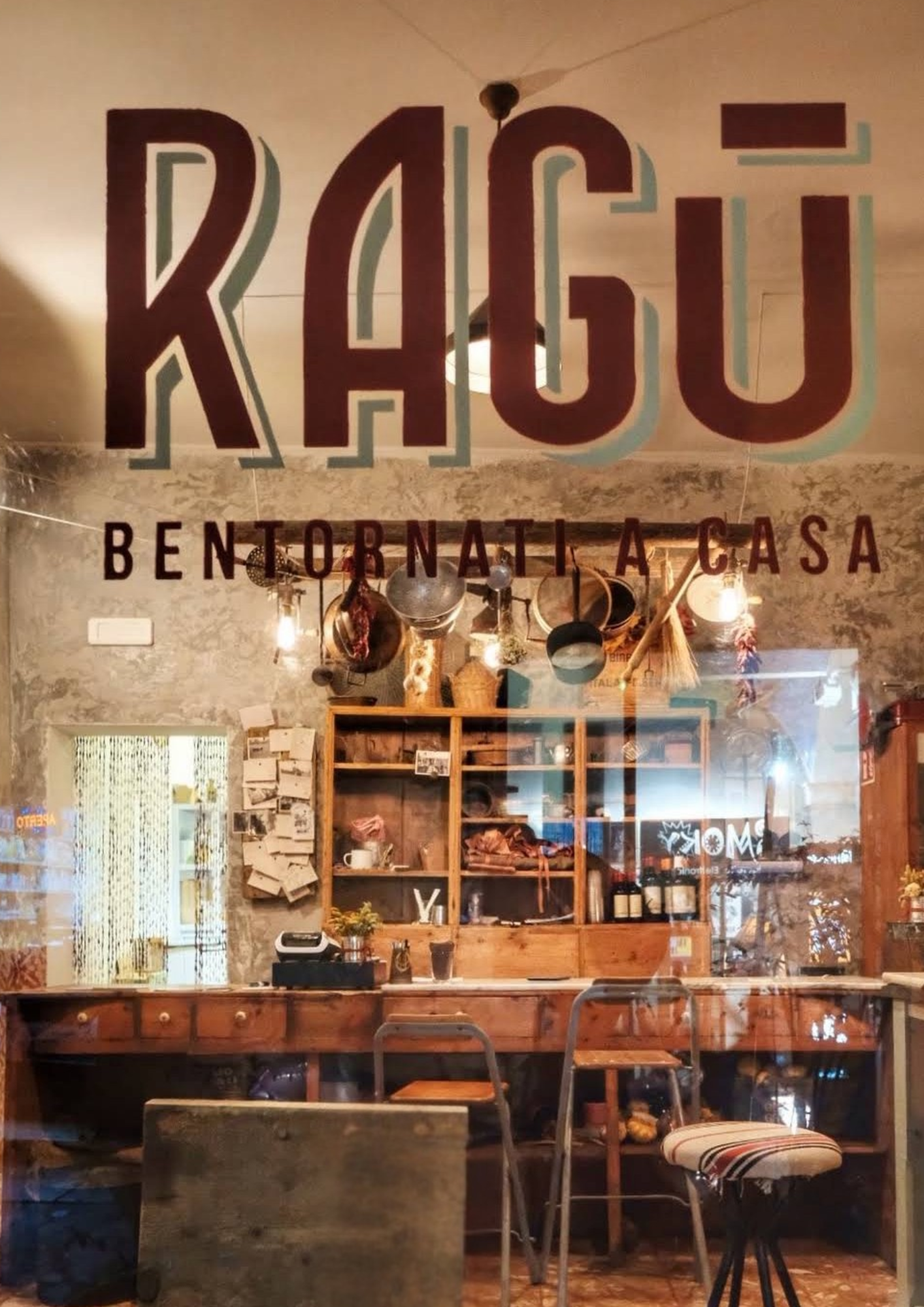
It’s worth looking for concrete signs: fresh pasta prepared every day, ragù and sauces made in the kitchen, bread baked internally, meat handled with care. In a place like Ragù Bologna, the idea is exactly this: bringing local dishes into the urban rhythm without cutting corners. Takeaway shouldn’t be distracted food.
The order matters too. If it’s your first time, tagliatelle al ragù or tortellini in brodo are the two most revealing dishes. If you’re with company, crescentine and cured meats open the meal well. If you’re bringing something home, lasagne and tortelloni handle the journey more easily. The cutlet, on the other hand, gives its best when it can arrive and be eaten right away.
You don’t need to taste everything at once. Choose a well-made dish, eat it hot, let the pasta and sauce say what they need to say. In Bologna, the best cuisine doesn’t chase novelty: it makes you want to come back tomorrow.