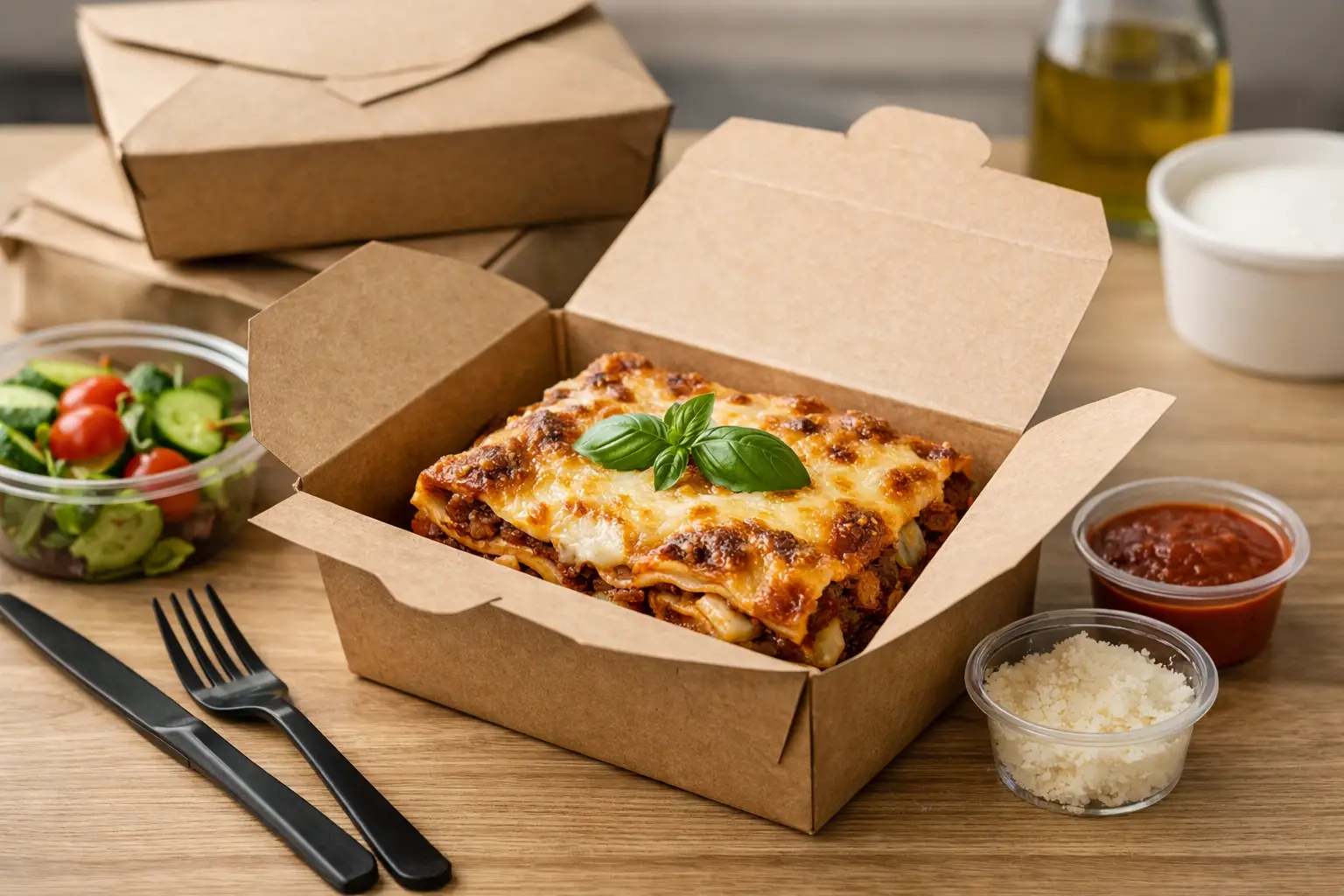
 Takeaway lasagne shouldn’t be a quick fix eaten hurriedly at your desk. When done properly, they’re a real meal, a dinner that pleases everyone, and a concrete way to bring Bologna home without losing the character of the dish.
The point isn’t just having a warm container in your hands. The point is finding recognizable layers: fresh pasta sheets, ragù cooked with patience, well-balanced béchamel, cheese that binds without covering everything. Good lasagne holds up during transport, preserves moisture and aroma, then arrives on the plate with that soft yet structured consistency that needs no filters. Less hashtags, more ragù.
What Makes Takeaway Lasagne Special
Lasagne alla bolognese is a dish of balance. The pasta sheets can’t be too thick, or they’ll overpower everything; they can’t disappear under the sauce either. The ragù must be present in every layer, without turning the portion into soup. The béchamel serves to add roundness and hold everything together, not to make each bite heavy.
In the traditional Bolognese version, the green pasta sheets already carry a precise identity. The color isn’t a decorative detail: it tells of a process, fresh pasta that needs to be rolled well and cooked carefully. When the pasta is handmade, it absorbs the sauce differently than industrial pasta and delivers a livelier, more porous, more homemade texture.
Takeaway puts this construction to the test. Lasagne can come out of the oven perfect and lose balance after twenty minutes if assembled poorly, closed too soon, or placed in an unsuitable container. That’s why quality shows even in what you don’t notice right away: in resting times, temperature, portion care, and choosing packaging that protects the dish without smothering it.
Pasta Sheets, Ragù, and Béchamel: The Work Is in the Layers
Good lasagne isn’t judged by the top crust alone. That’s pleasant, sure, but the cut tells the truth. The slice should stand up for a few seconds, then yield easily to the fork. When each layer is well distributed, there won’t be dry spots or corners filled only with sauce.
The ragù is the heart of the matter. It must have depth, not aggression. Slow cooking allows the meat and aromatics to become a unified sauce, without separate flavors fighting each other. The tomato accompanies, it doesn’t dominate. It’s this measure that makes ragù suitable for lasagne: rich enough to support the pasta, balanced enough to leave room for the sheets and béchamel.
Cheese also needs to be used with a sure hand. You need flavor, you need a golden top, you need that note that completes the bite. But too heavy a blanket of cheese covers the work done underneath. In lasagne, as in many Emilian recipes, generosity doesn’t mean overdoing it. It means using good ingredients in the right proportion.
Fresh Makes the Difference
When a kitchen prepares pasta sheets, ragù, and sauces in-house, the result isn’t simply a nod to tradition. It’s a difference you can taste. The pasta has elasticity, the sauce is designed for that format, the whole comes together in the same place with the same approach.
At Ragù Bologna, the kitchen starts right here: artisanal preparations, fresh pasta, and local recipes designed to be enjoyed even away from the home table. There’s no need to transform a classic into a gimmick. Just respect it, cook it well, and make it available when needed.
How to Choose Lasagne to Take Away
The first question is simple: do you want to eat it right away or later? In the first case, look for a portion just out of the oven or kept at the right temperature, with golden edges and a soft center. In the second, ask if it’s ready to reheat and follow the instructions given: properly cooked and cooled lasagne can become an excellent dinner, but it needs a bit of care.
Portion size matters too. For a quick lunch, a generous slice with fresh bread can be enough. For a shared dinner, better to choose a tray or multiple portions and let the dish remain the star. Lasagne is substantial: adding too many dishes around it risks taking space away from what you ordered it for.
Another useful sign is simplicity of explanation. If whoever prepares them can clearly tell you what’s inside, how to store them, and how to heat them, that’s already a good starting point. Artisanal cooking doesn’t need complicated words. It needs recognizable ingredients, precise techniques, and consistent results.
Transport and Storage Without Ruining Everything
If you’re heading home on foot, by bike, or by car, keep the container as horizontal as possible. It seems obvious, but lasagne rushed through in a backpack loses its structure, and not because of the recipe. If you have other purchases, keep it on top and don’t crush it with bottles or heavy containers.
To eat it right away, open the package as soon as you arrive and let it rest for a couple of minutes. The heat distributes better and the slice settles. If you’ll eat it later, don’t leave it at room temperature for hours: put it in the fridge as soon as possible, following the vendor’s instructions.
The fridge helps preserve, but it doesn’t improve lasagne left there too long. This is a fresh dish, not an anonymous stockpile to forget on the shelf. Ideally, plan to enjoy it soon, when pasta sheets, ragù, and béchamel still maintain their balance.
How to Reheat Lasagne Without Drying It Out
The oven remains the best choice when you have a few extra minutes. Heat at moderate temperature, initially cover the container if it allows, and uncover only at the end to recover a light golden color. Too-high heat dries the edges before the center is warm again: better to wait a few extra minutes than end up with lasagne hard on top and cold inside.
The microwave is a practical solution, especially during a lunch break. In this case, use medium power and proceed with short intervals, letting the portion rest between passes. You won’t get the same golden surface as the oven, but you can keep the center soft and the sauce well bound.
If the lasagne is very cold from the fridge, don’t expect it to come back perfect in two minutes. Time is part of the recipe even after purchase. Gradual reheating protects the pasta sheets and brings back the aroma of the ragù without separating the sauces.
The Right Dish, the Right Moment
Takeaway lasagne works in many situations: a break between classes, an office lunch that deserves more than a sandwich, a dinner with no pots to wash after a long day. They’re also a smart choice when friends show up unexpectedly and you want to offer something substantial, not yet another aperitivo made of snacks.
The context changes, but the rule stays the same: serve them calmly. A warm flat plate, a proper fork, maybe some bread to gather the last ragù. No need to stage a scene. The lasagne already arrives with enough history, flavor, and work inside.
When you choose well-made takeaway, you’re not just solving dinner. You’re choosing a kitchen that continues to speak even outside the kitchen. Bring it home, reheat it with respect, and let it do what it does best: make everyone feel a bit like they’ve come home.