by | Aug 14, 2026 | Senza categoria
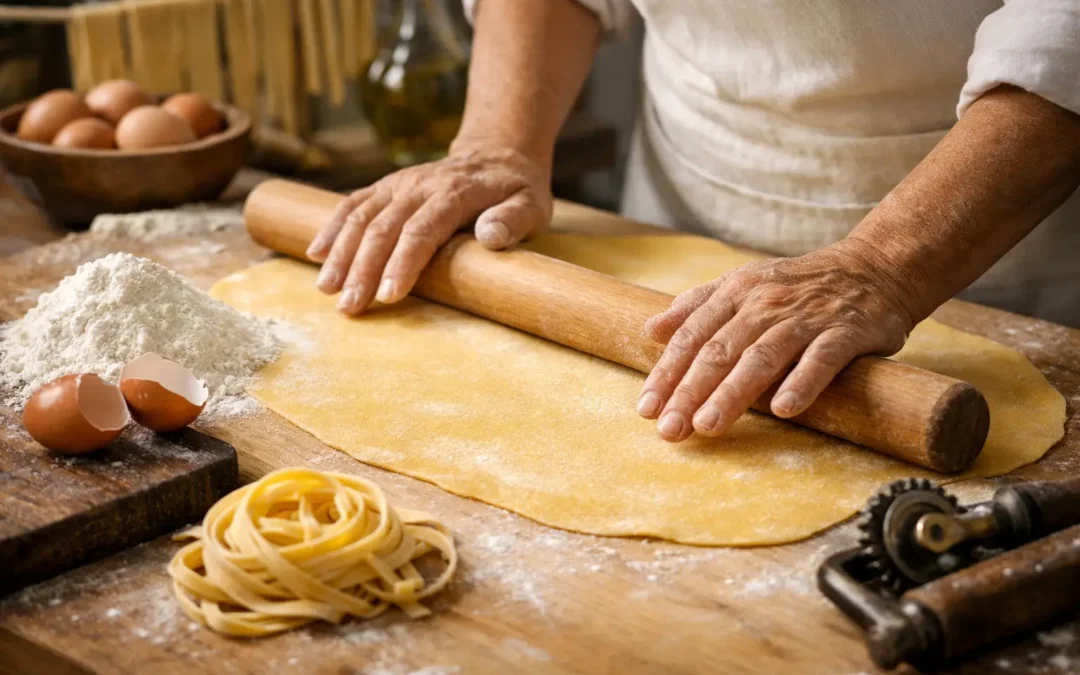
Handmade Bolognese pasta sheets aren’t just a backdrop for ragù. They’re the starting point for everything: tagliatelle that holds the sauce, tortelloni with a thin but present edge, lasagne that stands firm and doesn’t surrender at the first cut. In Bologna you recognize it before even tasting it: from the warm color of the egg, from the matte surface, from that lively texture that has nothing standardized about it.
Making pasta sheets requires few ingredients and plenty of attention. Flour, eggs, a work surface, and a rolling pin. The rest is hand, eye, and time. Fewer special effects, more precision.
What Makes Handmade Bolognese Pasta Sheets Special
The recipe seems essential precisely because it can’t hide mistakes. If the dough is too dry, the pasta breaks during rolling and cooks poorly. If it’s too soft, it sticks, loses structure, and struggles to hold the sauce. If the sheet is rolled unevenly, the same dish will have pieces that are overcooked and others still tough.
The best-known reference is one egg per 100 grams of flour, but it’s not written in stone. Eggs vary in size, the day’s humidity matters, flour absorbs differently. Those who make fresh pasta every day don’t just weigh: they look at the dough, feel it under their fingers, and adjust accordingly.
Flour matters too. Flour that’s too weak can make the pasta fragile; flour that’s too strong risks producing a tough sheet, difficult to roll and less delicate to bite. The choice depends on the format, the filling, and the desired result. For tagliatelle you need elasticity and hold, for tortellini you need a sheet that can close well without becoming thick.
Then there are the eggs. They’re not there to color the pasta like a well-filtered photograph. They’re there for structure, flavor, and texture. A rich yolk gives the sheet that natural yellow that changes slightly with the seasons and with the raw materials. That’s fine: handmade pasta doesn’t need to be identical every day, it needs to be good every day.
From Cutting Board to Rolling Pin: The Work You Don’t See
The flour well on the cutting board is a recognizable gesture, but it’s not enough to make tradition. The eggs must be incorporated gradually, gathering flour from the edges until you get a compact dough. At first it may seem rough, even uncooperative. That’s normal. The dough must be worked until the mass becomes smooth, elastic, and uniform.
This is where the real kneading comes in, done with the palm of the hand and with a repeated, firm movement, without rushing. It’s not about mistreating the dough: it’s about developing its structure. Kneading that’s too brief leaves an irregular dough; distracted kneading creates weak points that the rolling pin will reveal later.
Resting is part of the work, not an optional pause. After being kneaded, the dough needs to relax covered, so the moisture distributes and the dough’s network stops resisting. Rolling it immediately means fighting with a sheet that springs back. Waiting the right amount of time allows you to roll it with more precision and less working flour.
The rolling pin doesn’t simply flatten. It guides the dough from the center outward, rotates it, lengthens it, and thins it little by little. The sheet must remain even, but not sterile. A slight variation tells the story of the human gesture; a wrong thickness, however, shows up on the plate. They’re two very different things.
That’s why you don’t judge a pasta sheet only by how thin it is. For certain formats, pasta that’s too thin breaks during cooking or doesn’t support the filling. For others, a thicker sheet covers the flavor of the sauce. The right measure always depends on where that pasta needs to go.
Tagliatelle: The Right Width, The Right Roughness
Tagliatelle al ragù calls for an elastic sheet, dry on the surface and cut evenly. They shouldn’t be just any ribbons. Their width has a purpose: to catch the ragù and distribute it well with every forkful, without leaving the sauce at the bottom of the container.
The cutting must also be done at the right moment. If the sheet is too fresh, the strips tend to stick together; if it’s too dry, they break and lose softness. It’s a brief balance, to be caught. That’s why fresh pasta isn’t just a list of ingredients, but a sequence of correct timings.
Tortellini and Tortelloni: When Thickness Decides Everything
In filled formats the sheet has an extra responsibility. It must wrap the filling without falling apart, seal the edges well, and leave room for the internal flavor. A tortellino with heavy pasta tires the palate. A tortellone with a sheet that’s too fragile risks opening in the water, wasting the work done before.
Sealing requires confident hands and little excess moisture. If the edge is too wet, the pasta slips; if it’s dry, it doesn’t stick. These are details that only seem small. In a pasta workshop, they’re the details that separate a well-made format from one that needs redoing.
How to Recognize Good Fresh Pasta on the Plate
You don’t need to be a pasta maker to tell if the pasta in front of you has been treated well. Just observe and taste with a bit of attention. Good pasta sheets have a clear aroma of egg and flour, not a flat or overly floury smell. After cooking they remain soft but not limp, with a full and clean bite.
The sauce should cling, not float. In the case of ragù, this means the pasta shouldn’t be shiny as if it had been forcibly oiled, nor completely smooth. A slight natural roughness helps the sauce stay where it belongs: on the tagliatelle.
Watch the color too. A yellow that’s too bright and perfectly uniform isn’t always a virtue. Artisanal pasta sheets change based on the eggs and the processing. What matters more is their texture: they should have character, not look like a film without memory.
The final test comes a few minutes after serving, especially with takeaway. Well-made pasta must maintain dignity even during the trip home or to the office. It won’t be identical to pasta eaten freshly drained, because heat and sauce continue to work, but it shouldn’t turn into a soft mass. That’s why how it’s dressed, portioned, and packaged also matters.
Fresh Pasta Sheets Aren’t Nostalgia
Talking about Bolognese pasta sheets doesn’t mean putting tradition under a glass dome. It means bringing into the present a method that works: recognizable ingredients, daily preparation, formats designed for their sauce, and attention to every step.
In Bologna, this culture fits perfectly into a quick lunch break, a dinner taken home, or an aperitivo that calls for something more than a distracted snack. At Ragù Bologna, fresh pasta comes from exactly this idea: local cuisine done right, ready to follow the city’s rhythm without becoming impersonal food.
Next time you choose a plate of tagliatelle, don’t stop at the amount of ragù. Look at how the pasta supports it, taste the edge, feel if the bite stays lively. That’s where a pasta sheet tells the story of the work done before. And when it’s done well, it doesn’t need to raise its voice: one forkful is enough.
by | Aug 10, 2026 | Senza categoria
In Bologna, ragù is not a simple meat and tomato sauce. It’s a slow preparation, built in layers, that must smell of soffritto, well-browned meat, and patience. The ingredients of traditional ragù are few, but each has a precise role: changing one, overdoing another, or rushing the timing can shift the result far from that full, familiar flavor we know well.
The point is not to chase a rigid laboratory formula. Ragù changes slightly from one kitchen to another, as happens with all recipes that live in homes and trattorias. But there are foundations that are not up for debate: meat, vegetables, fat, wine, tomato used with restraint, milk, and a long cooking time. Less hashtags, more ragù.
Traditional Ragù Ingredients
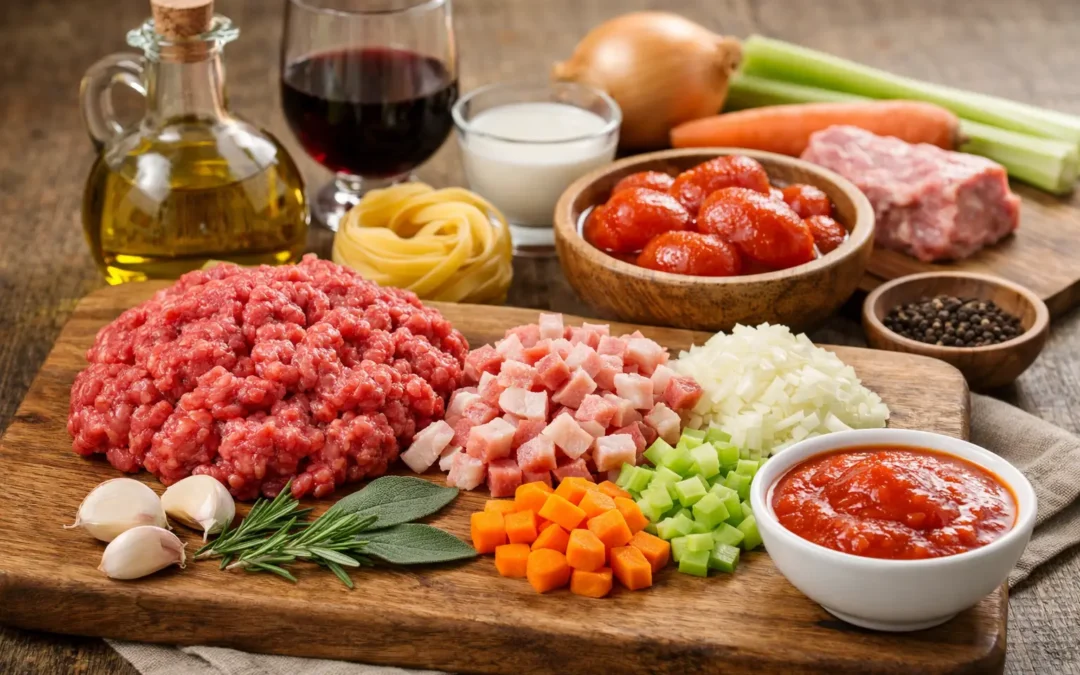
Bolognese ragù starts with the soffritto, not the tomato. Celery, carrot, and onion are finely chopped and cooked gently in a fat that can provide depth. Fresh pancetta, ground or knife-chopped, is an important presence: it brings savoriness, roundness, and that tasty foundation that oil alone cannot reproduce in the same way.
Then comes the ground beef. The best choice is not meat that’s too lean: a grind with the right amount of fat stays softer after hours of cooking and develops a fuller flavor. In many traditional preparations, a cut of beef for braising or a front portion is used, ground not too finely. Dry meat produces dry ragù, even if the sauce seems plentiful.
The essential ingredients, in a Bolognese kitchen, are these:
- ground beef and fresh pancetta;
- celery, carrot, and onion for the soffritto;
- wine, broth, and a small amount of tomato;
- whole milk, salt, and pepper.
Depending on the cook’s hand, a bit of tomato paste may appear in place of some of the passata. There’s no need to turn the pot into a vegetable garden: the tomato should bind, color, and provide slight acidity, not cover the meat. A bright red, very liquid ragù can be good, but it tells a different story.
The Soffritto: The Base You Don’t See, But You Taste
Celery, carrot, and onion must be present without being recognizable as chunks on the plate. The fine cut is a matter of balance, not aesthetics. When the vegetables cook slowly, they release sweetness and moisture, building the foundation on which the meat can brown without burning.
Rushing here has a price. If the heat is too high, the onion takes on an aggressive taste and the carrot tends to caramelize unevenly. If instead the soffritto stays too pale, the ragù loses depth. You need medium-low heat and an attentive eye: it should soften, become fragrant and glossy, not fry noisily like a cutlet.
The pancetta goes in early, to melt some of its fat and coat the vegetables. Its job is not to dominate. A ragù that tastes only of pancetta is heavy, just as one without pancetta can feel a bit flat. Proportions matter more than dietary trends: if you decide to reduce the fat, you have to accept that the result will have a different character.
Browned Meat, Not Boiled
The meat should be added when the base is ready and the pot can support it. It should be broken up and allowed to truly brown, without immediately adding liquids. This step creates the most intense flavor of the ragù: the meat loses water, changes color, and develops toasted notes that cannot be recovered later.
A pot that’s too small is a common mistake. If you pack in too much meat, the temperature drops and the ground meat cooks in its own steam. Better to use a wide pot, or work in two batches when the quantities are generous. It’s not a dramatic gesture, it’s practical cooking.
After browning, the wine serves to deglaze the pan and add lift. White or red? Both choices have a history in Emilian kitchens. White keeps the profile cleaner and more direct; a light red can add a darker note. What matters is letting the alcohol evaporate well before continuing: the wine should remain as aroma, not as a sharp edge.
Tomato and Milk: Little of the First, Just Right of the Second
Here traditional ragù distinguishes itself from many meat sauces. Tomato is not the star. Passata, strained peeled tomatoes, or concentrate should be used with restraint, according to the density and sweetness of the product. An excessive amount takes the ragù toward a tomato sauce with meat, while the Bolognese character comes from the opposite balance.
Milk, added during cooking or toward the end depending on habit, softens the acidity and makes the base more harmonious. It shouldn’t turn the ragù into a cream or leave an obvious milky taste. It’s a bridging ingredient, like good pasta dough: when it’s done well, it doesn’t demand attention but changes the whole experience.
Broth also has a precise function. It’s poured in a little at a time, only when the ragù dries out too much. The goal is not to thin the sauce, but to allow the meat to cook slowly while maintaining controlled moisture. Water, broth, and tomato are not interchangeable: each brings its own intensity.
Time Is Part of the Recipe
A ragù doesn’t improve because it’s forgotten on the stove. It improves because it cooks gently, monitored and stirred when needed. Two hours can be enough for a good home preparation; three hours, over very gentle heat, allow the meat to yield and the flavors to blend with greater precision. It depends on the quantity, the pot, the grind, and how much liquid was used at the start.
The right signal is not the clock, but the consistency. The ragù should be thick, glossy, and coating. It shouldn’t float in liquid, nor reduce to a dry mixture. When you lift it with a spoon, it stays compact but not stiff. It’s that density that allows it to embrace the tagliatelle and build distinct layers in lasagne.
Resting helps. Like many meat sauces, ragù often becomes even more balanced the next day, when the fat and aromas have settled. It should be cooled properly and stored in the refrigerator, then reheated gently with a splash of broth or water if needed. Aggressive reheating risks separating it and drying out the meat.
What to Leave Out of the Pot
Garlic, chili pepper, basil, oregano, and intrusive spices are not necessary for traditional Bolognese ragù. They’re not wrong ingredients in absolute terms: they simply shift the dish toward another language. The same goes for smoked cured meats, ready-made sauces, and sugar used to correct overly acidic tomato. If sugar is needed, it almost always means revisiting the quality of the tomato or the cooking time.
Also be careful with cheese inside the ragù. Parmigiano Reggiano has a magnificent place on the plate, especially on tagliatelle, but it’s not essential in the pot. Its flavor should arrive fresh at the moment of eating, without confusing the reading of the meat and soffritto.
From Pot to Plate
Traditional ragù doesn’t call for just any pasta. Fresh tagliatelle is its natural companion: porous, elastic, able to hold the sauce without leaving it at the bottom of the bowl. For lasagne, the ragù must be even more well-bound, because it will need to work together with béchamel, pasta sheets, and cheese without making the layer soggy.
At Ragù Bologna we prepare it the way it should be prepared here: starting from the kitchen, not from a shortcut. It’s a difference you can taste in a quick lunch, in a dinner brought home, or in a jar kept ready for when you need a proper dish.
If the ragù is made with chosen ingredients and respected timing, it doesn’t need special effects. Just heat it carefully, dress the pasta the right way, and sit down at the table: Bologna, for a moment, is already there.
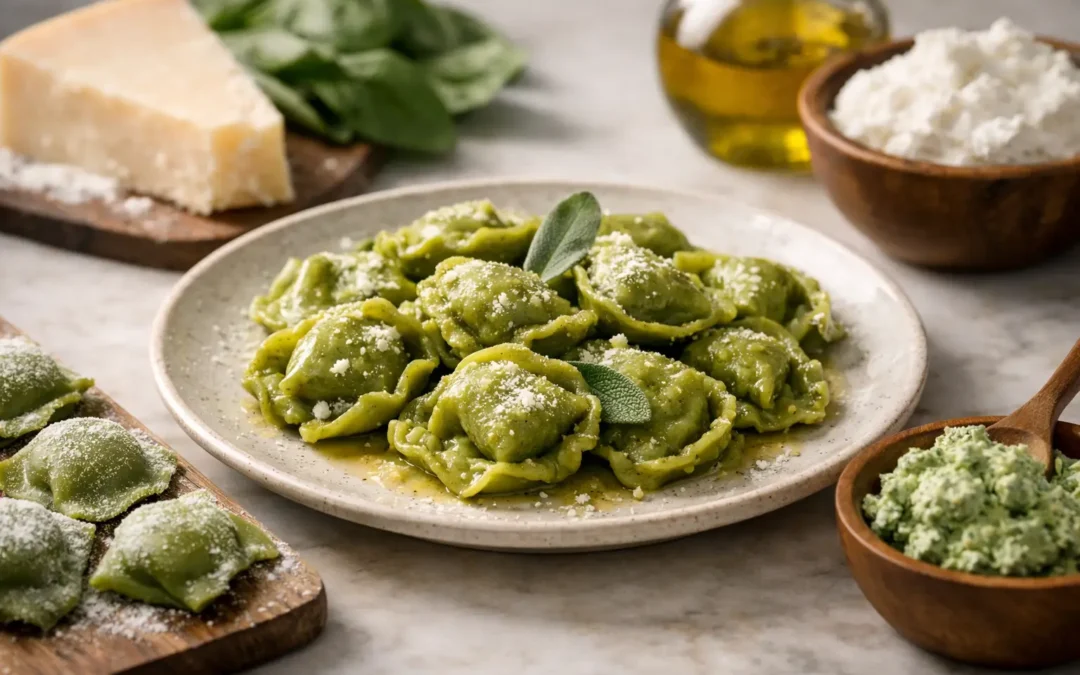
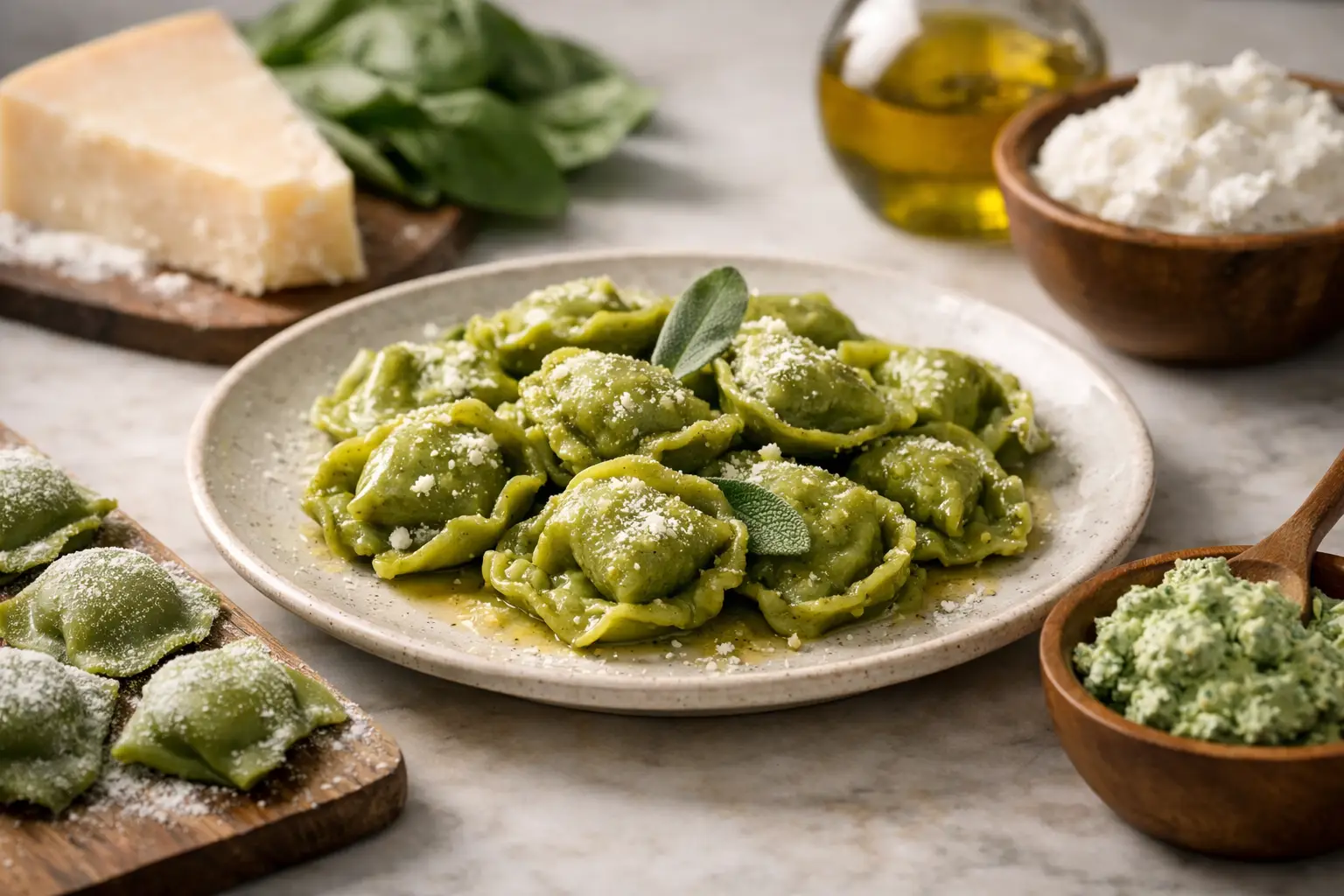 Balanzoni are not a shortcut in the Bolognese repertoire. They are generous filled pasta, green in dough and full of character: a dish that calls for good ingredients, skilled hands, and the desire to eat slowly. In a city that often talks about tortellini and
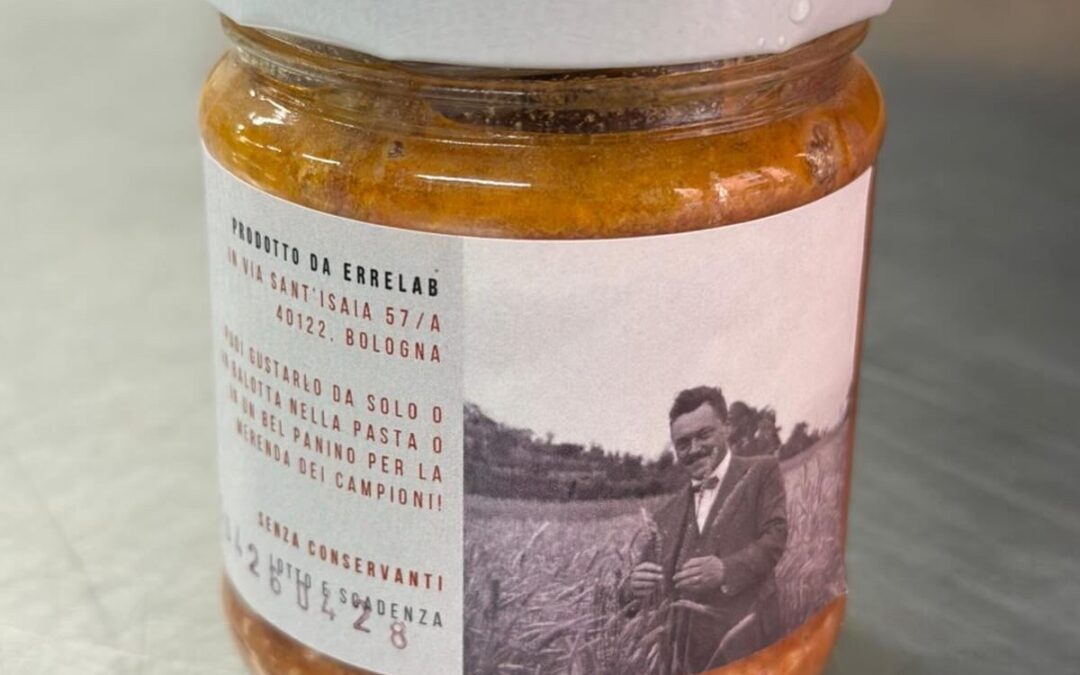
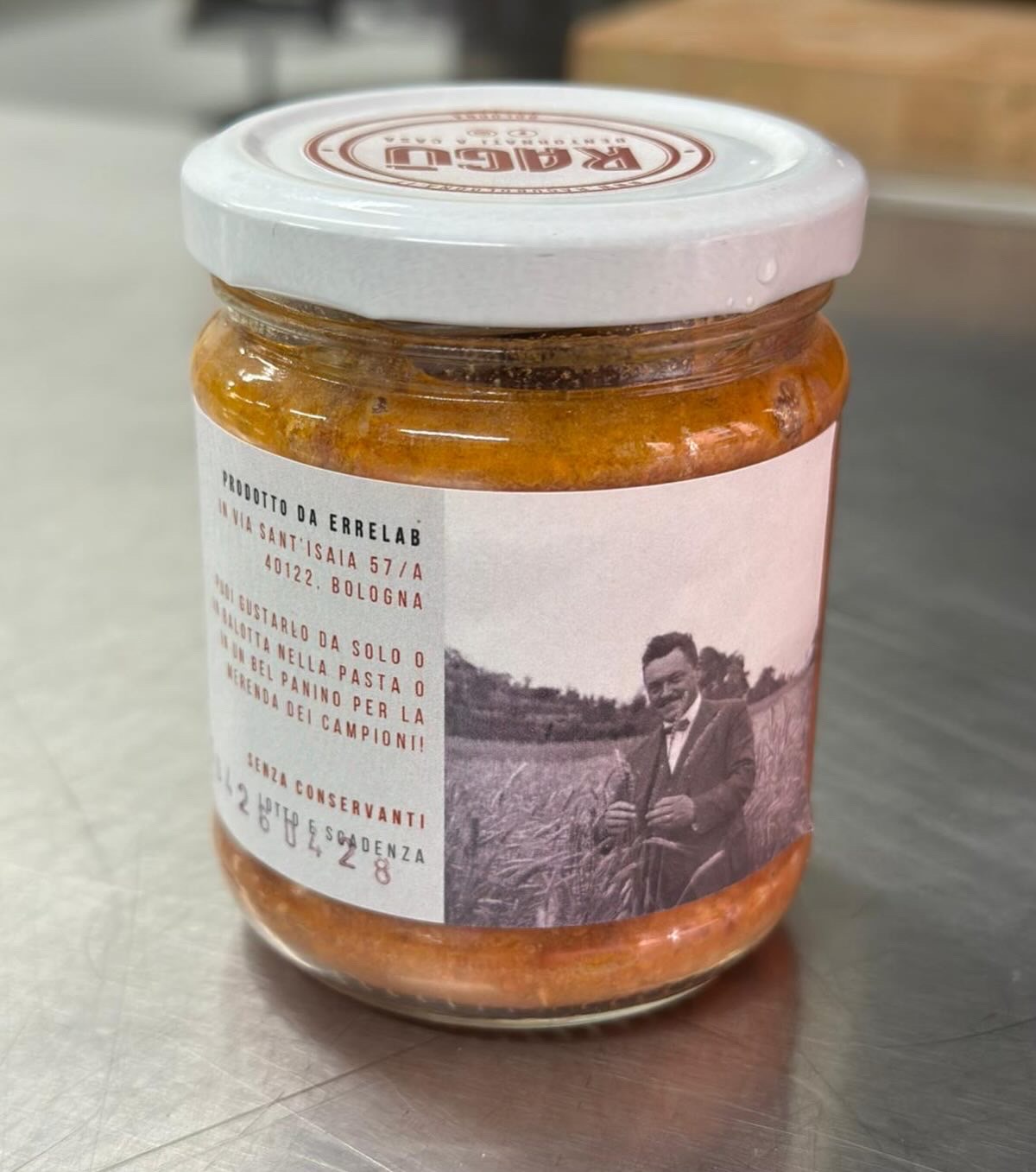 The traditional-recipe ragù is Ragū Bologna’s signature sauce. It means looking for something more than a meat sauce. It was our attempt to think about how a homemade ragù could really have been made back in the late 1800s when certain tools were still missing and, above all, you used whatever meat was available, because there wasn’t enough money to buy the “good” stuff.