by | Aug 26, 2026 | Senza categoria
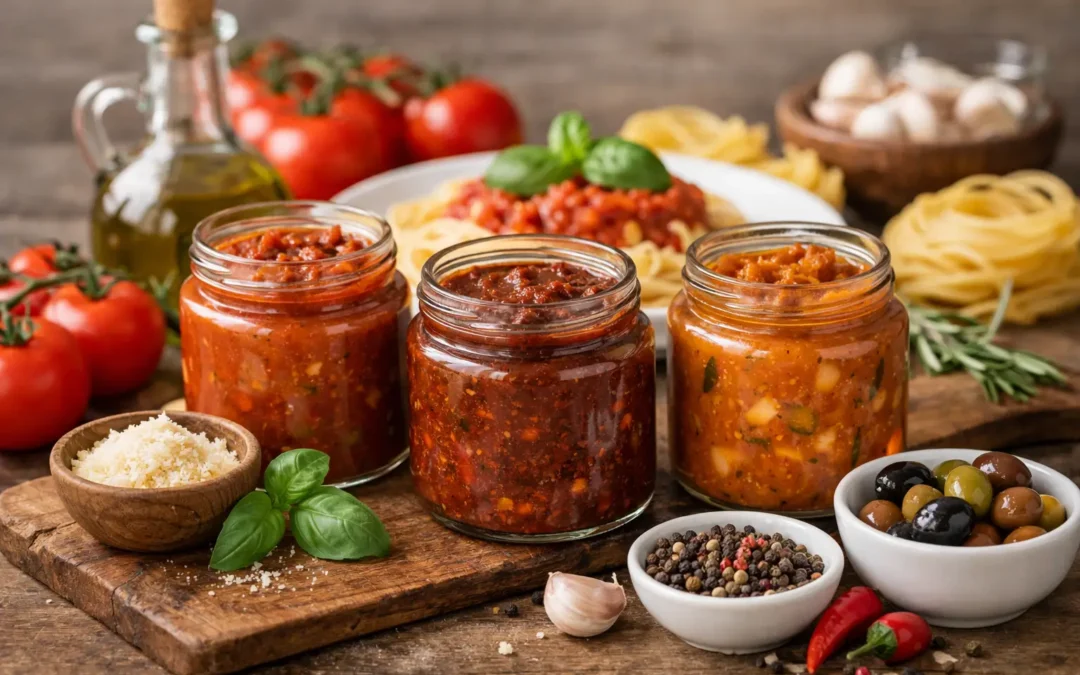
A ready-made sauce can save dinner after a long day. But between any old jar and the best artisanal ready-made sauces, there’s a difference you notice immediately: in the aroma as soon as it heats up, in the texture that clings to the pasta, in the flavor that doesn’t need correcting with half the fridge.
It’s not about finding a product that’s perfect on paper or a pretty label to photograph. It’s about recognizing a sauce made with care: readable ingredients, proper timing, a recipe that knows where it’s going. Fewer special effects, more substance on the plate.
What truly makes a ready-made sauce artisanal
The word artisanal shouldn’t be fancy dress for the jar. In cooking, it means direct control above all: whoever prepares it knows the recipe, chooses the ingredients, monitors the cooking, and tastes. Reducing production quantities isn’t enough to make a good sauce. It takes a precise hand and a clear idea of the result.
A well-made artisanal sauce starts from a built foundation, not shortcuts. In ragù, for example, what matters is the soffritto, the quality and cut of the meat, the browning, the right balance between fatty and lean parts, then cooking that gives ingredients time to become a whole. The tomato should accompany, not cover everything.
The same goes for a vegetable sauce or tomato sauce. A simple sauce often reveals the most: if it only tastes of acidity, sugar, or garlic, there’s not much to hide. If instead it preserves the character of the tomato, oil, and herbs without becoming heavy, the work was done well.
How to choose the best artisanal ready-made sauces
The label is the first taste, even before the spoon. You don’t need to play detective, but it’s worth reading a few lines carefully. An understandable ingredient list is a good sign: tomato, meat when included, vegetables, oil, salt, spices, and little else. Serious recipes don’t need to disguise themselves as laboratories.
There are five practical aspects to check:
- The order of ingredients. Those present in greater quantity appear first. In a ragù, the meat should have a concrete role, not be an extra after tomato and water.
- The quality of fats. Extra virgin olive oil, butter, or other clearly declared fats tell more than vague formulas like “vegetable oils.”
- Added sugars. In a tomato sauce they may rarely be needed to correct acidity, but they shouldn’t be the recipe’s constant crutch.
- The presence of thickeners and flavorings. They’re not automatically a crime, but a well-made sauce should find body in the cooking and ingredients, not in a technical shortcut.
- The actual portion. A 180-gram jar can be enough for one generous serving or two light dishes. Better to calculate beforehand, especially if cooking for several people.
Price also deserves honest consideration. A sauce with well-selected meat, fresh vegetables, and hours of cooking can’t cost the same as an industrial sauce built for large volumes. That doesn’t mean the most expensive is always the best. It means that if the price is too low compared to what it promises, some questions are legitimate.
Ragù is not just sauce with meat
In Bologna, this distinction matters. A good ragù is thick, coating, balanced. It shouldn’t float in the passata or be dry and grainy. It should bind with the pasta sheet, get into the folds of the tagliatelle, and play its part without dominating every bite.
Regional variations are many and deserve respect, but calling everything “ragù alla bolognese” doesn’t make it so. Tradition is a working foundation, not a sticker. When choosing a ready-made ragù, looking for a declared and coherent recipe is more useful than chasing generic promises of authenticity.
Vegetarian sauces: simple, not bland
A vegetable sauce can be as full-bodied as a ragù if it’s well constructed. Eggplant, peppers, mushrooms, legumes, or a rich soffritto need distinct cooking times and a balance between sweetness, acidity, and savoriness. Blending everything isn’t enough.
Here, texture is decisive. If the sauce is too liquid, it slides off the pasta. If it’s excessively uniform, it often loses character. A good vegetarian sauce lets you recognize the ingredients and has a structure that can hold on a spoon.
Pairing with pasta does half the work
Even an excellent jar can underperform with the wrong shape. Full-bodied ragùs call for porous, wide pasta: fresh tagliatelle, pappardelle, rigatoni, mezze maniche. Smoother tomato sauces go well with spaghetti, linguine, or short shapes, depending on density.
The sauce shouldn’t simply be poured over drained pasta. It should be heated in a pan with a small ladle of cooking water, then welcomed by the pasta for the final minutes. It’s a minimal gesture, but it changes the dish: the starch creates a natural binding and the sauce truly enters the pasta.
With fresh pasta, even more attention is needed. It cooks quickly and absorbs well, so the sauce must be hot and ready before draining. For a generous portion of tagliatelle al ragù, don’t skimp: the pasta sheet wants sauce, but not a swimming pool.
Storage and serving: don’t ruin good work
An artisanal ready-made sauce should be treated for what it is: a preparation made to be convenient, not immortal. Always check the label instructions, especially after opening. Generally, an opened jar should be kept in the fridge and consumed within a few days, using clean utensils each time.
To heat it, low heat is almost always the right choice. The microwave can be practical, but should be used in short intervals with stirring, because it tends to bring the edge of the sauce to a boil while the center stays cold. If the sauce has reduced too much, a spoonful of cooking water is better than more passata or oil.
Don’t add salt before tasting. It’s a common habit, especially with ragù, but it risks flattening the work already done. If anything, finish with Parmigiano Reggiano when the pairing calls for it, without turning it into a blanket that hides every flavor.
When to choose ready-made and when not
Artisanal ready-made sauce shouldn’t pretend to replace Sunday in the kitchen. It has another purpose: to bring a carefully prepared sauce to the table when there’s no time, without falling into the sad compromise of “as long as it fills the plate.” It’s a smart pantry for a rushed lunch, a late dinner coming home, a dish to share without starting from scratch.
If instead you feel like cooking slowly, do it. Make a big batch of ragù, let it rest, and invite someone to the table. But on busy days, choosing a jar well is already a form of respect for what you eat.
In Bologna, where fresh pasta and ragù aren’t scenery, this idea is simple: even takeaway and the pantry can have hands, time, and memory. Ragù Bologna works from exactly this point, with preparations made in-house and flavors designed to arrive well on the plate.
Next time you open a jar, don’t just ask yourself how much time it saves you. Ask yourself if it would make you want to do the scarpetta. That’s an answer that counts.
by | Aug 24, 2026 | Senza categoria
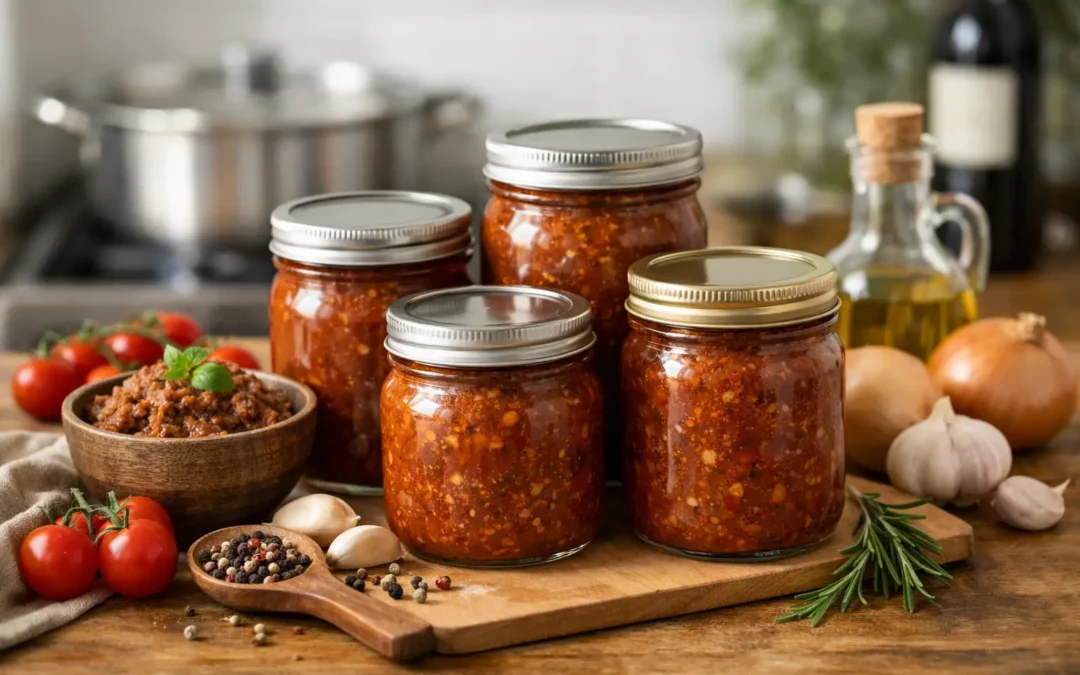
A well-made jar of ragù is not a backup plan for dinner. It’s a small reserve of real cooking: selected meat, slow cooking, tomato measured with care, and the right amount of time to let the ingredients speak. In this guide to ragù preserves we start here, because choosing a preserve means choosing what to bring to the table when you want to eat well without starting from scratch every time.
In Bologna, ragù doesn’t ask for special effects. It asks for respect: for the soffritto, for the meat, for patience, and for that fresh pasta that knows how to hold it. A good preserve must maintain this character even after packaging. Less slogans, more substance in the jar.
Guide to ragù preserves: what to look for before buying
The first thing is to read the label, not to turn shopping into an exam, but to understand whether that ragù resembles a cooked sauce or a product built to last at all costs. The ingredient list tells a lot: meat, vegetables for the battuto, tomato or passata in balanced quantity, oil, salt, wine or milk when called for by the recipe. The list can be simple, but it must be understandable.
The order matters too. Ingredients are listed from most present to least present: if meat and vegetables are at the center of the recipe, the ragù will have a different structure from a predominantly tomato sauce with few meat elements. There’s no single possible ragù, and every kitchen has its proportions, but a sauce declared as meat-based must have body, not just color.
Being wary doesn’t mean seeking purity at all costs. In a preserve, some technological measures may be necessary and declared. The point is different: the taste must remain clean and recognizable. If the first taste leaves only sweetness, acidity, or an overpowering smoky note, it will be hard to find the round, deep profile of a ragù cooked slowly.
Then observe the format. A small jar is practical for dinner for two or a quick lunch. A larger format works if you’re cooking for family, roommates, or friends, but it needs to be managed well once opened. Real value isn’t the lowest price per kilo: it’s finishing the product without waste and serving it the right way.
Artisanal doesn’t automatically mean better
The word artisanal has value when it corresponds to precise work: selected ingredients, coherent recipe, monitored cooking, careful packaging. On its own, though, it’s not enough. A well-made ragù may have a less uniform consistency than an industrial one, because the meat and vegetables remain the stars. It shouldn’t, however, show strange separations, unpleasant odors, or excess fat on the surface.
Appearance should also be interpreted with common sense. A bit of fat rising to the top can be normal, especially if the ragù contains meat and has rested. By stirring and heating gently, the sauce becomes smooth again. It’s different to find a jar with a swollen lid, liquid leakage, rust, or a compromised seal: in that case don’t taste it and don’t use it.
How to store ragù before and after opening
As long as the jar is intact, always follow the instructions on the label. Some preserves require a cool, dry pantry away from direct light; others may have specific conditions. The cabinet next to the oven or the shelf exposed to sunlight are not ideal spots: continuous heat shortens the aromatic life of the product and can compromise quality.
The date indicated is not a decorative detail. It helps you understand until when the producer guarantees the ragù’s characteristics if the jar has been stored correctly. You don’t need to wait until the last day: ragù is made to be eaten, not collected. A well-organized pantry follows a simple rule: use first what was purchased first.
After opening, conditions change. The ragù should be transferred to the refrigerator, tightly sealed, and consumed within the timeframe indicated by the producer. Use clean utensils, take only the amount needed, and don’t leave the jar open on the table for hours. These are small gestures, but they make the difference between leftovers that are good the next day and a product to throw away.
If you’ve opened a large format and know you won’t finish it in a few days, portion it immediately into suitable containers and freeze it. Better to make portions sized for one dinner than to freeze a single huge block. To thaw it, let it sit in the refrigerator or heat it directly over low heat, adding a spoonful of water if needed. Avoid refreezing ragù that’s already been thawed.
Homemade preserves require method, not improvisation
Making ragù in quantity and preserving it is a good habit. But meat, vegetables, and thick sauces are delicate preparations from a food safety standpoint. Filling hot jars, turning them upside down, and hoping that’s enough is not a reliable method for a preserve to keep in the pantry.
Home vacuum sealing requires validated procedures, proper equipment, and recipes designed specifically for that type of food. Acidity, density, and container size affect the necessary treatment. Don’t modify amounts, times, or methods found in reliable sources just because “it’s always been done this way.”
When you’re not certain about the process, the freezer is the simplest and most prudent choice. You cook the ragù, cool it quickly, portion it, and freeze it. The result stays true to the recipe and lets you have a ready supply without forcing your hand with pantry preservation.
How to heat a ragù preserve without ruining it
Ragù doesn’t need to boil furiously. Heat it slowly in a pan, stirring, until it’s evenly hot. Aggressive heat dries out the sauce, separates the fats, and flattens the aromas. If it looks too thick, add a little hot water, better yet a spoonful of pasta cooking water, one step at a time.
The amount depends on the pasta and how much sauce you want. With fresh tagliatelle or egg pasta, the ragù should coat without drowning. The dish is not a pool of sauce: the pasta should remain recognizable, with its texture and flavor. For short dried pasta, a slightly softer sauce can work better, because it gets into the grooves and binds each bite.
The final toss in the pan is useful, but don’t overdo it. Drain the pasta al dente, add the hot ragù, and toss for just a few moments. If the sauce is already perfectly balanced, there’s no need to adjust it with cream, sugar, or random spices. At most a drop of cooking water to bind. Parmesan, if you like it, goes on the plate: it shouldn’t cover the work done in the pan.
Not just tagliatelle
Tagliatelle al ragù is a reference point, but a good preserve can solve more than one meal. It’s excellent in lasagne, where the sauce must be hot and well distributed between pasta sheets and béchamel. It can accompany soft polenta on cold evenings or become the filling for a savory piadina, as long as it’s thick enough not to leak out with every bite.
With bread, avoid using it as a simple appetizer spread. Heat it, serve it in a bowl, and choose bread with crust and crumb capable of supporting it. It’s a direct way to eat well, especially when there’s little in the fridge but a properly made jar in the pantry.
The right pantry is the one you use
Keeping two or three ragù preserves at home changes last-minute dinners. One for a quick lunch, one for friends who arrive without warning, one to give to someone who wants to take home a piece of Bologna cooking. You don’t need to accumulate dozens of jars: you need to choose the ones you’d gladly eat even at a set table.
At Ragù Bologna, ragù is made to go with fresh pasta, but also to come home with you and find a place in a real pantry. Open it when you want a simple, well-made dish. Heat it slowly, cook good pasta, and let the ragù do the rest.
by | Aug 22, 2026 | Senza categoria
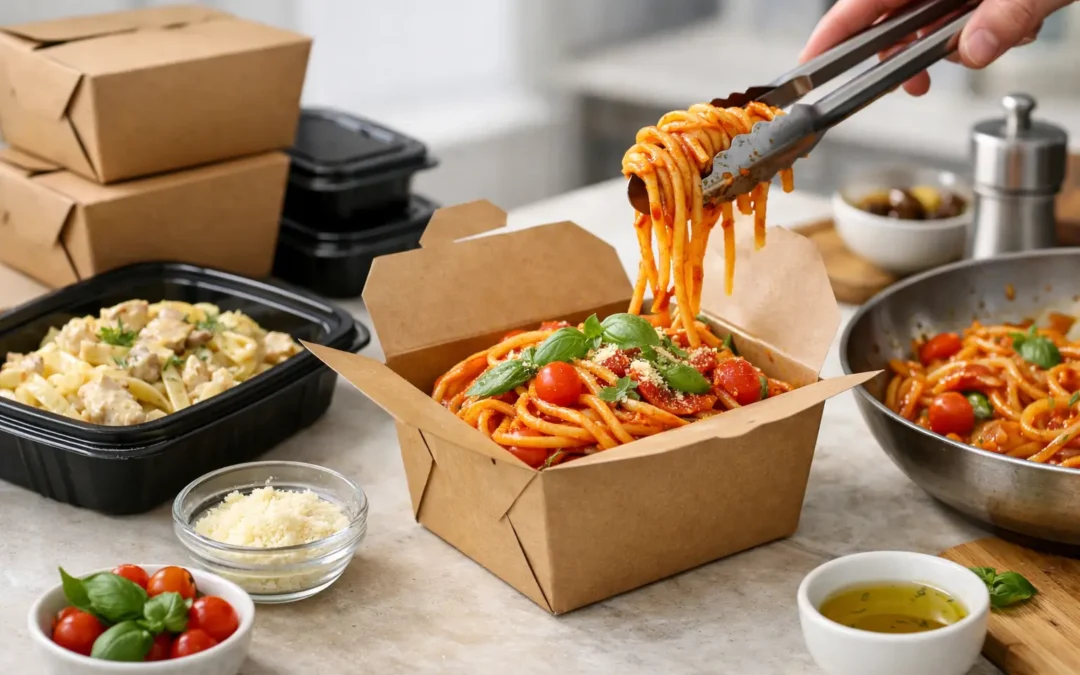
The container arrives at home, the aroma is just right, and so is your hunger. Knowing how to plate takeout pasta makes the difference between a meal eaten in a rush and a dish that truly preserves its character, temperature, and texture. You don’t need chef’s tongs or perfect photographs: you need a warm plate, a few gestures done well, and respect for those who rolled the dough and prepared the sauce.
Fresh pasta is not an accessory to the sauce. It’s part of the dish, with its porosity, thickness, and structure. That’s why tagliatelle al ragù, tortellini in broth, or takeout lasagna shouldn’t simply be dumped onto the first available plate. They deserve to be treated for what they are: well-made food, ready to return to the table.
How to Plate Takeout Pasta: Timing Matters
The first rule is simple: don’t wait too long. Takeout pasta is at its best when served as soon as possible, especially if it’s dressed with ragù, butter and sage, cheese cream, or other sauces that change consistency as they cool. Ten minutes can be enough to set the table calmly; half an hour, if the container stays closed and cold, can change the result.
Set the table before opening the container. Plates, utensils, glasses, and napkins should already be ready. That way you don’t leave the pasta uncovered while searching for a fork in the drawer, and you don’t force the sauce to cool while waiting for your dinner companions.
If the journey was short and the pasta is still quite hot, plate it immediately. If instead you feel the container has lost heat, check the instructions you received and reheat gently. Better moderate, controlled heat than an aggressive pass: fresh pasta suffers from extremes, cheese can separate, and ragù risks drying out at the edges.
The Right Plate Is Not a Detail
For tagliatelle, pappardelle, and tortelloni, choose a wide shallow bowl or a generous pasta bowl. The rim holds the sauce, leaves room for the pasta, and makes it easier to eat without chasing the sauce. A flat plate can work for a dry, compact portion, but it tends to disperse heat quickly.
Tortellini in broth call for a bowl or a proper shallow bowl, ideally warmed first with hot water and then dried. The broth stays hot longer and the tortellini remain submerged, as they should be. Lasagna instead needs a slightly wide flat plate that allows you to serve the portion intact without crushing its layers.
Warming the plate is one of those small gestures you feel at the first bite. Just fill it for a minute with very hot water, empty it, and dry it well. It’s not essential in summer or if you’re eating right away, but in winter and for heavily sauced dishes it really changes how the meal holds up.
Open, Toss, Serve: With a Light Hand
Don’t shake the container as if it were just any box. Open it on a stable surface and observe the sauce: during transport it may have distributed unevenly. With a fork or spoon, depending on the format, move the pasta once from bottom to top. The goal isn’t to mix everything, but to bring the sauce back around the pasta.
Tagliatelle al ragù should be taken in a full portion, without breaking them and without dragging away only the sauce. Place them in the center of the bowl and, if you like, gather them with a slight circular motion of the fork to form a soft nest. No need to build a tower: a low, generous portion stays hot better and is more natural to eat.
For tortelloni and stuffed pasta, use a spatula or large spoon. They’re more delicate than they seem: if you pour them too quickly, the filling can break or the sauce ends up all on one side. Arrange them in a single layer, then collect the sauce left in the container and pour it over with care.
With tortellini in broth the step is even more direct. First pour the tortellini, then the broth, so you can adjust the amount. They should stay well covered but not drowned in a huge bowl: the broth should accompany each spoonful, not turn the dish into a swimming pool.
Ragù, Cheese, and Finishing Touches: A Little, Done Well
When the sauce is prepared well, it doesn’t need to be disguised. A ragù cooked with patience should remain the star, not disappear under a cloud of cheese or random spices. If the dish is already complete, serve it as is and taste it before adding anything else.
Parmigiano Reggiano can elevate tagliatelle, lasagna, and tortelloni, but it should be measured carefully. Better a fine, even grating at the moment than a heap that cools the dish and covers the flavors. On broth, it depends on family tradition and personal taste: some want just a hint and others prefer to leave the broth clear.
Avoid oil poured out of habit, especially on an already balanced ragù or pasta with butter and sage. It doesn’t automatically add quality. It can weigh down the bite and make the sauce less clear. Even chili pepper, black pepper, and balsamic vinegar deserve caution: they’re excellent when they make sense, not when they cover up takeout pasta.
A useful finishing touch, when available, is a spoonful of the sauce left at the bottom of the container. That’s often where the most intense part of the sauce concentrates. Recover it carefully, without scraping plastic or paper, and use it to complete the center of the plate.
Each Format Has Its Own Measure
Lasagna is the case where aesthetics coincide with technique. Serve it with a wide spatula, supporting it from underneath too, and place it on the plate without flipping it. If it arrives quite hot, let it rest a minute before the first cut: the layers settle and the portion stays cleaner. Don’t press it with a fork to cool it down, because you’d lose precisely that structure that makes lasagna recognizable.
Tagliatelle need air and movement, not compression. Tortelloni ask for space, because each piece must reach the fork intact. Tortellini demand heat and broth. So there’s no universal plating: it depends on the shape, the sauce, the transport time, and also how many people are at the table.
If you’re serving multiple portions from the same container, divide the pasta first and then the sauce. That way the last portion doesn’t end up with all the ragù while the first stays almost dry. It’s a simple consideration, but at the table it’s immediately noticed.
Eating It Well Matters More Than Photographing It
Takeout pasta can be convenient without becoming anonymous. In Bologna, where fresh pasta is a serious matter, the difference is recognized even in the details: a warm bowl, a portion served with respect, a sauce that stays attached to the pasta. At Ragù Bologna this idea is clear: less show, more substance.
If you want to set the table with an extra touch, bring good bread and fresh water to the table, or choose a drink that doesn’t overpower the dish. But don’t delay the first bite to search for the perfect photo. Fresh pasta doesn’t wait long, and when it’s made properly it deserves to arrive immediately where it counts: at the center of the table, in front of those who want to eat it.
by Marco Vastola | Aug 20, 2026 | Senza categoria
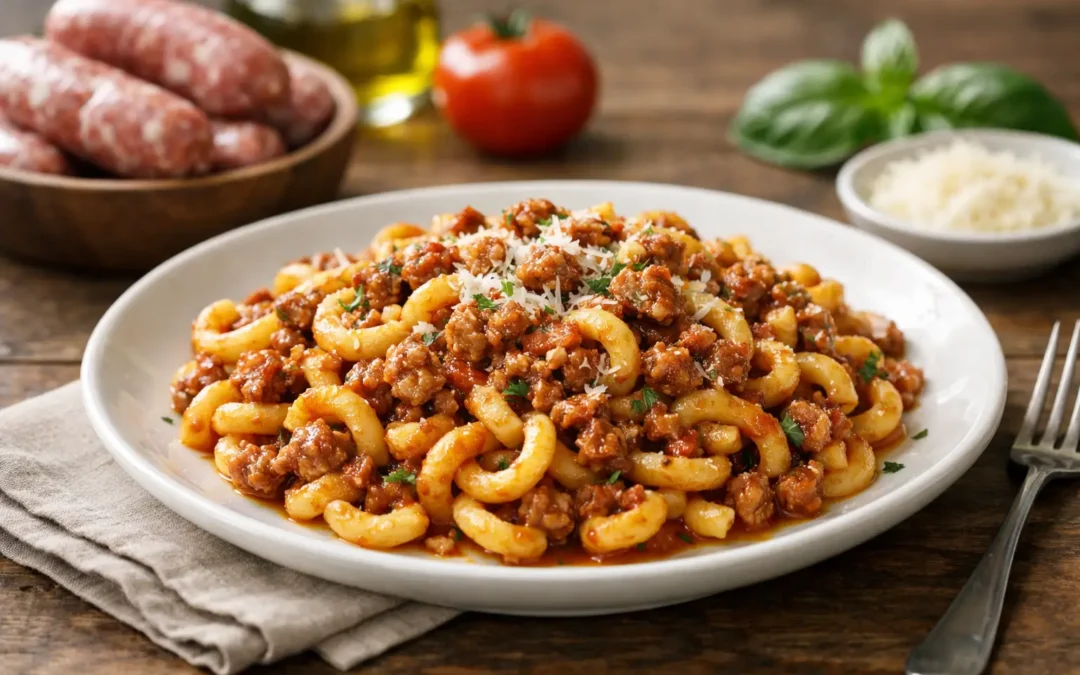
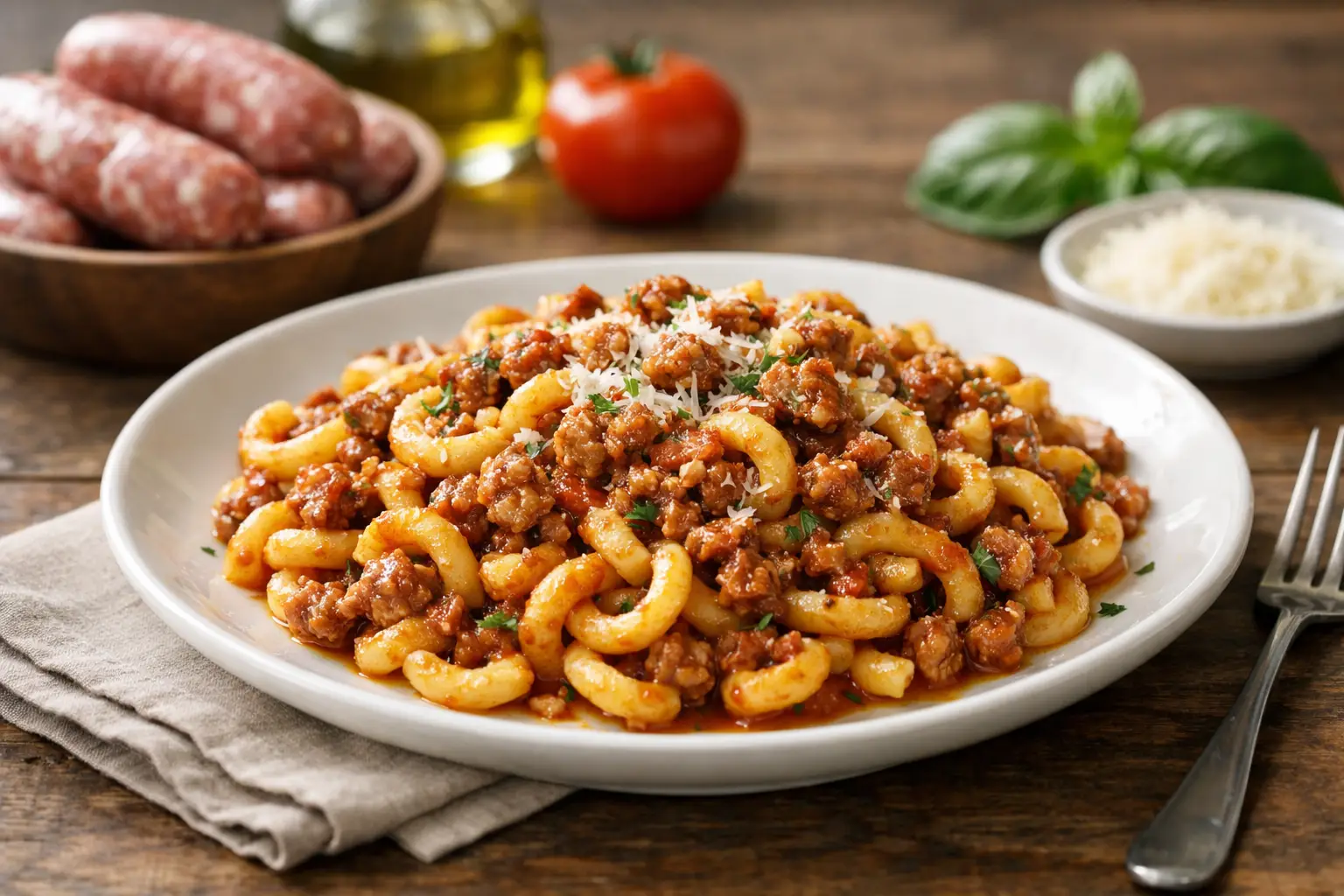 Gramigna with Bolognese sausage ragù doesn’t need special effects: just the aroma of browned sausage, simmering tomato, and that short, curly pasta capable of holding every spoonful of sauce. It’s a straightforward, generous, deeply Emilian dish. The kind you happily eat for lunch, dinner, at the family table, or during a proper quick break.
In Bologna, gramigna with sausage is a trattoria staple, a family kitchen classic, and a leisurely Sunday favorite. Don’t confuse it with classic tagliatelle al ragù: here the character changes. The meat is more rustic, the flavor more immediate, the pasta short and lively. Less ceremony, more ragù.
What is gramigna with Bolognese sausage ragù
Gramigna is a semolina pasta, short and curved, with a shape resembling small curls or twisted strands. It doesn’t come from egg-based dough like tagliatelle and tortellini, but belongs to that practical Emilian cooking tradition that knows how to choose the right format for each sauce.
Its natural partner is sausage ragù. A sauce prepared starting with a well-made soffritto, fresh sausage removed from its casing and crumbled, browned, tomato purée or crushed tomatoes, and enough cooking time to truly bring all the ingredients together. No shortcuts: if the soffritto is pale or the meat is tossed into the sauce without browning, the result will be correct but lacking depth.
It’s a popular dish in the best sense of the word. Accessible, recognizable, full of flavor. Gramigna doesn’t demand a studied presentation: it asks for a ragù that coats it well and a ready fork.
Sausage ragù and Bolognese ragù: they’re not the same thing
In Bologna, calling everything simply “ragù” can create confusion. Traditional Bolognese ragù has a precise structure, slow cooking, and a balance built over time between meat, vegetables, milk, and tomato. It’s the sauce for tagliatelle, lasagne, and many dishes that tell the city’s story with rigor.
Sausage ragù follows another path. Sausage brings with it fat, spices, and a more pronounced savoriness. That’s why its sauce tends to be livelier and less delicate than a classic ragù. It’s not a lesser version or a shortcut: it’s a different recipe with a distinct personality.
The quality of the sausage makes an enormous difference. Meat that’s too lean risks staying dry; sausage that’s too heavily spiced covers the soffritto and tomato. The goal is to find balance: meat that’s present but not aggressive; sauce that’s rich but not heavy.
How to build a ragù that tastes like Bologna
The starting point is the soffritto. Finely chopped onion, celery, and carrot, gently cooked in a little oil or with a carefully chosen fat component. They shouldn’t burn or stay crunchy: they need to become soft and sweet, almost melting into the sauce base.
At this point the sausage enters, removed from its casing and crumbled by hand. It should be browned patiently, letting it take on color. This is where that toasted note develops that separates an anonymous ragù from one that makes you hungry as soon as you lift the lid. If the pan is too crowded or the heat too low, the meat will boil instead of brown. Better to work calmly and give the ingredients space.
A splash of wine can help gather the flavors left on the bottom, but it shouldn’t dominate. When the alcohol has evaporated, add the tomato. Purée, crushed tomatoes, or a combination of the two: it depends on the desired consistency and the season. Purée gives a more uniform result; crushed tomatoes leave a more rustic texture.
Then comes time. Sausage ragù doesn’t need the very long hours required by other preparations, but it’s not ready in ten minutes. Gentle cooking allows the tomato to lose its acidity, the meat to soften, and the fats to become part of the sauce instead of remaining separated on the surface.
Does milk go in or not?
It depends on the family recipe and the desired effect. A small addition of milk can round out the tomato and make the ragù softer, especially if the sausage is very savory. It’s not mandatory. If you choose a balanced sausage and good tomato, the sauce can be complete even without it.
The same rule applies to pepper, nutmeg, or aromatic herbs: use them with a light hand. Gramigna with sausage ragù should taste like meat, soffritto, and tomato, not like a spice drawer emptied into the pot.
The pasta matters as much as the sauce
The shape of gramigna isn’t a decorative detail. Its curves catch the ragù and make every bite rich without requiring an excessive amount of sauce. That’s why it’s important to cook it al dente and toss it directly in the sauce with a little pasta water.
The starchy water binds pasta and ragù. It doesn’t turn the dish into a cream and doesn’t serve to hide flaws: it helps the sauce adhere. The final toss in the pan, even if brief, changes everything. The gramigna shouldn’t float in the sauce but should be coated down to the last curl.
Parmigiano Reggiano can come to the table, freshly grated. Here there’s no rigid rule that applies to everyone: some want it generous and others prefer to taste the sausage without other savory pushes. The only wrong choice is covering a well-prepared ragù with cheese that’s already tired or pre-grated too long ago.
The mistakes that make the dish heavy
Gramigna with sausage ragù is substantial, but it shouldn’t leave the palate fatigued. The first mistake is using too much oil: the sausage already releases its own fat. The second is overdoing the tomato paste, which can make the sauce dark and cloying. The third is cooking everything over high heat to shorten the time, resulting in a poorly blended flavor.
The choice of pasta also deserves attention. Overcooked gramigna loses consistency and no longer supports the sauce. If instead it’s undercooked and not tossed in the ragù, it remains separate from the sauce. The right measure is in the middle: lively pasta, well-bound ragù, dish served immediately.
A home-style dish, even away from home
There’s a reason gramigna with sausage remains so beloved in Bologna: it manages to be comfort food without becoming packaged nostalgia. It’s a dish that speaks of working kitchens, real ingredients, and gestures repeated well. It works for a work lunch, after a day of classes, at an informal dinner, or when you want to bring home something that tastes like cooking done right.
At Ragù Bologna this idea guides every preparation: tradition doesn’t mean immobility, but respect for raw materials, for timing, and for the taste of those who eat. A portion of well-dressed gramigna doesn’t seek approval on social media. It arrives hot, smells like ragù, and does what it’s supposed to do.
When you choose or prepare this dish, start here: good sausage, patient soffritto, pasta cooked with care. The rest is already on the plate, fork in hand.
by | Aug 18, 2026 | Senza categoria
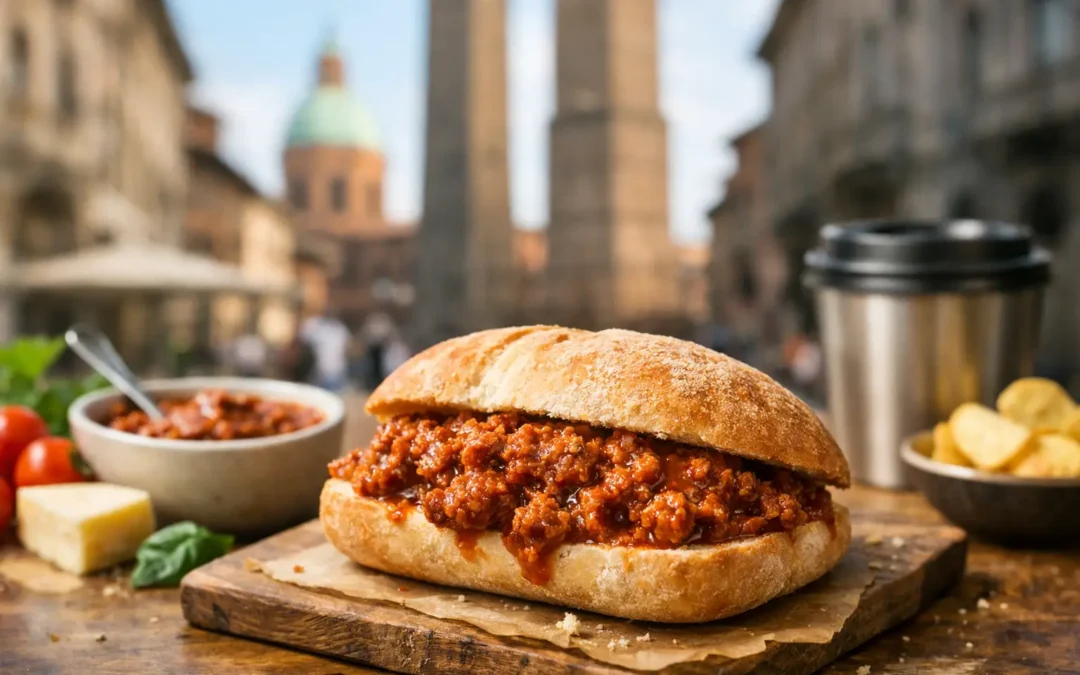
In Bologna, the ragù sandwich shouldn’t pretend to be a Sunday dish. It’s something else: a serious answer to hunger between classes, a tight lunch break, a walk downtown, or an aperitivo that deserves more than just a few chips. The point isn’t just putting a sauce in bread. The point is taking the character of ragù out of the plate, without watering it down or turning it into a window-dressing gimmick.
Bolognese ragù has its own timing, its own ingredients, and a density that can’t be faked. The sandwich, on the other hand, demands rhythm, practicality, and the ability to be eaten with your hands. Making these two needs coexist is a matter of cooking, not special effects. Less hashtags, more ragù.
The ragù sandwich is not a shortcut
Bolognese tradition is well acquainted with ragù paired with fresh pasta, especially tagliatelle. That is its most natural pairing: the sfoglia holds the sauce, accompanies it, and picks up every bit. The ragù sandwich belongs to a more urban and contemporary language, but it’s no less legitimate for it.
It’s a street food format that can remain deeply local. It all depends on how it’s built. If the ragù is prepared with care, using well-chosen meat, vegetables, balanced tomato, and slow cooking, it keeps its identity even between two slices of bread. If, instead, it’s a generic sauce—too liquid or too sweet—the bread won’t save it: it just makes it easier to eat.
There’s a clear difference between adapting a recipe to a new way of eating and simplifying it until it’s lost. The first case is living cuisine. The second is fast food disguised as Emilia.
How to recognize a well-made sandwich
The first sign is the aroma. Even before tasting it, a good ragù must smell of patiently cooked soffritto, browned meat, and concentrated sauce. It shouldn’t overpower everything with tomato, nor leave a sugary note in the mouth. Ragù doesn’t need to shout: it needs to have depth.
Then comes the texture. In a sandwich, the filling must be soft but compact. Too dry and it becomes stringy; too fluid and it escapes the bread at the first bite. The balance is that dense consistency that coats, stays in place, and leaves the bread still recognizable.
The bread matters as much as the filling. It must have crust and structure, but without turning lunch into an endurance test. A well-baked artisanal bread supports the ragù, absorbs just enough, and offers contrast. Soft bread falls apart. Bread that’s too dry breaks the rhythm and makes the filling disappear behind an overbearing crust.
Finally, there are the proportions. A ragù sandwich isn’t a contest to see who can put in the most sauce. An exaggerated filling might seem generous, but it often ends up being messy and confusing. The right portion leaves room for the bread, ensures ragù in every bite, and doesn’t force you to eat with ten napkins in hand.
Ragù must remain the star
Cheese, vegetables, extra sauces: everything can work, but nothing should mask the ragù. A cream that’s too salty, a dominant mayonnaise, or ingredients added just for volume completely change the dish. Sometimes a single detail is enough, especially if it brings freshness or a slightly acidic note. But the center must remain clear.
This also applies to more creative versions. Innovating doesn’t mean throwing random ingredients together. It means understanding which element adds something to the bite: a texture, a scent, a contrast. If it adds nothing, it’s better to leave it out.
When to choose it and how to eat it
The beauty of the ragù sandwich is that it doesn’t require a formal occasion. It’s great for lunch when you’re looking for a real meal without sitting down for two hours. It’s great in the evening, before a movie or after work. It’s also great for sharing during an aperitivo, if there are people at the table who prefer substance over the usual offerings that are all crunch and no memory.
However, it’s not always the only choice. If you have time, want to experience ragù in its most classic form, and are looking for a dish that requires a fork and calm, tagliatelle al ragù remains a choice that’s hard to beat. The sandwich wins when you need freedom and speed without sacrificing quality. They are two different ways of enjoying the same gastronomic heritage.
Eating it right away is almost always the best choice. The heat of the ragù softens the bread over time, and it’s in the first few minutes that you find the most pleasant contrast between crust, crumb, and sauce. If you take it to go, keep it closed for as little time as possible: steam is useful for warming, but it’s no friend to crispness.
To accompany it, a fresh and not-too-sweet drink helps cleanse the palate. A beer with a good bitter vein can work very well. Even a draft cocktail, built with balance and without excess, can be an interesting companion: ragù has character, so it doesn’t need to be overpowered by sugar or aggressive aromas.
The value of serious takeaway
For years, takeaway food has been associated with compromises: standard ingredients, fast preparation, identical flavors everywhere. Bologna can do things differently. A lunch picked up at the counter can contain hand-rolled pasta, carefully produced bread, well-sourced meats, and sauces prepared as they should be.
This is where a sandwich stops being just a sandwich. It becomes a concrete way to eat the city, even when the day doesn’t allow for a long table gathering. You don’t need to make it complicated. You need to respect the product, organize the service well, and deliver a bite that makes sense from the first to the last mouthful.
At Ragù Bologna, this idea comes from our internal kitchen: ragù, sfoglia, bread, and preparations are born to give takeaway the same dignity as a dish served at the table. Not mothballed nostalgia, but Bolognese recipes ready to fit into the real rhythm of the city.
A small bite, a big responsibility
Talking about tradition doesn’t mean freezing Bologna in a postcard. Habits change, breaks are shorter, people eat on the move and often look for a credible alternative to cookie-cutter formats. The ragù sandwich can meet this need without losing its Bolognese accent, provided there are real hands, time, and ingredients behind it.
Next time you choose one, look beyond the name on the sign. Ask yourself if the bread holds up, if the ragù speaks clearly, and if every ingredient has a reason to be there. If the answer is yes, you’re not just having a snack: you’re giving your hurry a much more serious flavor.
by | Aug 16, 2026 | Senza categoria
Fresh pasta doesn’t ask for special effects. It asks for a sauce made well, with the right timing and recognizable ingredients. The best traditional Emilian sauces are born right here: from respect for fresh pasta, from seasonality, and from cooking that doesn’t cover up, but accompanies.
In Emilia, every shape has its own path. Tagliatelle want a ragù that clings to the pasta; tortellini ask for a clear, fragrant broth; tortelloni pair well with butter and Parmigiano, but can change character with a seasonal sauce. There’s no universal sauce. There’s the pairing made with good judgment.
The Best Traditional Emilian Sauces for Fresh Pasta
Ragù alla Bolognese: Time Inside the Sauce
When you talk about Bologna, ragù comes first. It’s not a quick red sauce, nor a meat sauce carelessly tossed over pasta. It’s a preparation built in layers: soffritto base or ground meat, aromatics, tomato in the right measure, milk, and a slow cooking that brings all the flavors together.
Ragù alla bolognese needs balance. The tomato should support, not dominate. The meat should stay present without becoming dry. The right result is intense, enveloping, never aggressive. On fresh tagliatelle it finds its natural format: the rough surface of the pasta holds the sauce and every forkful stays complete.
Lasagne alla bolognese also lives on ragù, but with different logic. Here layering comes into play: pasta sheets, ragù, béchamel, and Parmigiano Reggiano must work together without turning into a heavy block. The ragù is the backbone, but it shouldn’t take over the whole show.
One detail matters more than many slogans: the ragù should be tossed with the pasta, not simply poured on top. That’s where a portion goes from good to memorable.
Melted Butter and Parmigiano Reggiano: Few Ingredients, Zero Shortcuts
Tortelloni with ricotta and spinach, chard, or squash: in many cases the right sauce remains the most essential. Melted butter and Parmigiano Reggiano aren’t a fallback solution. They’re a quality test. If the filling is made well and the pasta is fresh, there’s no need to hide it under a mountain of flavors.
The butter should be measured with a light hand, just hazelnut-brown if you want a more toasted note, but never burnt. The Parmigiano should be chosen for its ability to give savoriness and depth, not to cover everything. A bit of pasta water can help create a natural cream that coats the tortelloni without weighing them down.
This sauce works especially when you’re looking for the clean taste of fresh pasta. At lunch, in a quick break, it can be perfect: it’s comforting, straightforward, and doesn’t tire you out. But precisely for this reason it doesn’t allow mediocre ingredients.
Broth for Tortellini: A Sauce You Don’t See
Calling it just broth is reductive. For tortellini, broth is as much part of the recipe as the filling and the hand-folding. It should be clean on the palate, rich without becoming greasy, fragrant without tasting only of celery or bouillon cube. Its function isn’t to steal space from the tortellini: it’s to make them even better.
The Bolognese tradition calls for meat broth, obtained through patient cooking. Served piping hot, it keeps the tortellini soft and immediately brings to the table that sense of home that needs no explanation. It’s the holiday dish, sure, but it shouldn’t be locked away in the December calendar.
There’s also a question of season. In the cold, tortellini in broth are hard to beat. In warmer months, instead, many prefer other shapes and drier sauces. Tradition isn’t a cage: it’s understanding what truly brings out the dish in front of you.
Béchamel: The Creaminess That Holds Lasagne Together
In Emilia they often say besciamella, but béchamel is a precise gesture of home cooking. Milk, butter, flour, salt, and a grating of nutmeg, when needed. No mysteries, but it requires attention: a consistency that’s too liquid soaks the pasta; one that’s too thick makes the lasagna compact and heavy.
In lasagne verdi alla bolognese, the béchamel brings softness and binds the ragù to the pasta. It shouldn’t be the star. If when you cut into it you see a dominant white layer, something’s off. Good lasagna maintains a balance: recognizable pasta sheets, present ragù, delicate cream, a crust of Parmigiano on the surface.
It’s one of the most underrated Emilian sauces because it seems simple. In reality it’s what decides the structure of the dish. A lasagna can have excellent ragù and still fail if the béchamel isn’t made with care.
Traditional Emilian Sauces That Change with the Season
Emilian cuisine is famous for hearty dishes, but it also knows how to be precise with vegetables, herbs, and lighter flavors. The right sauce depends on the filling, the temperature, and how much you want to stay faithful to a local habit rather than a codified recipe.
Tortelloni with ricotta and spinach can meet butter and sage, especially when the sage is fresh and used without overdoing it. Squash tortelloni find in melted butter, Parmigiano, and sometimes amaretti a sweeter, more aromatic path, typical of the Mantua area but loved on Emilian tables too. Here balance is fundamental: squash is delicate and it takes little to push the dish toward overly sweet.
In spring, peas, asparagus, and herbs can give life to soft sauces for filled pasta or tagliatelle. In autumn come mushrooms, sausage, and radicchio, with more depth but no obligation of heaviness. The rule remains one: the sauce must have a consistency suited to the pasta. A sauce that’s too watery slides off; one that’s too thick smothers the fresh pasta.
How to Choose the Right Sauce
First you look at the shape. Wide tagliatelle hold a meat ragù; pappardelle can welcome even more rustic sauces; tortellini give their best in broth; tortelloni ask for sauces that let the filling speak. It seems obvious, but many wrong pairings come from putting the same sauce on everything.
Then you consider the moment. A container of tagliatelle al ragù is a sure thing for a lunch that needs to be quick but serious. Lasagne solve a dinner to share. Tortellini in broth require more calm, a set table, and maybe an evening that asks for comfort. Bringing home a ready-made artisanal sauce doesn’t mean giving up on good cooking: it means having already made the right choice.
Storage also matters. A ragù prepared with care maintains its character if it’s cooled and reheated properly, over low heat and without rushing. Fresh pasta, instead, should be treated with respect: a few minutes of cooking and sauce ready to meet it, not the other way around.
Real Tradition, Not a Postcard
The best sauces aren’t the ones with the most ingredients or with a fancy name. They’re the ones that know where to stop. A ragù should taste like ragù, not like marketing. The Parmigiano should give character, not cover up. The broth should smell like cooking, not like a shortcut.
In Bologna, Ragù Bologna works on this idea every day: fresh pasta, homemade sauces, and recipes that stand up even outside Sunday dinner. Because tradition isn’t keeping everything under a glass dome. It’s being able to eat well today, even between a class, a work shift, and an impromptu dinner.
Next time you choose an Emilian pasta, start with the sauce but also look at what it needs to accompany. If the fresh pasta remains the star, you’re already on the right path. Fewer special effects, more ragù.