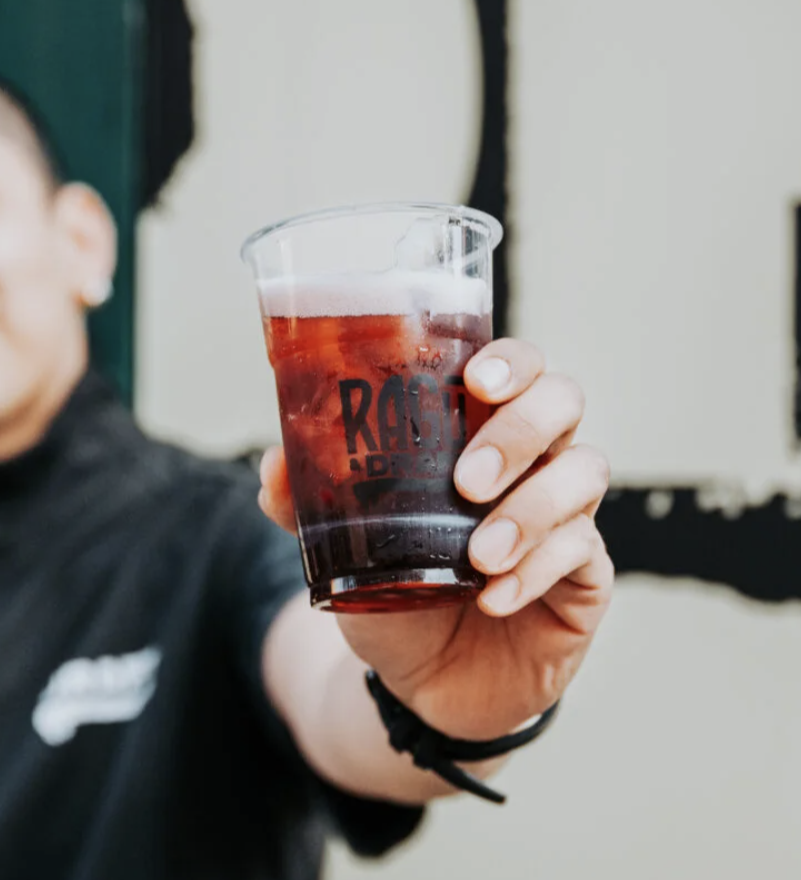
The Negroni Sospeso at Ragū&Draft
A well-made Negroni shouldn’t wait ten minutes behind a line. And it shouldn’t arrive unbalanced or served in a glass chosen just to be photographed.
Our draft cocktails also come from this: the desire to bring to the bar a drink prepared with care, quick to serve, and consistent from first to last.
It’s not a shortcut for an inattentive bar. If the recipe, dilution, and storage are well thought out, the tap is a serious way to work better.
Suitable for everything: from aperitivo to busy evenings, for those who want to relax, but with their legs under the table or elbows on the counter to unwind as soon as possible.
It’s not a shortcut for an inattentive bar. If the recipe, dilution, and storage are well thought out, the tap is a serious way to work better. It’s particularly suited to aperitivo, busy evenings, and those with little time but no intention of drinking something approximate.
What Is a Draft Cocktail
A draft cocktail is a pre-prepared, measured, and refrigerated mixture served through a system similar to draft beer. The drink is stored in a keg and pushed to the tap with a suitable gas, so it comes out at the right temperature and can be served in seconds.
Not all cocktails can be treated the same way. Drinks made from spirits, vermouth, bitters, liqueurs, and stable ingredients are ideal candidates. Think of an Americano, a Negroni, a Boulevardier, or an original recipe built around alcoholic bases and clarified components. Our cocktails have something others don’t: fresh unstabilized juices, fruit pulp, ingredients that change quickly and require more attention, normally with express preparation. That’s why our products are artisanal and genuine.
The difference is in the work before service. A traditional cocktail is built glass by glass. A draft cocktail is designed in advance: proportions are defined, the water needed for dilution is calculated, temperature and aromatic retention are controlled. The tap makes the final gesture, not the entire job.
Why Draft Works for Aperitivo
When the bar fills up, time matters. A good draft system reduces waiting without turning the drink into an anonymous beverage. The customer receives the same cocktail, at the same temperature, with the same recipe even when the place is full and the bartender is handling many orders at once.
There’s also a concrete advantage for those working: fewer repeated steps, fewer bottles open on the bar, less ice wasted during service. This doesn’t mean eliminating the craft. It means shifting it where it really matters: in researching the recipe, choosing raw materials, preparing, and daily monitoring of the system.
For those drinking, the tap can make aperitivo simpler. You order a recognizable drink, served quickly, and there’s more time for what counts: conversation, a plate of tortellini, a slice of lasagna eaten without rush. In Bologna, where aperitivo is often a natural transition between work, study, and dinner, this is no small detail.
Consistency Doesn’t Mean Standardization
The word “consistent” sometimes suggests something industrial. In cocktails, however, it can be a form of respect. If a recipe works, it should be good at 6:30 PM as well as 10:30 PM. It shouldn’t depend on a heavier or lighter hand, the rush of the moment, or how much ice is left in the bucket.
Of course, consistency alone isn’t enough. A cocktail can be perfectly replicable and uninteresting. That’s why the recipe comes before the technology: quality spirits, balance between sweetness, bitterness, and alcohol, garnishes that make sense and aren’t just decoration.
How to Properly Prepare a Draft Cocktail
Preparation requires precision. First you work on the recipe in small format, as you would for a classic cocktail. Then you move to keg quantities, maintaining proportions and deciding how much dilution to include in the mixture. This is the most delicate point: a drink served cold needs water to open the aromas, but too much water makes it flat.
Temperature is equally crucial. A cocktail that’s too warm loses clarity; one that’s excessively cold hides aromas and flavors. Constant refrigeration helps serve well without filling every glass with ice to the brim. Ice remains important, especially for drinks that should evolve slowly in the glass, but it stops being an improvised solution to disorganized service.
Gas isn’t a technical detail to leave to chance either. Depending on the cocktail and desired effect, you can use nitrogen, carbon dioxide, or a specific combination. Nitrogen can give a softer consistency and a dramatic cascade, while CO2 adds liveliness and bubbles. Not every recipe wants bubbles: forcing them onto a drink meant to be smooth would be a mistake, not an innovation.
Cleaning and maintenance complete the circle. Kegs, lines, and taps must be sanitized regularly. A neglected system can ruin even the most successful mixture. It’s work less visible than bar preparation, but it speaks to the same seriousness.
Less Glass, Fewer Unnecessary Transports
A well-organized draft system can reduce the use of single-serve bottles and glass related to beverage service. Kegs are refillable, concentrate more servings, and limit some of the packaging to manage. Transport can also become more efficient, because you’re moving containers designed to hold many servings rather than a large quantity of individual bottles.
It’s not a green magic wand. Sustainability depends on how you purchase ingredients, how long an open keg lasts, how the system is cleaned, and how many servings you actually manage to pour. However, when aperitivo volume is high and the system is well managed, the tap can cut concrete waste without asking customers to sacrifice quality.
It’s also a choice of space. Less glass on the bar means more orderly service, less bottle noise, and more attention to the glass arriving in front of whoever orders. It doesn’t seem revolutionary, but a clean bar works better. And a place that works better makes those inside feel better.
What to Expect in the Glass
A well-made draft cocktail should have personality. It shouldn’t taste like indistinct premix or have a random temperature. It should be balanced, clean, ready to drink. The garnish can be added at the moment, like a citrus peel expressed over the glass, a selected olive, or an aromatic element consistent with the recipe. Or it can be absent.
The glass matters, but it shouldn’t become an obstacle. For some drinks it’s right to use a tumbler with large ice; for others a wine glass or simpler glass can work. The shape influences aromas, temperature, and the way of drinking. The priority remains one: serving a cocktail that keeps what it promises until the last sip.
At Ragù & Draft, the idea of the tap meets that of food made fresh every day: original recipes, chosen ingredients, and service designed to accompany Bolognese cuisine without posing. A bitter and well-balanced drink can open the appetite; a fresher one can lighten a sandwich or a street food offering. No special effects are needed when the glass and plate speak the same language.
When to Choose Draft and When Not
Draft is perfect for stable recipes, frequent requests, and intense service moments. It’s less suitable when the value of the cocktail lies in an unrepeatable express gesture: freshly muddled herbs, citrus squeezed to order, fragile textures, preparations that live for only a few minutes. In those cases, the traditional bar remains the right choice.
There’s no war between classic cocktails and draft cocktails. There’s a more useful question: what’s the best way to serve this recipe, here and now? If the answer is a tap, it should be because it improves the drink and service, not because it’s trendy.
Next time you choose an aperitivo, look beyond the tap lever. Ask yourself if in the glass you find a thoughtful recipe, precise temperature, and a flavor that invites the next bite. Less show, more substance. And maybe, after the first sip, more ragù.