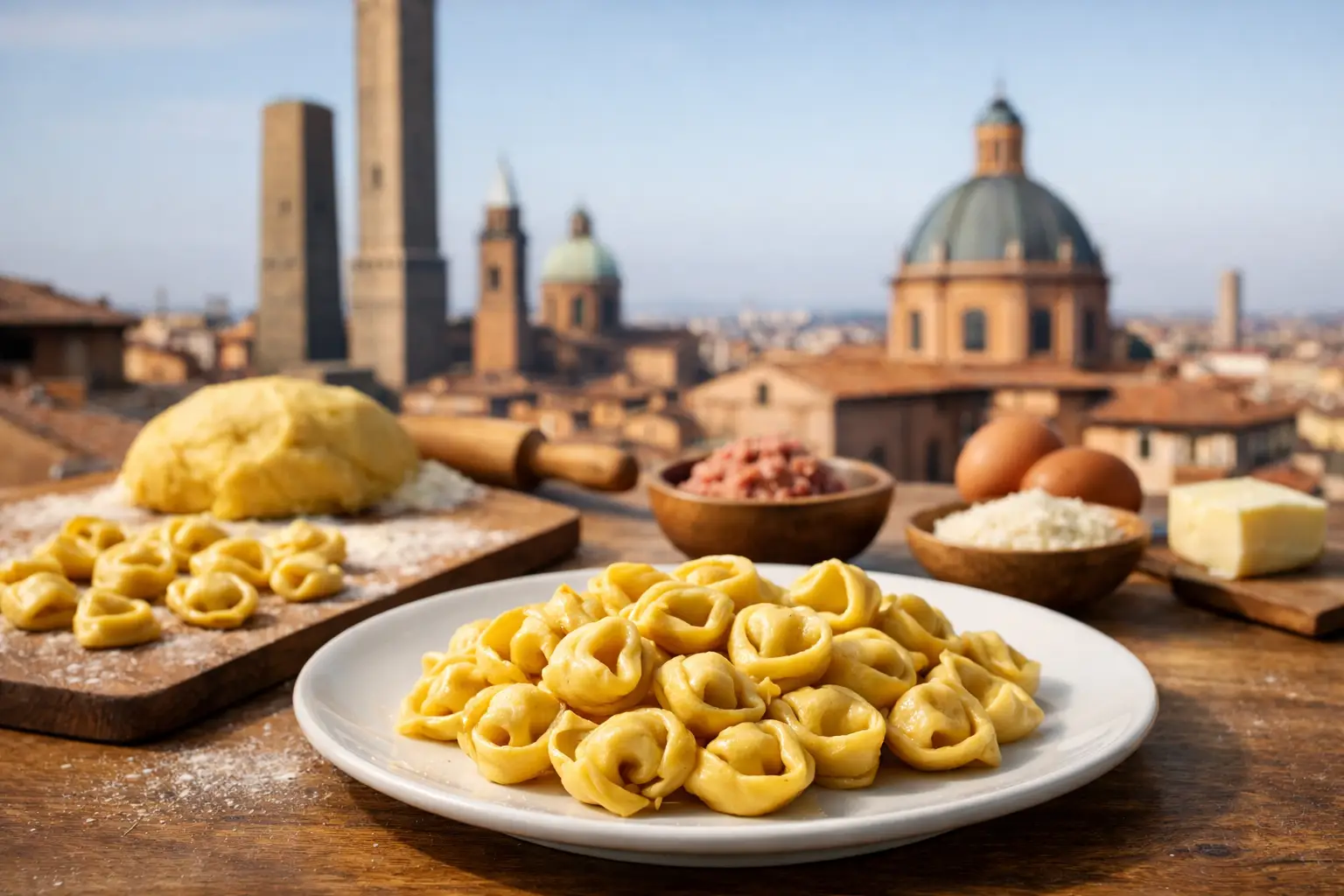
 At twelve-forty, in the center, Bologna is on the move: those leaving the office have little time, those visiting the city want to eat well, and students look for something truly filling. Searching for “tortellini Bologna centro” doesn’t just mean finding a typical dish near you. It means choosing whether to settle for just any pasta or to stop for tortellini with a specific history, a well-rolled dough, and a filling that speaks Bolognese.
The tortellino is neither a gastronomic souvenir nor a menu detail. It is a small but demanding shape. To do it well, you need skill, raw materials, time, and respect for a tradition that in Bologna needs no special effects. Less scenery, more substance. As we liked to say in 2017: less hashtags, more ragù.
Tortellini in downtown Bologna: the difference is in the hand
A tortellino done right is recognizable even before you taste it. The pasta sheet must be thin, elastic, and hold its shape during cooking without becoming mushy or opening up. It shouldn’t dominate the filling, but accompany it. When well-crafted, it remains present to the bite and leaves room for the full flavor of the inside.
Then comes the knot, what we in Bologna call naturally and what elsewhere often becomes just an imitated shape. It’s not a decorative exercise. The closure serves to protect the filling and give the tortellino 그 compact, round, unmistakable consistency. Every piece requires attention. Making many doesn’t change the rule: one by one, they must turn out well.
The traditional filling has character, but it shouldn’t be aggressive. Meat, cured meats, cheese, and aromas must come together without one ingredient overpowering the others. This is where the craft is felt: in the proportions, the grinding, and the resting of the mix. A written recipe is a starting point. The hand that executes it does the rest.
Not all tortellini should be eaten the same way
The most frequent question is simple: broth or parmesan cream? For Bologna, the historical answer is just as simple: the tortellino was born for broth. A well-made, clean, and fragrant broth enhances the pasta and the filling without covering them. It is the context in which the tortellino shows itself for what it is.
This doesn’t mean every lunch has to follow a long ritual. The city center lives by different rhythms. There are those who want a hot dish during their lunch break, those who stop by to pick up dinner, and those looking for something authentic to take home after a day under the porticos. In these cases, the service also counts: an artisanal preparation must arrive in the right container, with respected cooking times and clear instructions if the dish is finished at home.
Compromise isn’t choosing between tradition and convenience. Compromise happens when, to be fast, you give up on the quality of the pasta or turn a delicate dish into an anonymous portion. Takeaway done well solves a concrete need without making the work behind it disappear.
Broth is not an accessory
When talking about tortellini, broth is often treated as a liquid side dish. It isn’t. It must be built with the same care as the filling: flavorful, but not heavy; present, but not intrusive. A broth that’s too salty flattens everything. A weak one leaves the tortellino voiceless.
For those eating immediately, the dish must arrive hot and balanced. For those taking it away, it’s better to separate when necessary, so the pasta doesn’t keep absorbing liquid and lose its texture. These are practical details, but that’s exactly how flavor is defended.
What to look for when searching for tortellini in central Bologna
In an area full of signs and quick offers, choosing well requires fewer magic formulas than it seems. Looking at the dish is already a good start. Tortellini that all look identical, too shiny, or swollen can tell a story of standardized processing. Fresh pasta, on the other hand, has small natural differences: it’s the sign of a gesture repeated by hand, not a product without identity.
Transparency also counts. A serious place doesn’t need to invent vague traditions or use high-sounding words for a recipe it doesn’t know. It talks about the dough, the filling, the cooking, the broth. It can tell you what you’re eating and why it’s prepared in a certain way.
Freshness is another decisive point. The tortellino does not forgive distraction: if it sits too long, if it’s cooked poorly, or if it’s kept in the wrong conditions, the difference is felt immediately. The pasta loses its tension, the filling becomes muddled, and the dish stops being memorable. In the center, where everything is fast, true quality lies in not using speed as an excuse.
Finally, consider the occasion. For a quick lunch, you need portions designed to eat well without slowing down too much. For a dinner at home, you need products and instructions that maintain quality until they reach the plate. For those visiting Bologna, you need a real experience, not a simplified version of local cuisine designed only for those passing through once.
A living tradition, not a preserved one
Defending the tortellino doesn’t mean putting it under a glass dome. It means knowing its grammar well before deciding how to serve it to a contemporary city. Bologna is made of lunches on the go, shared tables, short breaks, improvised dinners, and people who want to take something good home without cooking from scratch.
Craftsmanship can fit within this rhythm. In fact, it must. A kitchen that prepares its own pasta, sauces, and bread can offer direct, accessible, and fast food without becoming soulless fast food. It’s the difference between eating in a hurry and eating badly: the first is an urban necessity, the second shouldn’t be.
At Ragù Bologna, this idea starts from Bolognese cuisine made every day and reaches the takeaway counter without disguises. The tortellini remain tortellini: small, full, to be treated with respect. Around them, the way they are experienced changes, because the days of those passing through the center change.
The pairing also carries weight
A plate of tortellini in broth asks for moderation. If you’re choosing a drink, it’s better not to try to overpower the dish with flavors that are too sweet, aromatic, or alcoholic. Water, a dry glass of wine, or a fresh, clean drink accompany it better than any pairing built to impress.
If, on the other hand, the tortellini are part of a larger dinner, they can open the meal with elegance and substance. There’s no need to add too much: a good stuffed pasta already has structure, fat, savoriness, and memory. The rest should leave room.
A small dish that asks for respect
The tortellino is one of the most direct ways to understand Bologna. Inside is the pasta of the homes, the patient work of hands, the idea that popular cuisine can be precise without becoming distant. It’s not a dish to be treated with nostalgia, but with attention.
Next time you’re hungry in the center, choose a place that lets the tortellino speak before the sign. If the pasta is fresh, the filling is balanced, and the service respects the dish until the last minute, even a short break can taste like home. Welcome home.