You don’t understand Bologna with a cone of fries in hand. You understand it with the aroma of ragù, with a thinly rolled sfoglia, with bread that holds a generous filling without giving in at the first bite. The best street food Bologna has to offer isn’t a copy of fast food: it’s Emilian cuisine done right, designed for those with little time but who don’t want to eat poorly or badly.
Here, fast food has a different measure. It can be lunch between classes, dinner to take home after work, something substantial to eat while walking through the city center. The speed of service matters, of course. But first come the raw ingredients, the skill in the kitchen, and respect for recipes that in Bologna aren’t a postcard costume.
Street Food Bologna: Not Just Sandwiches
When people talk about street food, they often think of dishes meant to be eaten while walking. In Bologna, the concept is broader and much more interesting. Even a portion of tagliatelle al ragù, a freshly cooked tortellone, or a lasagna served for takeaway can be street food, if they arrive in your hands hot, carefully prepared, and ready for the rhythm of the city.
The difference isn’t in the packaging. It’s in the fact that a dish maintains its identity outside the restaurant. Fresh pasta must stay al dente even on the journey to the office. Ragù must have depth, not be a sweet or overly liquid sauce. A sandwich must have character, not just volume.
That’s why Bologna is the right place for those seeking a quick lunch with a real story behind it. The city has a very strong culture of everyday eating: trattorias, markets, bakeries, delicatessens, and pasta workshops have taught that practicality and quality aren’t enemies. You just can’t take shortcuts.
Fresh Pasta Is the Real Bolognese Fast Food
Tagliatelle al ragù is the first test. Not because it’s the most photographed dish, but because it allows no pretense. The sfoglia must be porous, elastic, capable of catching the sauce. The ragù must cook with patience and speak of meat, vegetables, cooking juices. If tomato dominates, if the sauce covers everything, you’re off track.
For a quick lunch, a good portion of tagliatelle is often more satisfying than many seemingly light meals. It’s complete, recognizable, comforting. And if it’s truly made in-house, it doesn’t need special effects. Fewer hashtags, more ragù.
Tortellini and tortelloni also have a precise place in the city’s street food, but they require attention. Tortellini in broth are wonderful and better suited to cold months or an unhurried meal. Tortelloni, with fillings like ricotta, Parmigiano Reggiano, and vegetables, are a generous choice when you want something vegetarian without sacrificing substance. Not everything has to be eaten in ten minutes: good takeaway also offers the freedom to sit wherever you want and eat at your own pace.
Tigelle, Crescentine, and Bread: The Street Runs Through the Oven
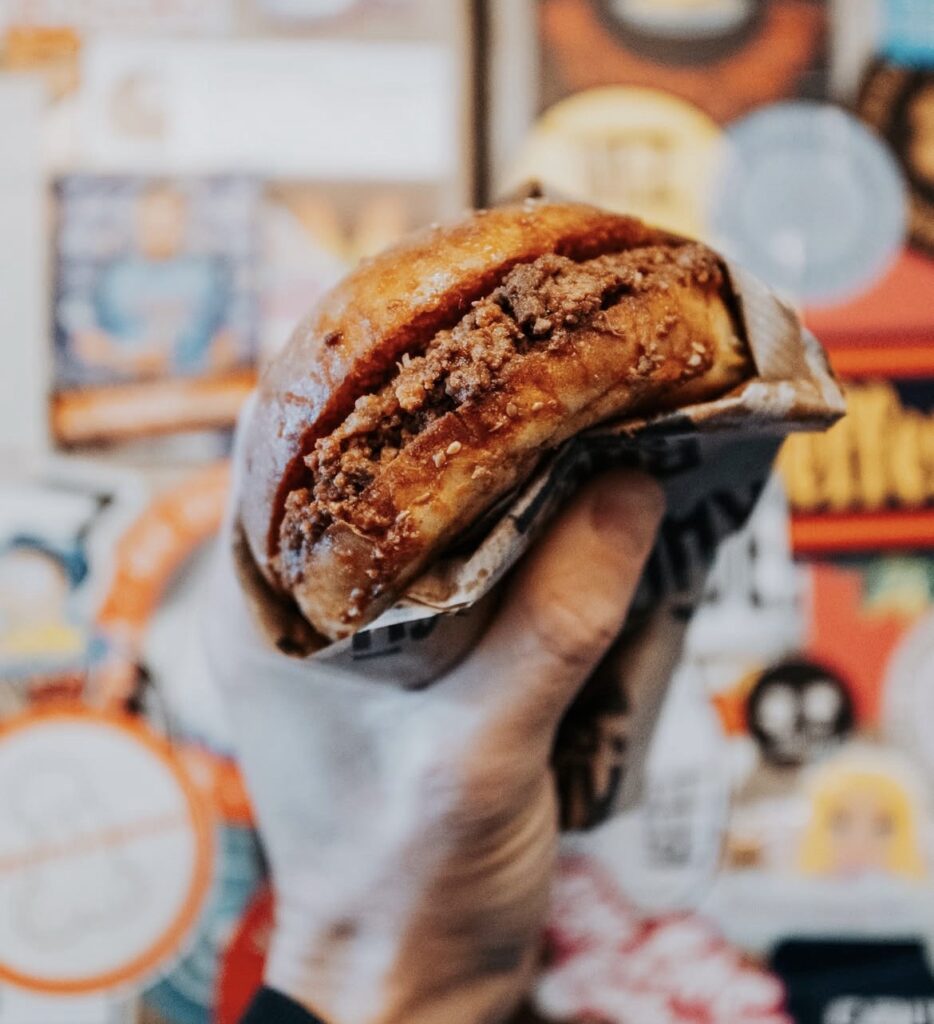
If you need something to hold in your hand, Bologna and Emilia have precise answers. Tigelle and crescentine are two neighboring but not identical worlds. Tigelle are small bread rounds, soft and warm, perfect for filling. Fried crescentine are more indulgent, fragrant, to be eaten immediately with cured meats, cheeses, and flavorful accompaniments.
Quality here shows in simple details. A well-worked dough has aroma, texture, and doesn’t sit heavy. The filling must be balanced: good mortadella, properly sliced cured meat, a cheese that doesn’t disappear, a sauce made in the kitchen and not randomly chosen from a shelf.
Bread deserves the same seriousness as pasta. It’s the first contact with the dish, the one that decides whether a sandwich stays intact or becomes a mess after two bites. When it’s done right, it supports meat, sauces, and vegetables without stealing the show. When it’s done poorly, no filling can save it.
Ragù to Eat Right Away or Take Home
A real advantage of Bolognese street food is that it can continue even after lunch. Ragù isn’t just a sauce to order: it’s a preparation to bring into the kitchen, to use for quick pasta, for a Sunday lasagna, or to save a midweek dinner without giving up the taste of home.
Taking away an artisanal sauce makes sense when it comes from a kitchen that truly prepares it, with timing and ingredients consistent with the recipe. It’s not the same as just any jar. It’s a practical way to have Bologna on your plate, even when you get home late or don’t feel like cooking from scratch.
At Ragù Bologna, the logic is exactly this: transforming homemade Bolognese dishes into a real takeaway meal, from fresh pasta with ragù to bread to preparations to take away. Not a preserved tradition, but a cuisine that lets itself be eaten every day.
How to Recognize a Place That Works Well
You don’t need to take a gastronomy exam before ordering. There are clear signs. The menu shouldn’t be endless: a few well-executed offerings are worth more than twenty interchangeable dishes. Seeing recognizable preparations, like fresh pasta, house-made sauces, and carefully prepared bread, is a good starting point.
The pace of service also matters. A place designed for takeaway shouldn’t force you to choose between quality and impossible timing. During peak hours there may be a wait, especially where they cook seriously. But precise organization, clear portions, and suitable packaging make all the difference when lunch is counted by the minute.
Then there’s the issue of price. Street food doesn’t have to be cheap at all costs. A dish of fresh pasta, well-selected meat, or a cocktail prepared with quality ingredients have a real cost. The point is receiving value: a proper portion, clear flavor, readable ingredients, and no shortcuts hidden behind a traditional name.
At Lunch, Aperitivo, Dinner: The Moment Changes
For the lunch break, fresh pasta remains an unbeatable choice if you want a dish that satisfies without leaving the feeling of having eaten something anonymous. If time is short, a well-made sandwich or a filled tigella can be more practical. It depends on where you need to go afterward and how comfortable you want to be.
At aperitivo, crescentine, small tastings, cured meats, cheeses, and drinks prepared with the same approach used in the kitchen come into play. A draft cocktail, if built with original recipes and serious ingredients, can be a smart choice: faster service, less glassware to handle, fewer unnecessary waste. Modernity doesn’t mean erasing tradition. It means making it work in today’s city.
At dinner, takeaway can become a real table. Lasagna, tortelloni, meat, bread, and a good sauce to save for the next day: it takes little to transform coming home into a better moment. Convenience, when done well, has nothing rushed about it.
Where Those Seeking Only the Famous Dish Go Wrong
Looking for the most famous specialty is normal, especially for those visiting Bologna for the first time. The risk is stopping at the name. The city offers much more than the usual list of dishes to check off: it offers gestures, textures, aromas, and habits that deserve attention.
Don’t order tortellini just because “you have to.” Ask yourself instead what you feel like eating, how much time you have, and whether you want to sit down or take something away. Tagliatelle al ragù might be the perfect choice one day, while a warm tigella is better suited to another. Eating local doesn’t mean following a script. It means choosing with judgment.
The best street food Bologna has to offer is the kind that makes you think, at the first bite, that the city had time to cook even if you didn’t. Look for real sfoglia, ragù made with patience, bread that smells of the oven. Then take the time you can: five minutes on a bench, twenty on a lunch break, dinner at home. Bologna will do the rest.