by | Aug 14, 2026 | Senza categoria
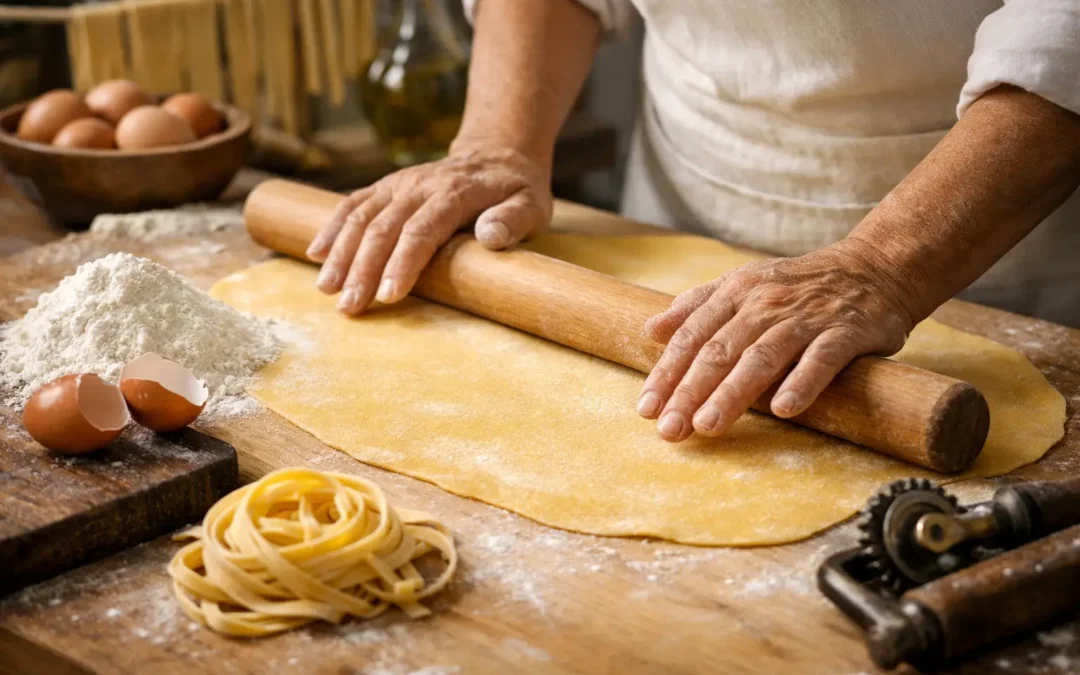
Handmade Bolognese pasta sheets aren’t just a backdrop for ragù. They’re the starting point for everything: tagliatelle that holds the sauce, tortelloni with a thin but present edge, lasagne that stands firm and doesn’t surrender at the first cut. In Bologna you recognize it before even tasting it: from the warm color of the egg, from the matte surface, from that lively texture that has nothing standardized about it.
Making pasta sheets requires few ingredients and plenty of attention. Flour, eggs, a work surface, and a rolling pin. The rest is hand, eye, and time. Fewer special effects, more precision.
What Makes Handmade Bolognese Pasta Sheets Special
The recipe seems essential precisely because it can’t hide mistakes. If the dough is too dry, the pasta breaks during rolling and cooks poorly. If it’s too soft, it sticks, loses structure, and struggles to hold the sauce. If the sheet is rolled unevenly, the same dish will have pieces that are overcooked and others still tough.
The best-known reference is one egg per 100 grams of flour, but it’s not written in stone. Eggs vary in size, the day’s humidity matters, flour absorbs differently. Those who make fresh pasta every day don’t just weigh: they look at the dough, feel it under their fingers, and adjust accordingly.
Flour matters too. Flour that’s too weak can make the pasta fragile; flour that’s too strong risks producing a tough sheet, difficult to roll and less delicate to bite. The choice depends on the format, the filling, and the desired result. For tagliatelle you need elasticity and hold, for tortellini you need a sheet that can close well without becoming thick.
Then there are the eggs. They’re not there to color the pasta like a well-filtered photograph. They’re there for structure, flavor, and texture. A rich yolk gives the sheet that natural yellow that changes slightly with the seasons and with the raw materials. That’s fine: handmade pasta doesn’t need to be identical every day, it needs to be good every day.
From Cutting Board to Rolling Pin: The Work You Don’t See
The flour well on the cutting board is a recognizable gesture, but it’s not enough to make tradition. The eggs must be incorporated gradually, gathering flour from the edges until you get a compact dough. At first it may seem rough, even uncooperative. That’s normal. The dough must be worked until the mass becomes smooth, elastic, and uniform.
This is where the real kneading comes in, done with the palm of the hand and with a repeated, firm movement, without rushing. It’s not about mistreating the dough: it’s about developing its structure. Kneading that’s too brief leaves an irregular dough; distracted kneading creates weak points that the rolling pin will reveal later.
Resting is part of the work, not an optional pause. After being kneaded, the dough needs to relax covered, so the moisture distributes and the dough’s network stops resisting. Rolling it immediately means fighting with a sheet that springs back. Waiting the right amount of time allows you to roll it with more precision and less working flour.
The rolling pin doesn’t simply flatten. It guides the dough from the center outward, rotates it, lengthens it, and thins it little by little. The sheet must remain even, but not sterile. A slight variation tells the story of the human gesture; a wrong thickness, however, shows up on the plate. They’re two very different things.
That’s why you don’t judge a pasta sheet only by how thin it is. For certain formats, pasta that’s too thin breaks during cooking or doesn’t support the filling. For others, a thicker sheet covers the flavor of the sauce. The right measure always depends on where that pasta needs to go.
Tagliatelle: The Right Width, The Right Roughness
Tagliatelle al ragù calls for an elastic sheet, dry on the surface and cut evenly. They shouldn’t be just any ribbons. Their width has a purpose: to catch the ragù and distribute it well with every forkful, without leaving the sauce at the bottom of the container.
The cutting must also be done at the right moment. If the sheet is too fresh, the strips tend to stick together; if it’s too dry, they break and lose softness. It’s a brief balance, to be caught. That’s why fresh pasta isn’t just a list of ingredients, but a sequence of correct timings.
Tortellini and Tortelloni: When Thickness Decides Everything
In filled formats the sheet has an extra responsibility. It must wrap the filling without falling apart, seal the edges well, and leave room for the internal flavor. A tortellino with heavy pasta tires the palate. A tortellone with a sheet that’s too fragile risks opening in the water, wasting the work done before.
Sealing requires confident hands and little excess moisture. If the edge is too wet, the pasta slips; if it’s dry, it doesn’t stick. These are details that only seem small. In a pasta workshop, they’re the details that separate a well-made format from one that needs redoing.
How to Recognize Good Fresh Pasta on the Plate
You don’t need to be a pasta maker to tell if the pasta in front of you has been treated well. Just observe and taste with a bit of attention. Good pasta sheets have a clear aroma of egg and flour, not a flat or overly floury smell. After cooking they remain soft but not limp, with a full and clean bite.
The sauce should cling, not float. In the case of ragù, this means the pasta shouldn’t be shiny as if it had been forcibly oiled, nor completely smooth. A slight natural roughness helps the sauce stay where it belongs: on the tagliatelle.
Watch the color too. A yellow that’s too bright and perfectly uniform isn’t always a virtue. Artisanal pasta sheets change based on the eggs and the processing. What matters more is their texture: they should have character, not look like a film without memory.
The final test comes a few minutes after serving, especially with takeaway. Well-made pasta must maintain dignity even during the trip home or to the office. It won’t be identical to pasta eaten freshly drained, because heat and sauce continue to work, but it shouldn’t turn into a soft mass. That’s why how it’s dressed, portioned, and packaged also matters.
Fresh Pasta Sheets Aren’t Nostalgia
Talking about Bolognese pasta sheets doesn’t mean putting tradition under a glass dome. It means bringing into the present a method that works: recognizable ingredients, daily preparation, formats designed for their sauce, and attention to every step.
In Bologna, this culture fits perfectly into a quick lunch break, a dinner taken home, or an aperitivo that calls for something more than a distracted snack. At Ragù Bologna, fresh pasta comes from exactly this idea: local cuisine done right, ready to follow the city’s rhythm without becoming impersonal food.
Next time you choose a plate of tagliatelle, don’t stop at the amount of ragù. Look at how the pasta supports it, taste the edge, feel if the bite stays lively. That’s where a pasta sheet tells the story of the work done before. And when it’s done well, it doesn’t need to raise its voice: one forkful is enough.
by Marco Vastola | Aug 13, 2026 | Senza categoria
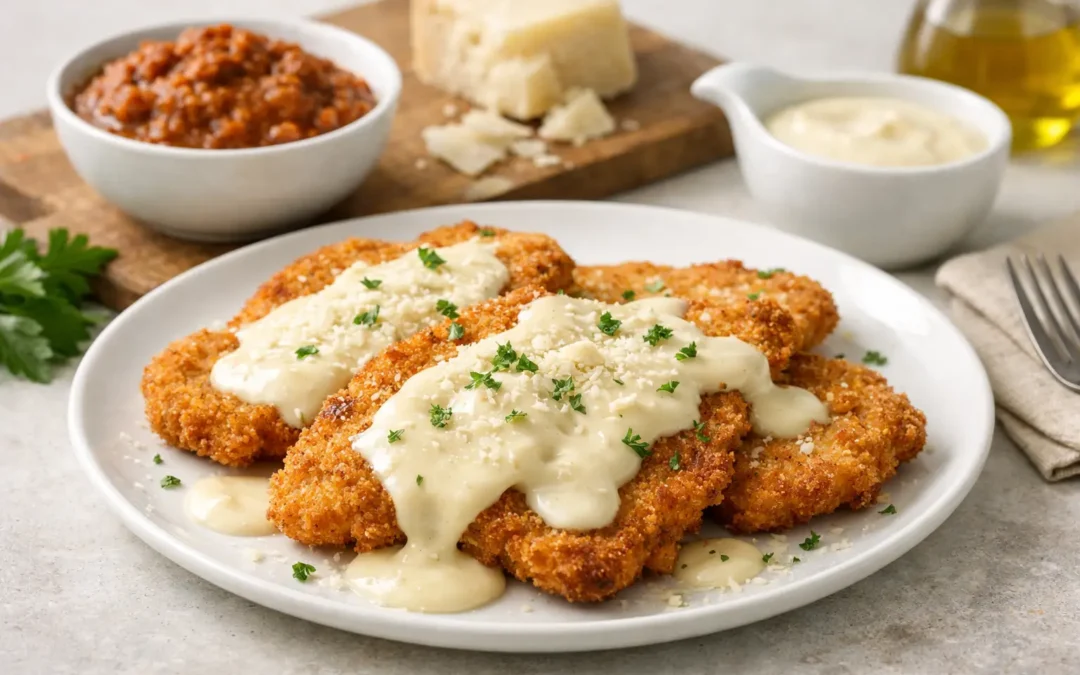
Cotolettine with Parmigiano cream from Ragù Bologna aren’t a second course to eat absentmindedly between one thing and another. They’re the clean crunch of breading under your teeth, the tenderness of the meat, and that warm, savory, enveloping cream that tastes of Emilia without needing special effects. A recipe that’s simple only in appearance, made for those who want to eat well even when time is short.
Cutlets are appealing because they’re straightforward. They don’t ask for explanations, don’t follow trends, don’t need to convince anyone. But a properly made cotolettina requires precision: the right cut, well-adhered breading, controlled cooking, and a topping that accompanies without covering. Parmigiano Reggiano cream does exactly that. It brings depth, roundness, and that unmistakable character that in Bolognese cooking isn’t a detail.
Cotolettine with Parmigiano Cream: The Strength Lies in Balance
The risk with a dish like this is overdoing it. A cream that’s too thick weighs down the breading; one that’s too thin soaks it until it loses its crispness. Even the cheese needs to be measured with respect: Parmigiano Reggiano has intensity, structure, and a natural savoriness that doesn’t need to be pushed further.
Balance comes from contrast. On one side there’s the golden cotolettina, with dry, fragrant breading. On the other there’s the cream, smooth and warm, resting on the meat without hiding the work done before. The result shouldn’t be heavy: it should be generous, yes, but clean on the palate.
Size matters. Cotolettine have a different rhythm compared to the classic large cutlet: they’re more practical, easier to share, perfect for a quick lunch or an informal dinner to take home. One leads to another, but they’re not a snack without identity. They’re substantial cooking in an urban format.
Breading Isn’t a Side Note
When talking about cutlets, the first attention often goes to the meat. Fair enough, but the breading deserves the same respect. It must protect, not smother. It must stay adhered during cooking and create a golden surface, never a hard, greasy shell.
The point is finding a crust that holds the bite and leaves room for the meat. If it’s too thick, everything tastes of breadcrumbs. If it’s too thin or poorly cooked, it detaches and loses its function. Good breading is a matter of technique and timing, not luck.
Temperature also makes a difference. Rushed cooking can leave the cutlet pale and loaded with oil; excessive cooking dries out the meat and stiffens the crust. The right golden color has a vibrant hue, a clean aroma, and a texture that remains pleasant until the last bite.
Parmigiano Reggiano Cream: Soft, Not Intrusive
A well-made Parmigiano Reggiano cream shouldn’t resemble a shortcut. It’s not simply melted cheese poured on top. It’s a sauce built to have a velvety consistency, to adhere to the cotolettina and leave in your mouth the taste of milk, aging, and Emilian cooking.
Parmigiano Reggiano brings umami, that savory fullness that extends the flavor without making it aggressive. That’s why it pairs well with meat and breading: it gathers the toasted notes of the crust and accompanies them with a creaminess that makes you want to mop up. Here bread also has its role, better if made with care and used without haste.
Not all creams need to be identical. The aging level of the cheese changes the result: a younger Parmigiano tends to be sweeter and more milky, a more aged one has bolder notes and a more pronounced savoriness. There’s no single right choice. It depends on the cut of meat, the type of breading, and the character you want to give the dish.
A Dish That Really Works for Takeaway
Takeaway doesn’t forgive approximations. A dish can be excellent when just served and arrive home without strength, especially when there’s a crispy component. Cotolettine demand attention even in packaging: they need to be protected from steam and condensation, otherwise the breading quickly loses its best part.
That’s why the cream needs to be managed carefully. Serving it in the right amount lets you immediately savor the contrast between hot, creamy, and crispy. If you want to preserve the breading’s crispness longer, the smartest choice is to add it little by little, without drowning everything from the start.
At home a simple gesture is enough to enjoy the dish at its best: arrange the cotolettine on the plate as soon as possible, distribute the cream, and eat them while they’re still hot. No need to turn dinner into a complicated ritual. You just need to not wait too long. Crispness has its timing, and it must be respected.
When to Choose Cotolettine
They’re a concrete answer to many different hungers. They work well at lunch when tagliatelle can wait for a longer evening, they work for a dinner on the couch that doesn’t want to be sad, and they lend themselves to being shared during an aperitivo with something well-made to drink. The format helps: it’s convivial, immediate, with no dishes to build at the table.
Alongside a fresh side dish, cotolettine find a nice counterpoint. A vegetable component, slightly acidic or crunchy, lightens the cream and rebalances each bite. If instead the hunger is serious, bread is the natural companion: it collects what remains on the plate and closes the circle without shame.
The drink pairing also depends on the occasion. A fresh, dry beverage cleans the palate from the creaminess of the Parmigiano; a well-balanced drink, with a bitter or citrus note, can give the dish a more contemporary step. No rigid rules, though: the criterion is simple. Drinking should accompany the food, not show off.
Tradition, But with the City’s Pace
In Bologna, home cooking isn’t a pose. It’s concrete memory: a well-rolled sheet of pasta, a ragù that requires time, a hand-closed tortellino, a sauce made with patience. Cotolettine with Parmigiano cream speak the same language, even if they choose a faster, more immediate format.
This is the interesting part: tradition doesn’t mean repeating the same gesture in the same way every time. It means knowing the fundamentals and taking them where they’re really needed. On a full day, between classes, offices, walks downtown, or late returns, eating well must remain possible. No need to make everything complicated to make it authentic.
Cotolettine with Parmigiano cream are this: a recognizable recipe, built with respect and served without theater. Crispy when they need to be, creamy at the right point, ready to bring order to hunger. Fewer effects, more flavor. And when a bit of cream remains on the plate, bread isn’t optional: it’s common sense.
by Marco Vastola | Aug 11, 2026 | Senza categoria
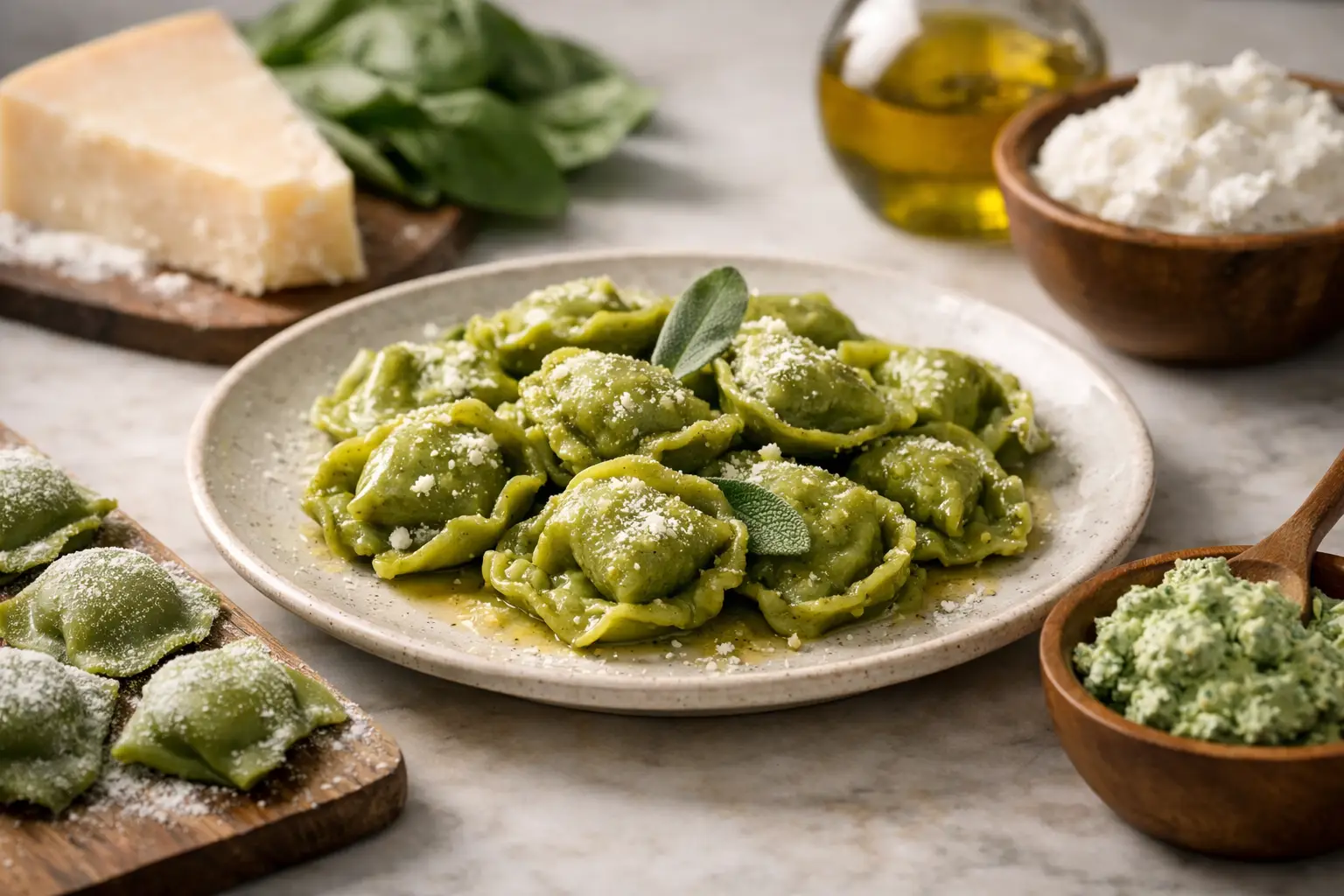 Balanzoni are not a shortcut in the Bolognese repertoire. They are generous filled pasta, green in dough and full of character: a dish that calls for good ingredients, skilled hands, and the desire to eat slowly. In a city that often talks about tortellini and tagliatelle al ragù, they deserve a precise place at the table.
What Are Balanzoni
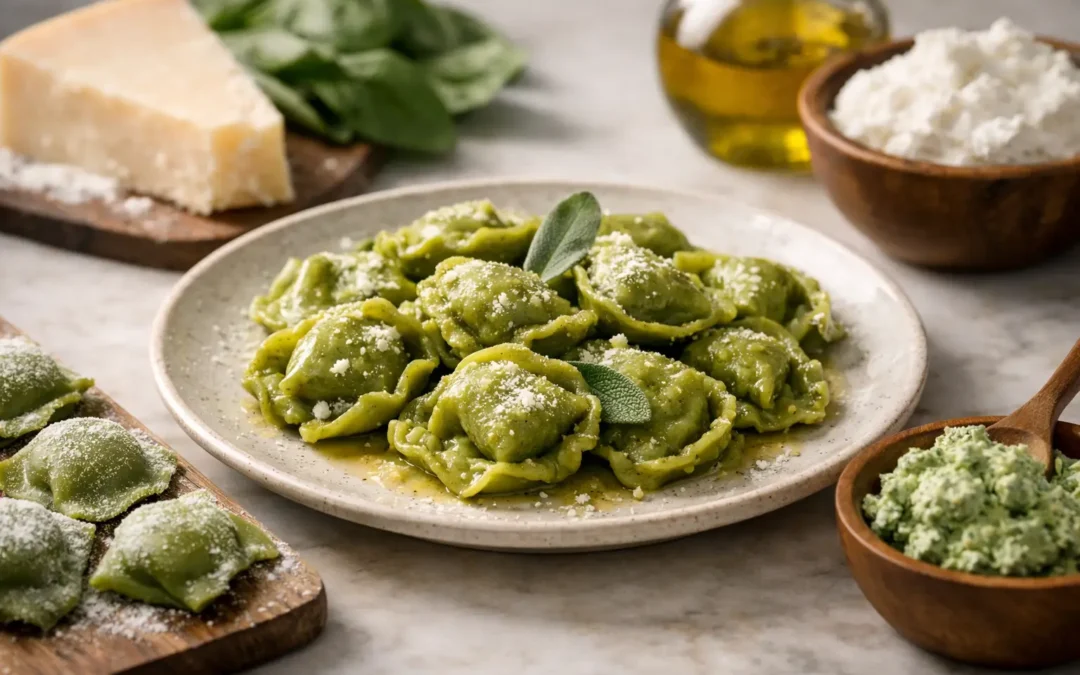
Balanzoni are a fresh filled pasta from Bolognese tradition, recognizable even before the first bite. The green dough, traditionally made with spinach, holds a soft and flavorful filling in which ricotta, mortadella, Parmigiano Reggiano, and eggs find a very Emilian balance: dairy, cured meat, aged cheese, and pasta-making craft.
The shape often resembles a large tortellone, sealed in a half-moon or with folded edges. There is no single mandatory fold, because home cooking has never needed uniforms. What cannot be missing is proportion: enough dough to hold the filling, but not so much as to cover its flavor.
Their name recalls Balanzone, the Bolognese mask from Commedia dell’Arte. Pompous doctor, full belly, abundant speech: a perfect reference for a pasta that does not try to be minimal. Balanzoni arrive on the plate without making a scene, but they do not go unnoticed.
A Tradition That Leaves Room for Variations
As with many local dishes, claiming a single recipe for balanzoni would be dishonest. Proportions change between families, sfogline, and professional kitchens. Some prefer a drier ricotta, some increase the Parmigiano for a more assertive filling, some use mortadella with a light hand and others make it the star.
The origin is often traced back to 20th-century Bologna and the desire to create a green, festive, and recognizable filled pasta. But in the kitchen what matters most is what the dish continues to say today: local ingredients, intelligent recovery of traditional knowledge, and no need for special effects. Less posing, more substance.
The Green Dough Is Not a Detail
In balanzoni, the green is identity, not decoration. The spinach must be cooked, carefully squeezed, and finely chopped before entering the dough with flour and eggs. If it releases too much water, the dough becomes difficult to roll out and risks breaking during cooking. If there is too little, the color remains timid and the flavor disappears.
A good green dough must be elastic, thin, and resistant. These are three qualities that must coexist. Rolling it too thick leads to a heavy bite, especially with such a rich filling. Rolling it too thin can make it give way in boiling water. The sfoglina’s hand serves precisely this purpose: understanding the dough by touch, not just following a number written in a notebook.
The color can vary from bright green to a darker shade. It is not an automatic defect. It depends on the spinach, its moisture, and the resting of the dough. Seeking an artificially bright green would be a mistake: here you are not eating a photograph.
The Filling: Rich, but Never Confused
The heart of balanzoni is balance. Ricotta, mortadella, and Parmigiano Reggiano are intense ingredients, but they must speak to each other without overpowering one another. Fresh, well-drained ricotta gives creaminess; mortadella brings aroma and roundness; Parmigiano Reggiano adds savory depth. The egg binds the mixture, while nutmeg and pepper can complete it with discretion.
The most common risk is a filling that is too wet. In that case the seal does not hold, water gets in, and the pasta falls apart. The other risk is the opposite: a dry, compact, almost dry and dense mixture. The right filling must remain soft after cooking and have a full consistency, not mushy.
Mortadella deserves a separate note. It must be chosen well and worked carefully, without turning it into an indistinct cream. It must be present in the aroma and flavor, not become the only voice of the dish. In balanzoni, richness does not come from accumulation: it comes from harmony.
The Size Changes How You Eat Them
A large balanzone can be satisfying, but it requires flawless dough and precise cooking. Smaller pieces are convenient to serve and easier to manage, especially when the dish needs to travel or arrive home still at the right point. It is not a question of the best size in absolute terms. It depends on the occasion, the sauce, and how much filling you want to taste in each forkful.
For a quick lunch, a well-calibrated portion avoids that heaviness often attributed to filled pasta without reason. For a family dinner or a holiday table, however, the more generous balanzone has every right to take up space.
How to Dress Balanzoni Without Covering Them
The most natural dressing is melted butter and sage. It is simple only in appearance: the butter must be fragrant without browning too much, the sage must release aroma without becoming bitter. A sprinkle of Parmigiano Reggiano at the end completes the dish and leaves the filling in the leading role.
A light Parmigiano cream can also work, especially if the dough is thin and the filling has delicate mortadella. Here caution is necessary: a sauce that is too thick or too salty flattens everything. Balanzoni already have their own voice, they do not need a megaphone.
Bolognese ragù, as beloved as it is, is not always the most suitable choice. It can be a delicious variation, but it shifts the center of gravity of the dish and tends to cover the ricotta and the green of the dough. If you want to try it, better a well-balanced ragù, not overly concentrated, and a measured amount. Tradition is not fragile, but it must be treated with respect.
Cooking and Serving: A Few Minutes That Count
Fresh balanzoni should be plunged into plenty of salted water that simmers steadily. Too aggressive a boil can open the seals and knock the pasta against the pot. When they rise to the surface it does not always mean they are ready: the time depends on the thickness of the dough and the size of the format.
They should be drained gently, better with a slotted spoon than with abrupt movements, and immediately tossed in the sauce. Waiting too long makes them dull and dries out the surface. Filled pasta does not like unnecessary pauses.
At home, the advice is the same as for any good fresh takeout pasta: organize plates, sauce, and water beforehand. Do not leave the package on the table while deciding what to do. The work of the kitchen reaches the door, then the final minutes are in the hands of whoever serves.
Why Balanzoni Still Speak of Bologna
Balanzoni tell a less stereotypical but deeply true Bologna. There is hand-rolled dough, spinach, mortadella, Parmigiano Reggiano, and that Emilian ability to transform concrete ingredients into a dish that feels festive without becoming pretentious.
For those who live in the city, they are a way to change from the usual lunch without giving up something done well. For those who visit, they are a choice that goes beyond the most photographed dish. At Ragù Bologna we believe that local cuisine should remain everyday, accessible, and precise: tradition matters when it truly ends up on the fork.
Next time you are looking for a full Bolognese flavor, look beyond the sauce and start with the dough. If it is green, thin, and holds a filling made properly, you are already on the right track.
by | Aug 10, 2026 | Senza categoria
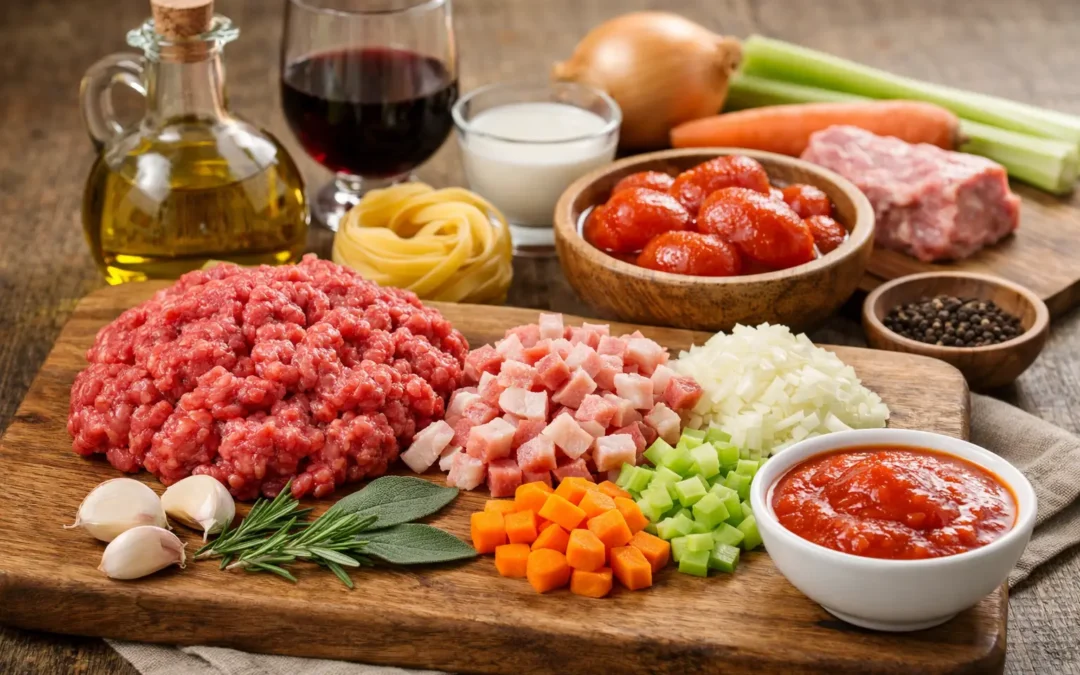
In Bologna, ragù is not a simple meat and tomato sauce. It’s a slow preparation, built in layers, that must smell of soffritto, well-browned meat, and patience. The ingredients of traditional ragù are few, but each has a precise role: changing one, overdoing another, or rushing the timing can shift the result far from that full, familiar flavor we know well.
The point is not to chase a rigid laboratory formula. Ragù changes slightly from one kitchen to another, as happens with all recipes that live in homes and trattorias. But there are foundations that are not up for debate: meat, vegetables, fat, wine, tomato used with restraint, milk, and a long cooking time. Less hashtags, more ragù.
Traditional Ragù Ingredients
Bolognese ragù starts with the soffritto, not the tomato. Celery, carrot, and onion are finely chopped and cooked gently in a fat that can provide depth. Fresh pancetta, ground or knife-chopped, is an important presence: it brings savoriness, roundness, and that tasty foundation that oil alone cannot reproduce in the same way.
Then comes the ground beef. The best choice is not meat that’s too lean: a grind with the right amount of fat stays softer after hours of cooking and develops a fuller flavor. In many traditional preparations, a cut of beef for braising or a front portion is used, ground not too finely. Dry meat produces dry ragù, even if the sauce seems plentiful.
The essential ingredients, in a Bolognese kitchen, are these:
- ground beef and fresh pancetta;
- celery, carrot, and onion for the soffritto;
- wine, broth, and a small amount of tomato;
- whole milk, salt, and pepper.
Depending on the cook’s hand, a bit of tomato paste may appear in place of some of the passata. There’s no need to turn the pot into a vegetable garden: the tomato should bind, color, and provide slight acidity, not cover the meat. A bright red, very liquid ragù can be good, but it tells a different story.
The Soffritto: The Base You Don’t See, But You Taste
Celery, carrot, and onion must be present without being recognizable as chunks on the plate. The fine cut is a matter of balance, not aesthetics. When the vegetables cook slowly, they release sweetness and moisture, building the foundation on which the meat can brown without burning.
Rushing here has a price. If the heat is too high, the onion takes on an aggressive taste and the carrot tends to caramelize unevenly. If instead the soffritto stays too pale, the ragù loses depth. You need medium-low heat and an attentive eye: it should soften, become fragrant and glossy, not fry noisily like a cutlet.
The pancetta goes in early, to melt some of its fat and coat the vegetables. Its job is not to dominate. A ragù that tastes only of pancetta is heavy, just as one without pancetta can feel a bit flat. Proportions matter more than dietary trends: if you decide to reduce the fat, you have to accept that the result will have a different character.
Browned Meat, Not Boiled
The meat should be added when the base is ready and the pot can support it. It should be broken up and allowed to truly brown, without immediately adding liquids. This step creates the most intense flavor of the ragù: the meat loses water, changes color, and develops toasted notes that cannot be recovered later.
A pot that’s too small is a common mistake. If you pack in too much meat, the temperature drops and the ground meat cooks in its own steam. Better to use a wide pot, or work in two batches when the quantities are generous. It’s not a dramatic gesture, it’s practical cooking.
After browning, the wine serves to deglaze the pan and add lift. White or red? Both choices have a history in Emilian kitchens. White keeps the profile cleaner and more direct; a light red can add a darker note. What matters is letting the alcohol evaporate well before continuing: the wine should remain as aroma, not as a sharp edge.
Tomato and Milk: Little of the First, Just Right of the Second
Here traditional ragù distinguishes itself from many meat sauces. Tomato is not the star. Passata, strained peeled tomatoes, or concentrate should be used with restraint, according to the density and sweetness of the product. An excessive amount takes the ragù toward a tomato sauce with meat, while the Bolognese character comes from the opposite balance.
Milk, added during cooking or toward the end depending on habit, softens the acidity and makes the base more harmonious. It shouldn’t turn the ragù into a cream or leave an obvious milky taste. It’s a bridging ingredient, like good pasta dough: when it’s done well, it doesn’t demand attention but changes the whole experience.
Broth also has a precise function. It’s poured in a little at a time, only when the ragù dries out too much. The goal is not to thin the sauce, but to allow the meat to cook slowly while maintaining controlled moisture. Water, broth, and tomato are not interchangeable: each brings its own intensity.
Time Is Part of the Recipe
A ragù doesn’t improve because it’s forgotten on the stove. It improves because it cooks gently, monitored and stirred when needed. Two hours can be enough for a good home preparation; three hours, over very gentle heat, allow the meat to yield and the flavors to blend with greater precision. It depends on the quantity, the pot, the grind, and how much liquid was used at the start.
The right signal is not the clock, but the consistency. The ragù should be thick, glossy, and coating. It shouldn’t float in liquid, nor reduce to a dry mixture. When you lift it with a spoon, it stays compact but not stiff. It’s that density that allows it to embrace the tagliatelle and build distinct layers in lasagne.
Resting helps. Like many meat sauces, ragù often becomes even more balanced the next day, when the fat and aromas have settled. It should be cooled properly and stored in the refrigerator, then reheated gently with a splash of broth or water if needed. Aggressive reheating risks separating it and drying out the meat.
What to Leave Out of the Pot
Garlic, chili pepper, basil, oregano, and intrusive spices are not necessary for traditional Bolognese ragù. They’re not wrong ingredients in absolute terms: they simply shift the dish toward another language. The same goes for smoked cured meats, ready-made sauces, and sugar used to correct overly acidic tomato. If sugar is needed, it almost always means revisiting the quality of the tomato or the cooking time.
Also be careful with cheese inside the ragù. Parmigiano Reggiano has a magnificent place on the plate, especially on tagliatelle, but it’s not essential in the pot. Its flavor should arrive fresh at the moment of eating, without confusing the reading of the meat and soffritto.
From Pot to Plate
Traditional ragù doesn’t call for just any pasta. Fresh tagliatelle is its natural companion: porous, elastic, able to hold the sauce without leaving it at the bottom of the bowl. For lasagne, the ragù must be even more well-bound, because it will need to work together with béchamel, pasta sheets, and cheese without making the layer soggy.
At Ragù Bologna we prepare it the way it should be prepared here: starting from the kitchen, not from a shortcut. It’s a difference you can taste in a quick lunch, in a dinner brought home, or in a jar kept ready for when you need a proper dish.
If the ragù is made with chosen ingredients and respected timing, it doesn’t need special effects. Just heat it carefully, dress the pasta the right way, and sit down at the table: Bologna, for a moment, is already there.

by | Aug 8, 2026 | Senza categoria
An aperitivo full of empty bottles is a bit of an urban paradox: you’re looking for a light moment, but behind the bar there’s glass to manage, cardboard, deliveries, and fragmented stock. Sustainable cocktails on tap were born for this too. They aren’t a shortcut or a trendy bar trick: if designed well, they allow for original drinks to be served with less packaging, less handling, and more consistency in the glass.
The decisive word, however, is “well.” A cocktail on tap doesn’t become sustainable just because it comes out of a faucet. The recipe matters, the way it’s prepared and stored matters, and the supply chain of the chosen products matters. And above all, it matters that the result stays good: fresh, balanced, and recognizable.
Why a draft cocktail is more sustainable
A cocktail on tap is a pre-prepared mixture, precisely measured and served from a dedicated system. Instead of opening, measuring, and pouring different ingredients for every order, the bartender works with a recipe that’s already balanced, kept in the right conditions, and ready to serve.
The most obvious advantage is the reduction of single-use or returnable glass passing through the venue: the same mixture can be managed in a keg instead of through many individual bottles. Added to this is simpler logistics. Fewer packages to receive, less warehouse space occupied, and fewer trips related to repeated products and packaging.
But sustainability doesn’t just mean waste. It also means making better use of what you buy. When a recipe is designed for the tap, quantities are controlled and the portion remains consistent. Dosing errors and product wasted during service are reduced. In a place where the aperitivo has a fast pace, this precision makes a real difference.
The tap isn’t enough: quality starts with the recipe
The risk with cocktails on tap is simple: turning a good idea into an anonymous drink. A pre-mixed drink can’t rely on the theatrical flair of the moment to make up for a weak recipe. It has to work beforehand, in the glass, sip after sip.
That’s why not all cocktails are equally suitable. Recipes with a clear structure, stable ingredients, and a good aromatic component hold up better to being prepared in advance. A bitter aperitivo, a fresh highball, a well-calibrated citrusy cocktail, or a house recipe with infusions and cordials can give excellent results. Drinks that depend on fresh ingredients, like certain freshly muddled herbs, delicate juices, or very fragile textures, require more attention or traditional service instead.
Then there’s the issue of dilution. In a cocktail prepared on the spot, water and temperature enter the recipe through ice and mixing technique. With a tap, that step has to be thought out beforehand. If it’s wrong, the drink ends up too concentrated, too watery, or lacking punch. If it’s right, the speed of service takes nothing away from the cocktail’s character.
A good system doesn’t automatically make a drink good. A good recipe, however, can make the tap system a precise and smart choice.
Less glass, less transport, less waste: where the advantage shows
Talking about sustainability in a bar without making easy promises requires honesty. The keg doesn’t erase the environmental impact of spirits, ice, energy for cooling, or the farming of raw materials. But it can improve several daily steps that, put together, really carry weight.
The first is packaging. Serving a recipe from a keg allows for limiting the number of bottles handled for the finished product. The second is transport: when supply management is more concentrated and less dispersed, the volume and frequency of some deliveries are reduced. The third is operational waste, because repeatable dosing avoids over-pouring, improvised tests, and forgotten dregs at the bottom of bottles.
Work at the bar changes too. During busy times, a well-designed cocktail on tap arrives in seconds and with the same balance as the first order. It’s not just a matter of speed: it means less waiting for those with a tight lunch break, a pre-dinner drink to squeeze in, or a table to get to. Quick service can be done with care. In fact, when the preparation has been done with care beforehand, it’s much more so.
Sustainable doesn’t mean standardized
There’s a understandable distrust toward anything that appears industrial. In the kitchen, as at the bar, the idea of “ready-made” can evoke soulless products. But preparing in advance isn’t the same as producing without care. A hand-rolled pasta dough takes time before service; a properly made ragù cooks for hours before reaching the plate. The value isn’t in improvisation, but in work done well.
The same goes for a cocktail on tap. The artisanal part can be in the choice of spirits, in building a syrup, in an infusion, in the search for the correct acidity, and in the tests necessary to find the balance. The tap is only the final gesture. Behind it, there’s a recipe that must have a signature.
At Ragù & Draft, this is exactly the idea: to accompany a cuisine that speaks Bolognese with original cocktails on tap, prepared with premium ingredients and homemade components. Not to complicate the aperitivo, but to make it more direct, more consistent, and less burdened with useless glass.
What to ask when you choose a drink on tap
You don’t need to know about valves, pressures, and technicalities to drink well. Just use the same curiosity you’d have for a plate of tortellini or a lasagna: ask what’s inside and how it was conceived.
A clear answer should tell you the base of the drink, its profile — whether it’s bitter, citrusy, dry, or smooth — and the type of service. If the venue can explain the recipe without hiding behind vague words, it’s a good sign. So is finding a clean glass, proper ice, and a garnish that makes aromatic sense and isn’t just decoration.
It’s also worth asking if the preparations are made in-house. A cocktail on tap can be excellent with a good ready-made mix, but a place that builds its own bases has more room to express identity. And identity, at the bar, can be felt: in a well-dosed bitter, in the scent of real citrus, in a herbal note that doesn’t overpower everything else.
Food pairing changes the aperitivo
A sustainable drink makes more sense when it’s part of a complete experience, not when it remains an isolated accessory. A bitter and fresh cocktail can cleanse the palate alongside well-sliced mortadella or a rich sandwich. A citrusy and dry profile goes well with fried foods and street food. A recipe with smoother and spicier notes can stand next to meats and sauces with a significant structure.
There are no mandatory pairings. It depends on the time, how hungry you are, and how much you want to let the dish take center stage. But choosing a drink with the same attention dedicated to the food changes the rhythm of the break: you don’t drink something “just because,” you build an aperitivo that makes sense.
Next time you see a tap dedicated to cocktails, don’t just think about speed. Ask yourself what’s behind it: a well-made recipe, less glass to manage, more precise service. If the answer is in the glass, you’re in the right place.
by | Aug 7, 2026 | Senza categoria
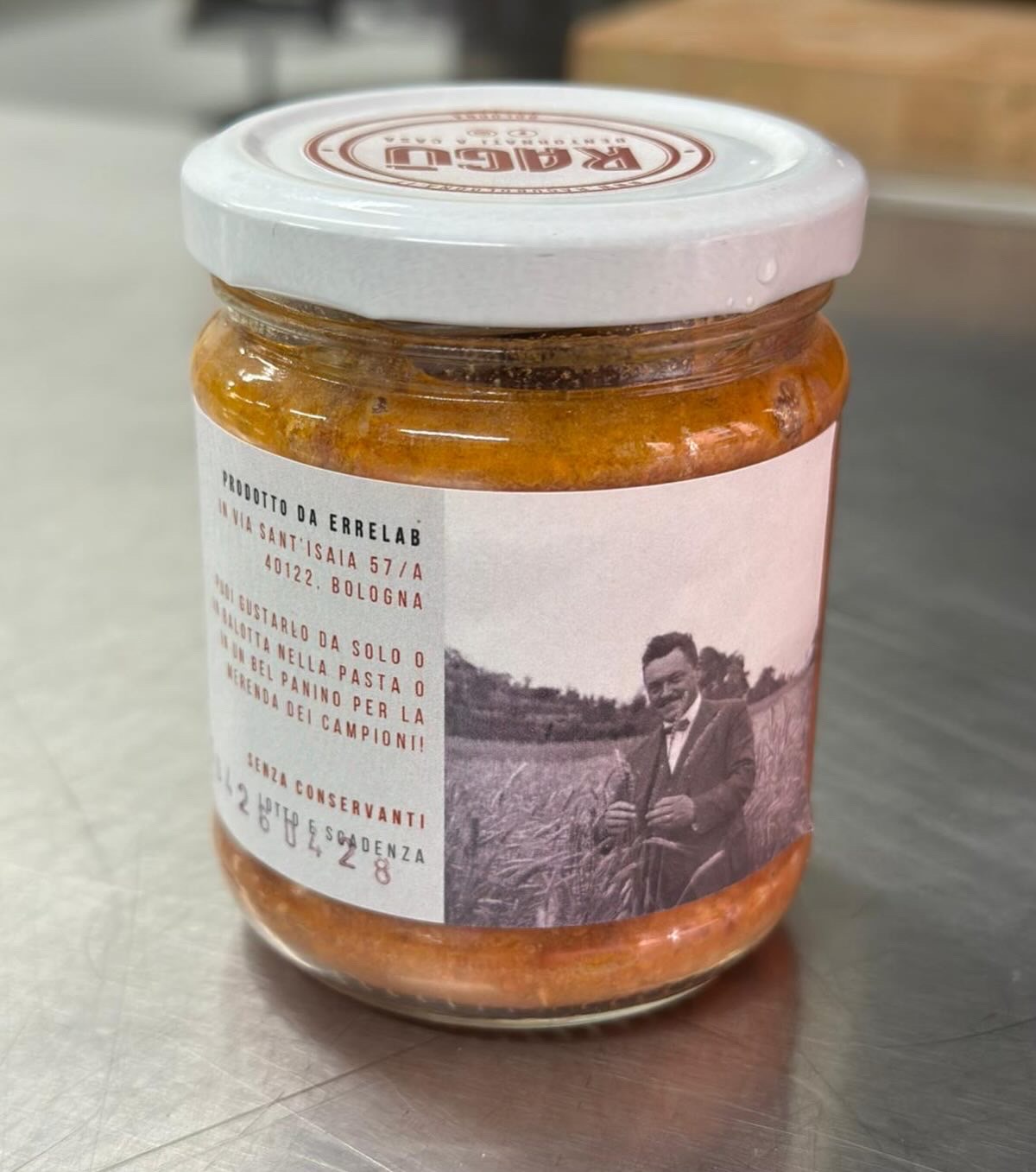 The traditional-recipe ragù is Ragū Bologna’s signature sauce. It means looking for something more than a meat sauce. It was our attempt to think about how a homemade ragù could really have been made back in the late 1800s when certain tools were still missing and, above all, you used whatever meat was available, because there wasn’t enough money to buy the “good” stuff.
Traditional-recipe ragù in our Bologna: what it really means
The idea of a “traditional recipe” can be misleading. Bolognese ragù is not a museum artifact, unchanged for centuries. It’s an urban preparation that has been refined in home kitchens, trattorias, and fresh pasta workshops. It has gone through different meat availabilities, family habits, and seasons, while maintaining a clear direction: building an intense, full-bodied sauce that’s never overpowering.
The starting point remains the soffritto: celery, carrot, and onion worked slowly in fat until their aroma becomes sweet and deep. They shouldn’t stay crunchy or disappear in a burnt shortcut. They’re the foundation on which the meat can cook properly, developing flavor without becoming heavy.
Then comes the meat, browned carefully. We cut it by knife and it’s essential to the result: it gives substance, structure, and fills each bite. The heat can’t be too aggressive, but not too weak either—it needs to be lively. You need heat, but you need judgment. Ragù isn’t born from haste.
Here’s one of the most important differences between our traditional-recipe ragù and traditional ragù: the tomato. We only use tomato paste, not passata. It enters as a supporting element, not as the absolute star. It holds the base together, adds roundness, and supports a long cooking time. As in our traditional version, we don’t add milk. This makes it lighter and more digestible, as well as suitable for practically everyone.
Meat Cuts
The difference seems small, but on the palate it’s clear. Our cuts include beef tongue for sweetness, chicken livers to cut through with a more decisive taste and slight bitterness, beef rib cap to make everything more buttery so the meat melts in your mouth delivering an intense but tasty flavor, and finally beef tripe to provide a low-fat, high-protein ingredient that gives a slightly herbaceous yet neutral flavor, and pancetta for punch and savoriness.
Ingredients matter, but how you treat them matters more: Errelab.
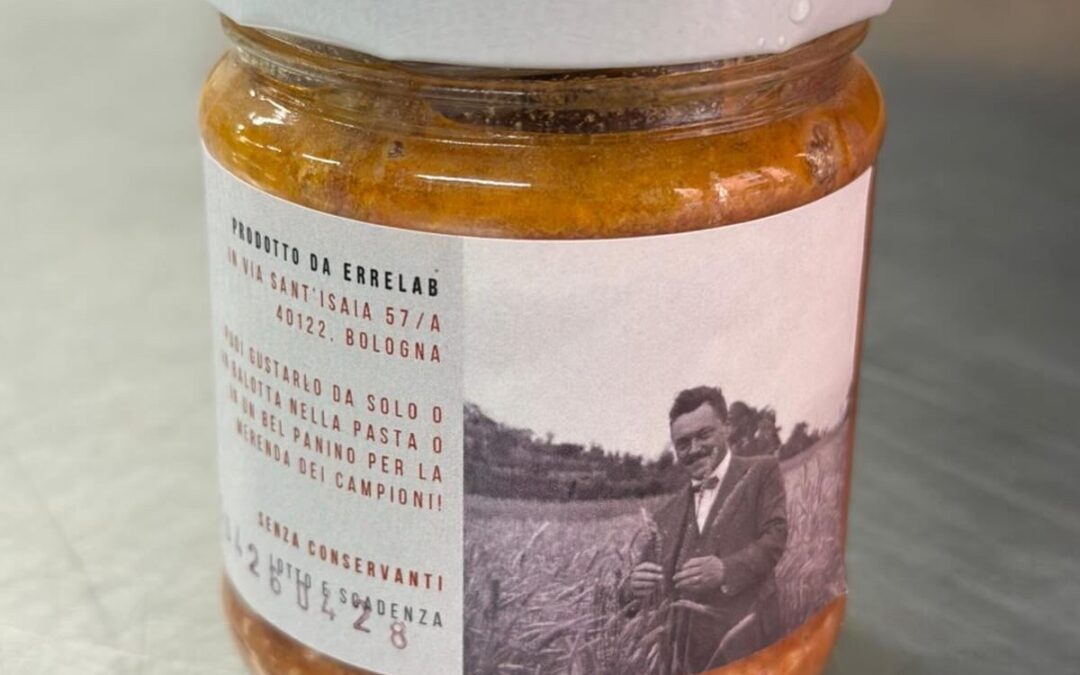
Everything is done with care by the skilled hands of our team at via Sant’Isaia 57, a tucked-away area, far from prying eyes, in the center of Bologna. Selected meats that give structure and flavor to our dishes. But buying excellent ingredients isn’t enough to make excellent ragù.
The real difference lies in the less spectacular steps: cutting the soffritto evenly, letting the wine evaporate, stirring when needed and not out of anxiety, controlling moisture, adding liquid a little at a time. These are simple gestures, repeated with precision.
Even the fat deserves respect. Some versions use pancetta to give punch and savoriness, others prefer a lighter touch. It’s not a contest over who adds more ingredients. The useful question is different: does that detail help the ragù be more balanced? If yes, it makes sense. If it covers everything else, it’s just noise.
Slow cooking isn’t a romantic detail
Saying “slow cooking” is easy. Doing it well means understanding what happens in the pot. At first the flavors are separate: the vegetables, the meat, the acidity of the tomato, the dairy component. Over time they merge. The liquid reduces, the fat integrates, the meat becomes more tender, and the aroma changes register.
Too lively a flame compromises this work. Too timid cooking, on the other hand, can leave a pale, underdeveloped ragù. The pot needs to simmer steadily. Every so often you check, stir, taste. There are no reliable shortcuts, only experience and care.
The right pasta: tagliatelle, lasagne, and more
Bolognese ragù needs pasta that knows how to welcome it. Fresh tagliatelle is the most natural pairing: wide, porous, elastic, with a sheet that holds the sauce with every forkful. No need to drown it. A well-measured amount lets you taste pasta and ragù together, without one canceling out the other.
In lasagne the ragù works differently. It enters into dialogue with béchamel, pasta sheets, and cheese, helping to build layers that are soft but defined. Here too a simple rule applies: abundance doesn’t mean balance. Ragù that’s too liquid floods the layers; one that’s excessively dry makes the result compact and heavy.
The habit of serving ragù with spaghetti is common outside Emilia-Romagna, but it’s not the pairing that best tells the Bolognese tradition. Smooth, thin spaghetti often leaves the sauce on the plate. Fresh pasta sheets, on the other hand, give it a home. Less postcard folklore, more taste logic.
How to recognize well-made ragù even for takeout
Ragù can travel well, as long as it’s prepared and packaged properly. In fact, after a brief rest the flavors are often even more blended. For those who want to take Bologna home in a container or jar, quality can be recognized by concrete signs.
The aroma should recall slowly cooked meat and aromatic base, not just tomato or spices. The color is warm and natural, never artificially bright. The consistency should be full-bodied, with a clear presence of meat and without excessive separation of water or fat. On the palate, the first sensation should be balance: savory, round, persistent, but clean.
At Ragù Bologna the preparation starts in the kitchen, from handmade pasta sheets to sauces. It’s a very simple principle: takeout can be quick, but it shouldn’t taste rushed. A well-made plate of tagliatelle al ragù remains a real meal even between a class, a work shift, and a walk under the porticos.
Reheating it at home without ruining it
If the ragù is already prepared, heat should be managed gently. Better to warm it in a small pot over low heat, adding a spoonful of hot water if needed. The microwave can be practical, but should be used in short intervals, stirring between each round, to avoid hot spots and cold areas.
With fresh pasta, the decisive step is tossing. Cook the tagliatelle in well-salted water, drain them while still elastic, and toss them for a few moments with the ragù. If needed, add a little pasta cooking water. Not to stretch the sauce, but to make it adhere to the pasta sheet. Grated cheese comes at the end, to taste, without turning everything into a heavy blanket.
Tradition doesn’t mean immobility
Defending Bolognese ragù doesn’t mean treating it like a dogma useful only for correcting others. It means knowing why certain choices work and not confusing a well-constructed version with any red sauce called “bolognese.” Tradition lives when it remains readable: when you recognize the soffritto, the meat, the slow transformation of cooking, the relationship with fresh pasta.
There are legitimate personal variations and there are compromises that completely change the dish. Reducing cooking time may be necessary in a busy home kitchen, but the result will be different. Increasing the tomato may be pleasing, but it shifts the ragù toward another family of sauces. It’s not forbidden: just call things by their name.
Next time you open a jar of ragù or choose a plate of tagliatelle, take an extra minute. Look at the consistency, smell the aroma, taste before adding anything else. The best ragù doesn’t ask for special effects: it asks for good pasta sheets, a fork, and the time to enjoy it.
by | Aug 4, 2026 | Senza categoria
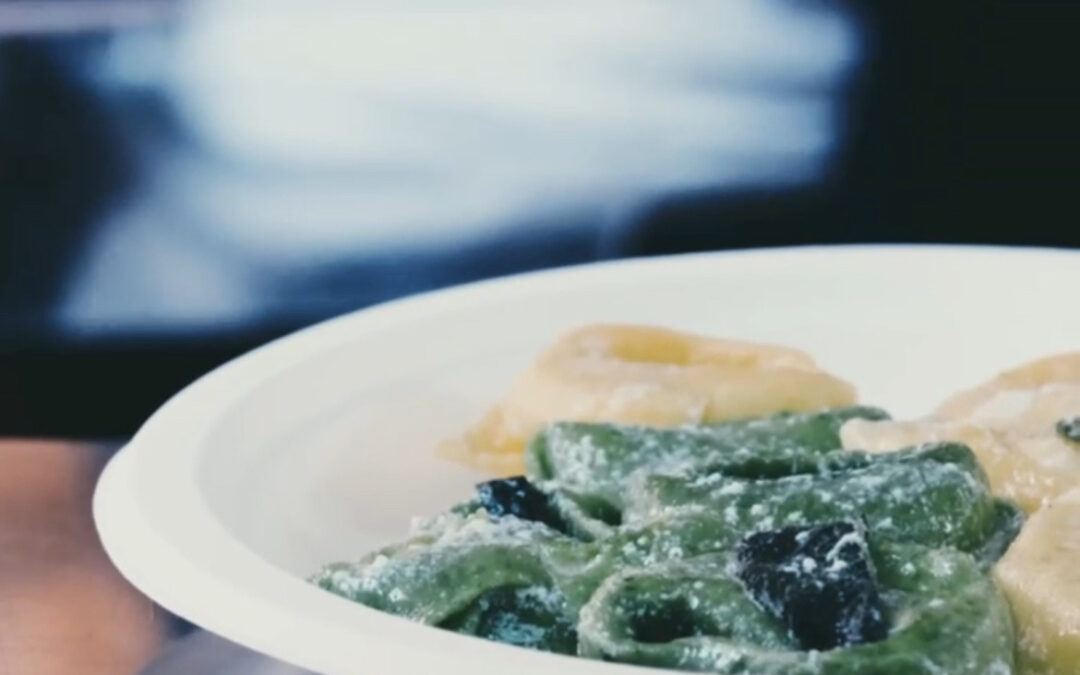
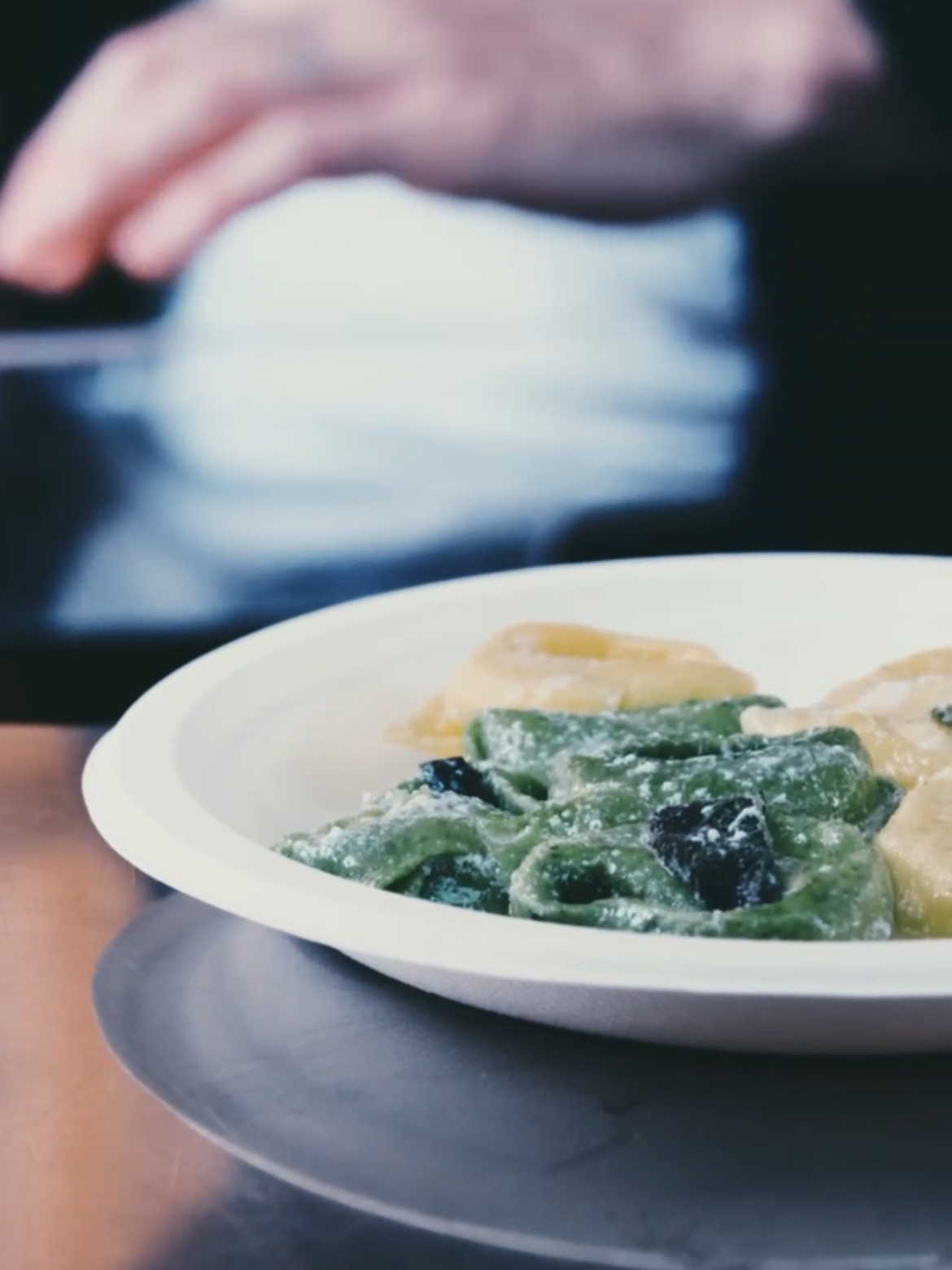 The lid lifts, the scent of warm butter and sage wafts out, and the sfoglia should still be glossy. This is where butter and sage tortelloni takeaway is truly judged: not by the photo, but by how they arrive at the first bite. Because fresh filled pasta is generous, but it doesn’t forgive distractions. If there’s too little sauce, it dries out. If there’s too much, it drowns the filling. If the container is wrong, the steam does the rest.
For a lunch break, a dinner on the sofa, or a dish to take home without turning on the stove, tortelloni are a serious choice. They aren’t the usual quick meal disguised as local cuisine: they are sfoglia, filling, and sauce reduced to the essentials. Fewer special effects, more precision.
Why butter and sage works so well
Butter and sage isn’t meant to make the dish simpler. It’s meant to leave room for what matters. In tortelloni, the star is the filling: ricotta, cheese, vegetables, or the balance intended by the recipe. A bold tomato sauce or a heavy ragù can be excellent, but they completely change the tone. Melted butter, on the other hand, coats the pasta and accompanies it without hogging the microphone.
Sage brings a herbal, slightly resinous note that cuts through the sweetness of the butter and the softness of the filling. When balanced well, you smell it before you even taste it. When there’s too much or it’s burnt, it leaves an intrusive bitterness and turns a clean sauce into an avoidable mistake.
There’s also a practical reason. The butter sticks to the sfoglia and helps the tortelloni stay pleasant during the short takeaway time. It won’t save them for hours, of course: fresh pasta must be treated with respect. But, compared to more watery sauces, it holds up better during the journey between the counter and home.
Butter and sage tortelloni takeaway: what makes the difference
A good takeaway starts long before the bag is handed over. It starts with the sfoglia. It must be thin but resilient, capable of holding the filling and remaining distinct to the bite. A pasta that’s too thick feels heavy and absorbs the sauce; one that’s too fragile risks breaking open, especially when moved around in a hot container.
Then comes the cooking. The tortelloni shouldn’t wait too long in the water and shouldn’t come out mushy. Al dente, in the case of fresh filled pasta, doesn’t mean hard: it means intact, soft, with a structure that doesn’t give up at the first touch of the fork. In takeaway, this detail is twice as important, because the residual heat continues to cook the pasta even after the container is closed.
The sauce must be added with a steady hand. The butter should be melted and fragrant, not separated into a greasy puddle at the bottom. The sage must be present, not just decorative. A grating of cheese can complete the dish, but it depends on the filling and the eater’s taste. If the filling is already savory, it’s better not to overdo it.
Finally, the container. It seems like a behind-the-scenes detail, but it decides a lot. It must hold the heat without turning the tortelloni into a soggy mess of condensation. The seal must be reliable, but the dish shouldn’t be sealed and forgotten for half an hour. The best takeaway is the one that travels a short distance and arrives at the table immediately.
How to take them home without ruining them
The most useful rule is simple: tortelloni are not an errand to leave for last. If you’re picking up dinner, go get them when you’re ready to head back. A ten-minute trip is one thing; forty minutes between shops, buses, and phone calls is another.
Keep the container horizontal. Don’t tuck it vertically into a backpack, don’t rest it on a tilted car seat, and don’t squash it under a bottle. Tortelloni need to stay comfortable: it’s a small demand, but a completely reasonable one.
Once home, open the container as soon as possible. Not to let them get cold, but to prevent the steam from continuing to dampen the sfoglia. If you need to set the table, do it before you leave or in two minutes flat. Plates, forks, water, and table: then you eat.
If the journey was longer than expected, a quick toss in a pan can help. Pour the tortelloni with their sauce into a wide pan, add a tablespoon of hot water, and heat over low flame for a very short time, moving them gently. Don’t use high heat: the butter risks separating and the filling might give way. The microwave remains an emergency solution, not the first choice, because it heats less evenly and can make the pasta soft at the edges.
The right time to order them
Butter and sage tortelloni are perfect when you want a complete dish without the heaviness of a random dinner. At lunch, they work if you have the actual time to sit down and eat them hot. In a ten-minute break, it’s better not to treat them like a sandwich: haste does justice to neither the sfoglia nor the filling.
In the evening, they have a different pace. They are a dinner that tastes like home but doesn’t require a grocery run, a pot to wash, and forty minutes of preparation. For two people, they can be the center of the table with a simple side dish. For a larger dinner, they sit well alongside seasonal vegetables, good bread, and something to drink that doesn’t overpower the dish.
Even for those visiting Bologna, they are a more interesting choice than chasing the most photographed dish. Bolognese cuisine isn’t a competition of portions or a list of symbols to check off. It’s care for the raw ingredients, well-repeated gestures, and recipes that don’t need to shout. A properly made tortellone tells this whole story in one bite.
Butter and sage, yes. But with what expectation?
It’s worth being clear: anyone looking for an explosive, spicy, or very salty flavor might find this dish more delicate than they imagined. That is precisely its strength. The contrast isn’t aggressive, the sauce doesn’t hide anything, and the filling remains the protagonist. It’s a dish for those who recognize the difference between simplicity and banality.
The type of tortellone also matters. A ricotta and spinach filling finds a natural partner in butter and sage. A bolder filling, with aged cheeses or bitter vegetables, might call for less sage or a different amount of butter. There isn’t one dose that fits all: there’s the balance of the recipe, and you can taste it.
At Ragù Bologna, the fresh pasta is homemade, just as things that carry a tradition on their shoulders should be. Not for postcard nostalgia, but because the sfoglia, filling, and sauce need to speak to each other. Takeaway doesn’t change this rule: it only changes the place where you sit down to eat.
When you open the package, don’t wait for the perfect moment. Put the tortelloni on the plate, make room for the sage, and eat them hot. Welcome home, even if home for tonight is a bench, a desk, or the kitchen table.
by Marco Vastola | Aug 4, 2026 | Senza categoria
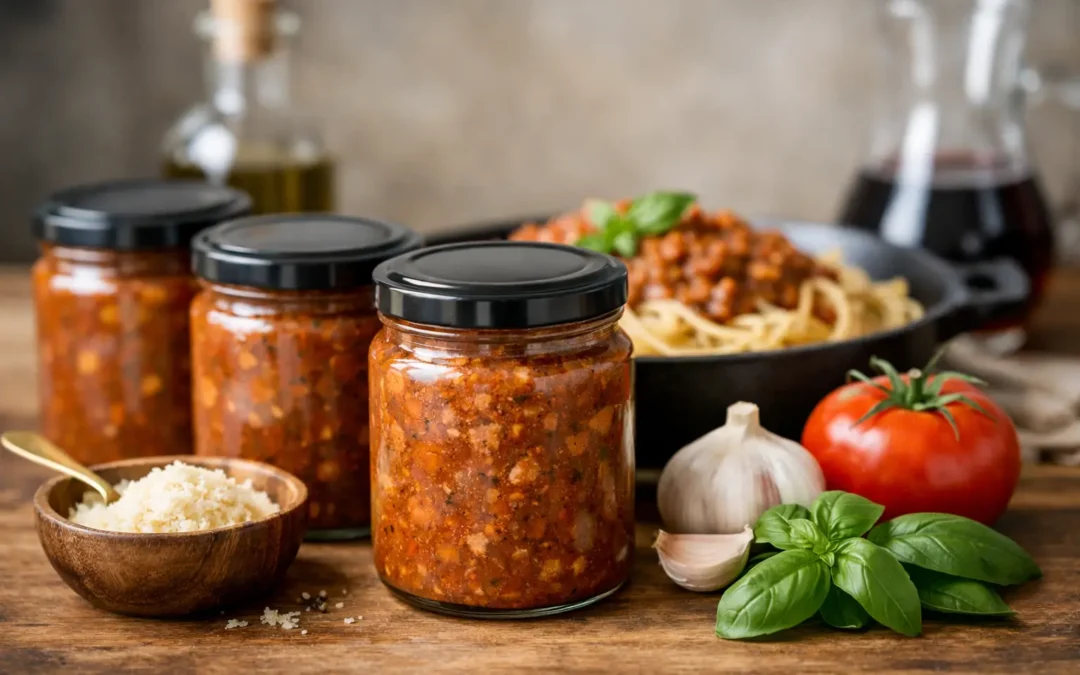
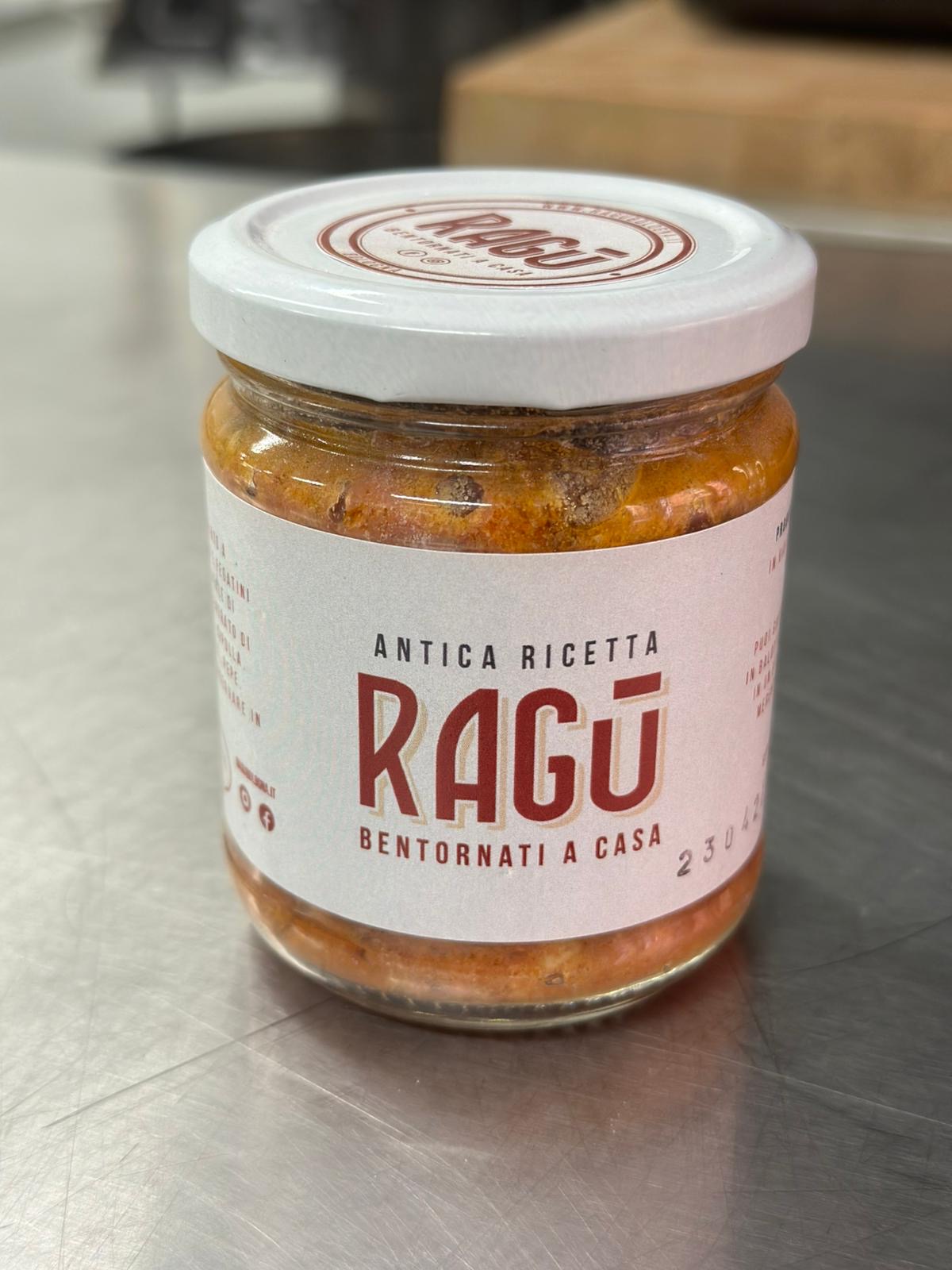 Buying artisanal Bolognese ragù doesn’t mean choosing a jar with a nice label. It means bringing home a piece of serious cooking: patient soffritto, well-worked meat, slow cooking, and a balance that needs no special effects. In Bologna, ragù isn’t a shortcut for dressing pasta. It’s a precise, familiar, everyday matter.
When there’s no time to cook it from scratch, a well-made artisanal ragù can save dinner without turning it into a compromise. But you need to know what to look for, how to store it, and above all, which pasta to serve it with.
What Makes a Bolognese Ragù Artisanal
The word artisanal alone isn’t enough. A credible ragù is recognized first by its method. It starts from a base of finely chopped vegetables, lets the meat develop flavor without rushing, and finds in tomato a measured presence, not a dominant one. The result should be rich but not heavy, compact but not dry, fragrant with cooking and not added aromas.
Meat is central. Bologna tradition calls for a beef-based preparation, with possible pork components depending on recipe and kitchen interpretation. There’s no need to look for an identical formula in every workshop: each hand can have its own balance. What matters is that the meat remains recognizable, that it isn’t covered by excess tomato purée, and that it isn’t reduced to an indistinct consistency.
Time also plays its part. A ragù doesn’t improve because it cooks for a magic number of hours, but because it’s watched as it changes: the soffritto softens, the meat binds to the base, the liquids concentrate. Haste leaves flavors separate. Careful cooking brings them into agreement.
Buying Artisanal Bolognese Ragù: What to Read
The label is a good starting point, not a philology exam. Look for a clear ingredient list, with meat and vegetables in the first positions, and a composition that makes sense. If tomato opens the list and meat appears after many thickeners or correctors, you’re probably looking at a different type of sauce.
A good preserved product can contain the elements necessary to guarantee its safety and shelf life. That’s not the problem. The difference lies in transparency: understandable ingredients, declared origin when available, readable storage methods and expiration date. A workshop that works well doesn’t need to hide the contents behind vague formulas.
Also observe the quantity. A two-portion jar can be perfect for a quick dinner, while a larger format makes sense if you already know the ragù will end up on tagliatelle, lasagne, or polenta. Once opened, though, treat it like fresh food: refrigerator, clean container if necessary, and consumption within the indicated times.
Price deserves honest consideration. An artisanal ragù costs more than an industrial sauce because it contains meat, manual labor, cooking time, and more limited production. That doesn’t mean high price always guarantees quality, but a price that’s too low can hardly support serious raw materials and long cooking times.
Color and Consistency Tell Something
Bolognese ragù shouldn’t be bright red. It tends toward a warm, brownish-red color, due to the meat, soffritto, and long cooking. A slight fatty layer may appear on top: it’s not an automatic defect—in fact, it can be the sign of a sauce that hasn’t been artificially homogenized. Just stir gently before heating.
The consistency should coat the spoon. If it looks like tomato soup with a few bits of meat, it won’t do its job on the pasta. If it’s too thick, don’t correct it with cold water directly in the jar: recover it in the pan with a spoonful of pasta cooking water, a little at a time.
The Right Pasta Isn’t a Detail
In Bologna, ragù and tagliatelle are a pairing with precise logic. The porous, wide pasta sheet catches the sauce, while its consistency supports the meaty part of the ragù. Spaghetti with ragù can be enjoyable, sure, but it doesn’t tell the same story: the ragù tends to slide off and the bite loses balance.
Fresh tagliatelle remains the most natural choice. Cook them in well-salted water, drain when still elastic, and finish them in the pan with the ragù. No need to drown them. The sauce should cling to the pasta, not float in the plate. A splash of pasta water helps create that binding that makes everything seem freshly made.
Artisanal ragù also has other very serious destinations. In lasagne it becomes part of an ensemble made of pasta sheets, béchamel, and cheese. On soft polenta it finds a more rustic dimension. With tortelloni or stuffed pasta, however, use it sparingly: a delicate filling deserves space and doesn’t always call for an important sauce.
How to Heat It Without Ruining It
A pan remains the best method. Pour the ragù into a small pot and heat over low flame, stirring occasionally. It shouldn’t boil violently: gradual heat keeps the meat tender and prevents the fat from separating too much.
If the ragù comes from the fridge, taking it out a few minutes early can help, but it’s not mandatory. If it’s particularly compact, add a little pasta cooking water. Don’t use cream to make it creamy: it changes the character of the dish and covers the work already done in the kitchen.
A generous portion for two people depends on the pasta and appetite, but generally it’s better to start with restraint and toss well. Bolognese ragù should dress, not hide the pasta. If some is left over, no drama: the next day it can become a warm sandwich with artisanal bread, the base for quick lasagne, or a filling for savory piadina.
When to Choose Ready-Made Ragù to Take Home
There are days when you want Bologna cooking but not to shop, chop vegetables, and watch over a pot for hours. A well-made jarred ragù makes sense right here: during a last-minute organized lunch break, for dinner with friends, after a trip, or as good pantry stock.
It’s a particularly useful choice also for those visiting Bologna who want to take away a concrete flavor, not a generic souvenir. A properly preserved product travels better than fresh pasta and, once home, delivers a simple gesture: open, heat, dress. Quality isn’t only in the moment of purchase, but in the ability to recreate that dish with ease.
At Ragù Bologna, ragù is born from the same idea that guides everyday cooking: homemade preparations, local flavors, and no need to disguise tradition as a trend. It’s food to take and enjoy when needed, at lunch, dinner, or whenever home calls for something good.
One Last Touch Before Serving
Warm the plates. It’s a small detail, but it changes dinner: the tagliatelle stay hot longer, the ragù maintains its consistency, and the aroma reaches the table the right way. Then serve without building too much around the dish. A bit of Parmigiano Reggiano, if you like, and the rest is done by the ragù.
Because an artisanal Bolognese ragù doesn’t seek easy applause. It seeks a fork, well-made pasta, and someone who truly stops to eat.
by | Aug 3, 2026 | Senza categoria
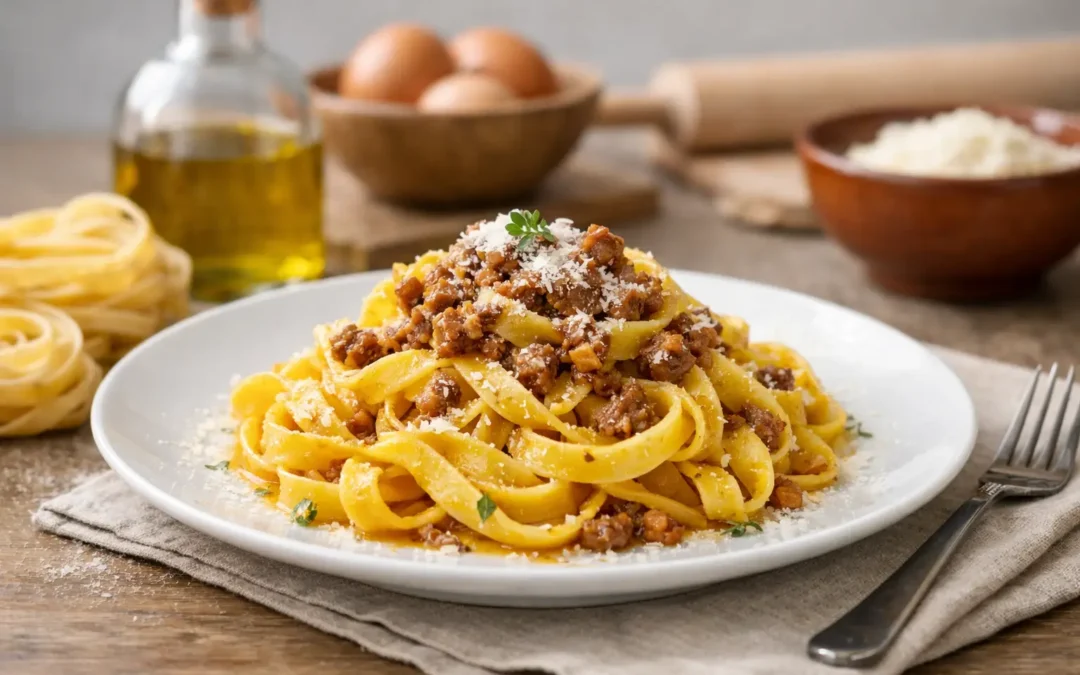
Ordering tagliatelle alla romagnola and expecting an identical recipe in every trattoria is the quickest way to be surprised. In Romagna, as in home kitchens, the name tells the story of a territory before it fixes a formula. And that’s the beauty of it: fresh sfoglia, generous sauce, and no desire to put on a show.
These aren’t tagliatelle al ragù bolognese with a different label. They’re another family of dishes, close in ingredients and egg pasta culture, but free to change from one city to another, even from one home to another.
What Tagliatelle alla Romagnola Really Are
This expression generally refers to egg sfoglia tagliatelle dressed with a rich, homestyle meat sauce, often more immediate and less codified than Bolognese ragù. The pot might include ground meat, sausage, pancetta or prosciutto, tomato, soffritto vegetables and, depending on the season or family tradition, peas, mushrooms, or a touch of cream.
The key word here is exactly that: family tradition. In Emilia-Romagna, recipes don’t sit still in a display case. They pass through the hands of whoever rolls the sfoglia, the contents of the pantry, and the character of the cook. So be wary of anyone presenting a single version as absolute law.
There are, however, some recognizable signs. The pasta must be fresh, porous, able to catch the sauce. The sauce must bind to the tagliatella, not float beside it. And the result must taste like real cooking: full-flavored, but without covering everything with tomato, cream, or spices.
The Difference from Bolognese Ragù
In Bologna, the reference is clear: tagliatelle al ragù. Bolognese ragù requires time, balance, and precise construction between soffritto, meat, fat component, wine, tomato, and milk. It’s not simply ground meat in sauce. It’s a sauce that cooks slowly, concentrates, and finds an enveloping consistency.
Romagnolo versions can use a similar base, but often move with greater freedom. Sausage can become the star, prosciutto can add savory depth, peas can add sweetness. In some cases the sauce is redder and livelier; in others it’s almost a white meat sauce. There’s no rigid boundary, because the two traditions share the same great Emilian-Romagnolo pantry.
The difference isn’t a contest over who’s more authentic. It’s a question of accent. Bolognese ragù seeks depth and measure; tagliatelle alla romagnola more easily tell the story of variation, the season, cooking done with what’s on hand but done well.
The Sfoglia Matters as Much as the Sauce
When talking about sauce, there’s a risk of forgetting the central point: without a serious sfoglia, there are no tagliatelle worth having. Flour and eggs seem simple until you try to roll out pasta that’s thin, elastic, and even, that won’t break during cooking and won’t turn mushy on the plate.
The right tagliatella isn’t a decorative ribbon. It must have body, bite, and surface. It’s that natural roughness of fresh pasta that holds the sauce. If the sauce stays at the bottom, the problem isn’t just in the ladle: often it’s in the sfoglia or the finishing.
Even the cut matters. A tagliatella that’s too narrow gets lost in the ragù; one that’s too wide can feel heavy with a very rich sauce. The format should be chosen to accompany the sauce, not to make a taller photo.
How to Recognize a Properly Made Dish
No special effects needed. Just ingredients treated with respect. The meat must be browned, not boiled in tomato; the soffritto must disappear into the sauce without burning; the pasta should be drained while still lively and finished in the sauce with a bit of its cooking water.
Watch out for a common misconception: abundant doesn’t mean heavy. A good meat sauce should leave you wanting another forkful, not silence your palate after three bites. Even the cheese should be measured: Parmigiano Reggiano yes, but as part of the balance, not as a blanket over every flavor.
In Bologna we’re proud of our tagliatelle al ragù, but the Emilian-Romagnolo table is bigger than a single dish. Tagliatelle alla romagnola deserve to be ordered for what they are: a regional pasta, straightforward and generous. Fewer shouted definitions, more fresh sfoglia and properly made sauce.
by | Aug 3, 2026 | Senza categoria
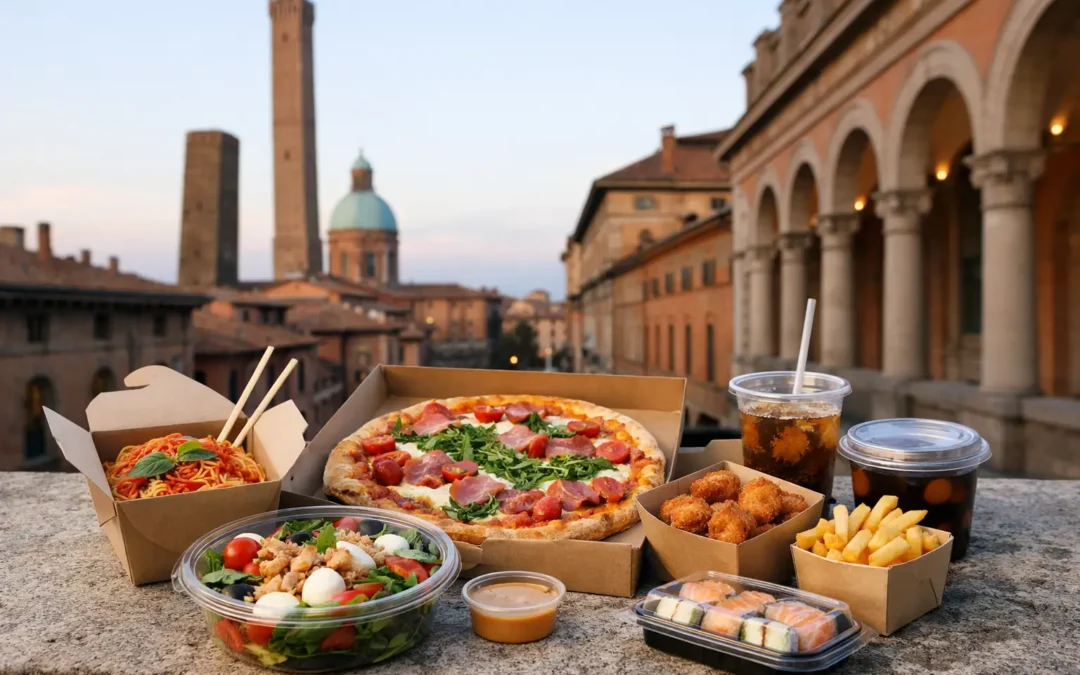
When you’re looking for takeaway dinner Bologna center, you’re not just looking for something to eat quickly. You want to end the day with a dish that has a precise flavor: fresh pasta, a properly made sauce, bread to mop up every last drop. You want to bring Bologna home without the tourist version, without shortcuts.
In the center, there’s no shortage of options. The point is choosing a dinner that holds up during the journey, arrives well at the table, and doesn’t ask for compromises between speed and quality. For us, the answer starts with something simple: Bolognese cuisine is already perfect for takeaway, if it’s actually prepared in the kitchen.
Takeaway Dinner in Central Bologna: What Really Matters
A good takeaway dinner isn’t the one that fills the bag. It’s the one that, once opened at home, keeps its character, temperature, and texture. The pasta sheet shouldn’t give way, the ragù shouldn’t be a generic sauce, the tortellini shouldn’t float without identity in broth or cream.
Central Bologna has different rhythms on the same evening. There are those leaving the office late, those coming back after classes, those with guests in their apartment, and those who want to eat dinner on the sofa without ordering the usual sandwich. In all these cases, you need a straightforward option: recognizable dishes, well-thought-out portions, ingredients that don’t need lengthy explanations.
The difference comes from the preparation. A freshly rolled pasta sheet, a balanced filling, a carefully assembled lasagna, and a ragù cooked with patience aren’t romantic details. They’re what you taste in the first bite, even when dinner is eaten twenty minutes after purchase.
Fresh Pasta Is a Practical Choice, Not Just Traditional
There’s a common misconception: choosing fresh pasta for takeaway would be a luxury reserved for Sunday lunch. Actually, it’s one of the most practical solutions for a proper dinner. It heats easily, satisfies without becoming heavy, and pleases people with different tastes.
Tagliatelle al ragù is the most obvious case. It doesn’t ask for special effects: it asks for pasta with the right texture and a rich ragù, where meat, vegetables, and time have done their work. It’s a dish that speaks clearly. If it’s good, it doesn’t need filters.
Then there are tortellini and tortelloni, to choose based on the evening. Tortellini are the most classic gesture, the one that feels like a set table and family. Tortelloni have a more generous step, perfect when you want to dedicate a few extra minutes to dinner. Lasagne, on the other hand, solves the dilemma for those who want a complete and comforting dish, ready to do its part without debate.
Naturally, it also depends on where and when you’ll eat. If you have to walk through the center, lasagna or tagliatelle are reliable choices. If you get home and can set the table calmly, tortellini and tortelloni become a small ritual. The best takeaway doesn’t impose one way of eating dinner: it adapts to your evening.
Not Just a First Course: Building a Dinner That Makes Sense
Bolognese cuisine doesn’t end in the pasta container. A well-thought-out takeaway dinner can start with something to share, continue with a substantial first course, and close with artisan bread to leave nothing on the plate. You don’t need ten courses. You need the right pairings.
If there are two of you, it often works to choose different dishes and taste each other’s. Tagliatelle for those who want ragù, tortelloni for those seeking a filling, a lasagna to split if hunger is serious. If you’re in a group, it’s better to focus on formats that arrive well at the table and allow everyone to eat together, instead of adding up random orders.
Meat can also find space, especially when it’s prepared with care and not treated as a service add-on. And house-made sauces help transform a quick dinner into something more personal: not an emergency meal, but a deliberate choice.
The advantage of takeaway is exactly this: you don’t have to cook, but you can still decide how to eat. You can set the table nicely, pour drinks, invite someone at the last moment. Or take everything and go home quietly. Quality doesn’t need a reservation to exist.
Ragù Is Not a Detail
In Bologna, ragù is a serious matter, even when you get it for dinner after a long day. It’s not a red shortcut on top of pasta and it’s not a condiment to hide with Parmesan. It’s a preparation that requires balance, quality ingredients, and patience.
That’s why good ragù is also an excellent indicator when choosing where to order. Looking at the menu helps, but what really matters is understanding if there’s a real kitchen behind the dishes: who prepares the pasta sheets, who cooks the sauces, who treats the bread and meats with the same attention given to the main dish.
At Ragù Bologna, this idea translates into cuisine made in-house, from pasta to sauces, with recipes that don’t chase the trend of the moment. Fewer hashtags, more ragù. Not out of nostalgia, but because certain things keep working when they’re done with precision.
Dinner Ready, But Not Standardized
The risk of takeaway is standardization. Same containers, same flavors, a dinner that could have been prepared anywhere. In the center, where the offering is wide and time is short, it’s easy to choose the quickest solution without asking if it’s really what you want to eat.
A Bolognese takeaway dinner should instead maintain its own character. The format can be urban, practical, and quick, but the content must have roots. It means recognizing a handmade tagliatella, tasting a well-constructed filling, finding real texture in the bread and not an accessory.
This also applies to those visiting Bologna for a few days. A takeaway dinner can be an authentic experience as much as a restaurant table, sometimes even more so. It lets you eat at your own pace, perhaps in your apartment after a walk, without turning every meal into a mandatory stop. You just need to choose a place that doesn’t confuse authenticity with scenery.
And to Drink? The Glass Plays Its Part Too
A complete dinner deserves something more than the drink taken out of habit. The choice depends on the dish and the occasion: a quick dinner can stay essential, while an aperitif that becomes dinner calls for a more playful pairing.
Draft cocktails make sense right here. They bring a contemporary idea of drinking well into takeaway, with original recipes and selected ingredients, avoiding unnecessary amounts of glass and transport. It’s not a whim: it’s a smarter way to serve a drink, without taking anything away from the pleasure of the glass.
No need to complicate everything. A good first course, a well-made cocktail or a thoughtfully chosen drink, and the evening changes tone. The center stays outside the door, with its noise and its rush. At the table, what matters remains.
The Right Dinner for Your Bologna
To choose well, start with the evening you want to have. If you’re looking for comfort, go for lasagne or tagliatelle al ragù. If you want a more convivial dinner, combine fresh pasta, bread, and something to share. If you need to stock up for home, artisan packaged preparations let you rediscover that flavor even when you don’t have time to stop by the shop.
Real convenience isn’t eating in five minutes. It’s knowing that, even on the busiest evening, you can bring home a dish made with respect. Set the table however you like, eat where you’re comfortable, and let the ragù do the rest.