by | Oct 3, 2026 | Senza categoria
The question is simple: how long does fresh pasta last? The answer, as often happens when well-made fresh pasta, eggs, and fillings are involved, depends on what you have in front of you. A freshly rolled tagliatella does not keep like a stuffed tortellino, and a tray just picked up from the deli should not be treated like a long-life industrial product. Fresh pasta asks for attention, but it returns the favor on the plate.
To find your way, just start from a concrete rule: a cold refrigerator, short times, and a suitable container. Less hashtag, more ragù—and also less improvisation when it comes to storage.
How long fresh pasta lasts in the refrigerator
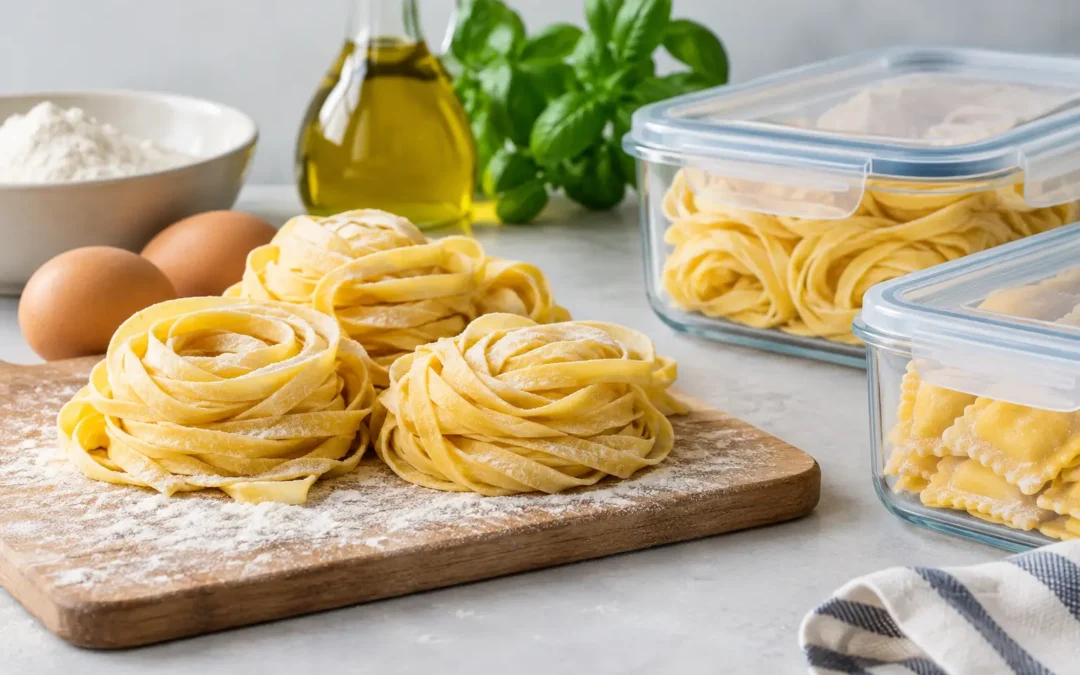
Fresh egg pasta without filling, such as tagliatelle, pappardelle, lasagne, or cut fresh pasta, generally keeps for 1-2 days in the refrigerator, at a temperature between 0 and 4 °C. If it has just been prepared, well-floured, and immediately placed in the cold, it is still at its best the following day.
From the second day, it may still be usable if stored correctly, but the quality begins to change: the fresh pasta tends to become damp, stick together, or dry out at the edges. It is not just an aesthetic issue. Pasta that has lost its structure cooks less well and no longer has that elastic, rough, and welcoming consistency it must have when it meets the sauce.
Stuffed fresh pasta requires more caution. Tortellini, tortelloni, ravioli, and cappelletti, especially if they contain meat, fresh cheeses, or vegetables, should be cooked within 24 hours of purchase or preparation. The filling is the most delicate part: treating it like common dry pasta would be a mistake.
If there is an expiration date or specific instructions from the producer on the packaging, those always apply. The duration changes based on the recipe, packaging, and processing. Artisanal fresh pasta produced without preservatives has different timelines than pasta packaged in a protective atmosphere.
The right refrigerator does half the work
It is not enough to just put the pasta in the fridge. It must be placed well. Store it in its original packaging, if intact, or in a clean, airtight container. For tagliatelle and other non-stuffed shapes, a light dusting of semolina helps limit moisture and prevents sticking.
Keep it on an internal shelf, not in the door: the temperature fluctuates too much there every time you open the refrigerator. Also avoid crushing it under heavy containers. A tortellone broken before cooking loses its filling and its patience, two things that are of no use at the table.
Fresh pasta out of the fridge: how long can it stay?
The short answer is: not long. Raw fresh pasta, especially egg or stuffed pasta, should not stay at room temperature for more than two hours in total. In a hot kitchen, in summer, or near the stove, it is better to reduce this time further.
This also applies after picking up a takeaway order. If you know you won’t be returning home immediately, get organized: a thermal bag is a simple and sensible choice, especially for tortellini, lasagne to be cooked, or pasta with fresh fillings. Running an errand, stopping for an aperitivo, and leaving the fresh pasta in the car is not a good plan.
Pasta can also dry out a bit during processing, but be careful not to confuse drying with storage. Leaving tagliatelle or tortellini on the table for a few hours serves to let the surface take shape before cooking or freezing. It does not transform them into stable products to be kept in the pantry.
How to freeze fresh pasta without ruining it
The freezer is your best ally when you realize you won’t be able to consume the pasta in time. Non-stuffed fresh pasta can stay frozen for about 1-2 months while maintaining good quality. For stuffed shapes, the same interval is a prudent choice, provided they are frozen while still very fresh.
The decisive step is pre-freezing. Arrange tortellini, ravioli, or tortelloni on a floured tray, well-spaced from each other, and put them in the freezer. When they are hard, transfer them to a food bag or a closed container. This way, they won’t form a single block that is impossible to separate without breaking the fresh pasta.
Tagliatelle can be frozen in small nests, with a little semolina between one nest and another. Dividing the portions beforehand prevents you from thawing more pasta than necessary. Always write the date: not out of a mania for order, but because a freezer full of anonymous bags is the quickest way to forget what you bought.
Should it be cooked from frozen?
Yes, and it is often the best solution. Do not thaw fresh pasta at room temperature. Bring the water to a boil, salt it moderately, and pour in the still-frozen pasta. For tortellini, it is particularly useful: they stay compact, the filling does not heat up too much before cooking, and the shape holds better.
Cooking times increase slightly, but there is no single number that works for everyone. They depend on the thickness of the fresh pasta, the size of the shape, and the filling. Tasting remains the most reliable method. A good pasta does not wait for the stopwatch: it asks for attention in the final minutes.
And if the pasta is already cooked?
Cooked pasta with sauce should be cooled and placed in the refrigerator within two hours. Generally, it is best to consume it within 1-2 days. Tagliatelle al ragù, lasagne, and baked pasta can often hold up until the next day with excellent results, if placed in a closed container and cooled quickly.
Here, the compromise is mainly one of quality. Reheating a lasagna calmly can restore its character. Reheating already seasoned tagliatelle, however, can make them too soft. If you know in advance that you want to save a portion, keep the sauce separate when possible: the fresh pasta suffers less and the final result will thank you.
To reheat, look for uniform heat. Lasagne do well in the oven, covered in the first phase so as not to dry out the surface. Ragù heats up gently in a pan. Already seasoned pasta can be revived with a tablespoon of water or broth, without drowning it.
When it is better not to risk it
Smell is a first signal, but not the only one. If the pasta shows mold, unusual spots, a slimy surface, suspicious liquids in the packaging, or an acidic and unpleasant odor, do not taste it to check: it must be discarded. The same applies if it has stayed out of the fridge for too long.
A fresh pasta that is a bit dry or slightly stuck together may be a quality issue, not always a safety one. A slimy or fermented pasta, however, is another story. With simple and perishable ingredients, the rule is clear: when in doubt, it is not worth the risk.
From the counter to the pot: time matters
Freshness is not just a label word. It is a precise sequence: dough, fresh pasta, filling, cold, transport, and cooking. When this sequence is respected, even a quick lunch can have the flavor of a kitchen done as it should be.
At Ragù Bologna, the pasta is designed to arrive home with its identity intact, but the final step remains yours. Get it into the cold as soon as possible, cook it without haste, and serve it when it is at its best. A good fresh pasta does not ask for miracles: it only asks not to be forgotten in the fridge.
by | Oct 1, 2026 | Senza categoria
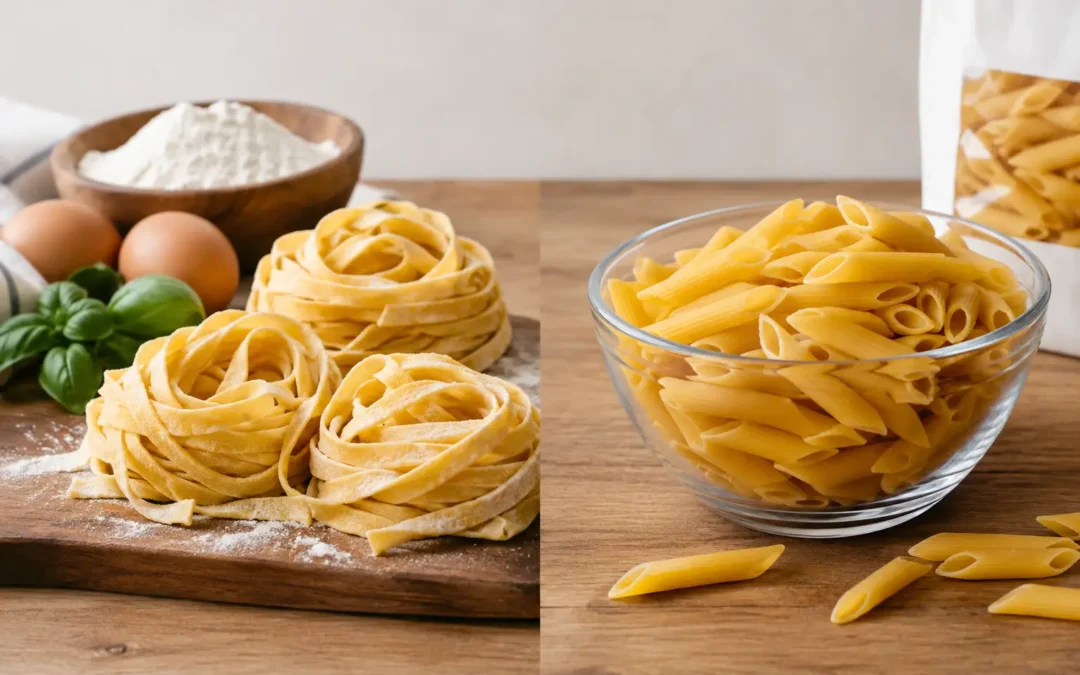
A tagliatella is not judged by its label or a more golden color. It is recognized when it gathers the ragù, holds its presence on the palate, and carries the aroma of just-cooked fresh pasta. In the comparison between artisanal versus industrial pasta, the real difference is not a slogan: it is a sum of choices, from raw materials to dough resting time, from production to cooking.
For those seeking a quick lunch done properly, understanding these differences helps in making better choices. Not to turn every dish into an exam, but to give proper value to what arrives at the table.
Artisanal versus industrial pasta: where the difference begins
Artisanal pasta is born from close-up work. Those who knead, roll the fresh pasta, cut, and inspect the product can intervene at every stage. If humidity changes, if an egg yields differently, if the fresh pasta asks for a few extra minutes of rest, hand and experience correct the course.
Industrial production, on the other hand, is designed for consistency across large volumes. Machinery, standardized dosing, and process controls make it possible to obtain millions of portions with very similar characteristics. It is not automatically a flaw: it is its objective. But that regularity requires recipes, timings, and formats designed to travel, keep for a long time, and maintain predictable behavior.
Artisanal craft is not a magic word. Pasta made in small batches can be mediocre, just as industrial pasta can be well produced and reliable. The useful question is another: what ingredients does it use, how is it worked, and for which dish was it intended?
Ingredients: few, but not interchangeable
In fresh Emilian pasta, the traditional base is essential: flour and eggs. Precisely for this reason, every ingredient counts. Flour determines elasticity and structure; eggs bring color, fat, flavor, and a different consistency when cooked. Even the ratio between elements and the time they are blended changes the result.
In industrial dry pasta, durum wheat semolina is often the protagonist. It is a choice consistent with the product: it provides structure, allows drying, and offers long shelf life. For many pantry formats it is an excellent solution, especially when the pasta must wait weeks or months before being cooked.
The point is not to establish an absolute winner between egg and semolina. A tagliatella al ragù calls for an egg-based fresh pasta, porous and welcoming. Spaghetti with tomato, garlic, and oil may instead call for the resilience of good dry pasta. They are different languages, not a universal ranking.
Production: the hand leaves a trace
Fresh artisanal pasta is kneaded, rested, rolled, and cut closer to the time of consumption. The fresh pasta is not only thin: it must be balanced. Too thick and it covers the sauce, too fine and it risks breaking. A well-made tagliatella has body, but not heaviness.
In artisanal production, small irregularities are not necessarily a defect. A slightly less perfect edge, a surface not completely smooth, a minimal variation from one nest to another can be the sign of real production, not serial. What matters is the precision of the result on the plate: even cooking, pleasant consistency, ability to hold the sauce.
Industrial pasta aims for exact geometries. For extruded formats, dies and pressure define a repeatable shape; for other products, lamination and cutting ensure constant measurements. This precision is useful in professional kitchens, canteens, and home pantries. It offers predictability, but rarely returns the sensitivity of fresh pasta rolled and prepared to be eaten the same day.
Fresh or dry? Let’s not confuse categories
Saying “artisanal” does not always mean “fresh,” and saying “industrial” does not necessarily mean “dry.” There are excellent artisanal dry pastas, carefully worked and slowly dried, just as there are industrial fresh pastas. The distinction between fresh and dry concerns mainly water, storage, and use; that between artisanal and industrial concerns production scale, process control, and production philosophy.
Fresh pasta has high moisture and a shorter life. It must be handled with care and cooked in a few minutes. In return it offers a particular softness and a natural bond with fillings, butter, ragù, and enveloping sauces. Tortellini, tortelloni, lasagne, and tagliatelle belong to this world: here the fresh pasta is as much part of the dish as the filling or sauce.
Dry pasta is made to last and to withstand longer cooking times. It is not a lesser version of fresh: it is a product with a different function. The problem arises when one pasta is expected to replace the other without considering recipe, sauce, and occasion.
The relationship with the sauce changes everything
In Bologna, pasta is not a neutral support. It is part of the recipe. Tagliatelle al ragù works because the egg-based fresh pasta accompanies the sauce without being overwhelmed. Its fibers and surface take the sauce, while the width distributes meat and sauce in every forkful.
A very smooth industrial pasta may have more difficulty holding a rich ragù, especially if the format is not designed for that sauce. This does not depend only on quality, but on the combination. A well-made ragù needs pasta that truly meets it, not pasta that leaves it at the bottom of the container.
With fillings the matter is even clearer. The fresh pasta must be thin without yielding, seal well, and cook without opening. In tortellini, a few millimeters more or less change the balance between pasta and filling. In tortelloni, fresh pasta that is too thick makes everything heavy; too fragile, on the other hand, compromises cooking.
This is why in an artisanal kitchen the format is not chosen to make a scene. It is built around the sauce. At Ragù Bologna, fresh pasta and sauces are born in the same kitchen precisely for this reason: they must speak to each other, not merely share the plate.
Cooking: the moment when the work shows
The quality of pasta is also measured after boiling water. Good fresh artisanal pasta cooks quickly, but must not become limp in the passage between pot, sauce, and table. The margin is brief: a few moments are enough to go from the right consistency to tired fresh pasta.
Industrial pasta, thanks to its structure and lower moisture, tends to have longer times and more stable behavior. It is convenient when cooking for many people or when service requires a wider window. In a home lunch or in a takeaway, however, the speed of fresh pasta can be a concrete advantage, if those preparing it know the timings well.
A common mistake is draining too much and then adding cold sauce. Pasta must be finished in the sauce, with a bit of its water when needed, to create a real bond. With ragù, the goal is not an artificial cream: the goal is glossy pasta, with sauce well distributed and still recognizable.
Price and value: what you are really paying for
Industrial pasta often costs less because it works on large quantities, optimizes distribution, and extends shelf life. It is a real advantage for daily shopping. It would make no sense to deny it.
Artisanal pasta instead requires labor, frequent production, fresh ingredients, and more careful management of waste and storage. The price also reflects this. Paying more makes sense when that difference is felt: in consistency, in flavor, in coherence with the sauce, and in the pleasure of eating a dish prepared with care.
There is no need to choose artisanal for every meal. A good pantry is intelligent, not ideological. Keeping reliable dry pasta for an improvised dinner and choosing fresh artisanal pasta when you want a well-made Bolognese dish is a matter of common sense.
Next time, faced with a portion of tagliatelle, try a simple test: look at how the ragù stays on the fresh pasta, taste the consistency, feel whether pasta and sauce are going in the same direction. Less labeling, more attention to the plate. And, when the moment comes, less hashtags, more ragù.
by | Sep 30, 2026 | Senza categoria
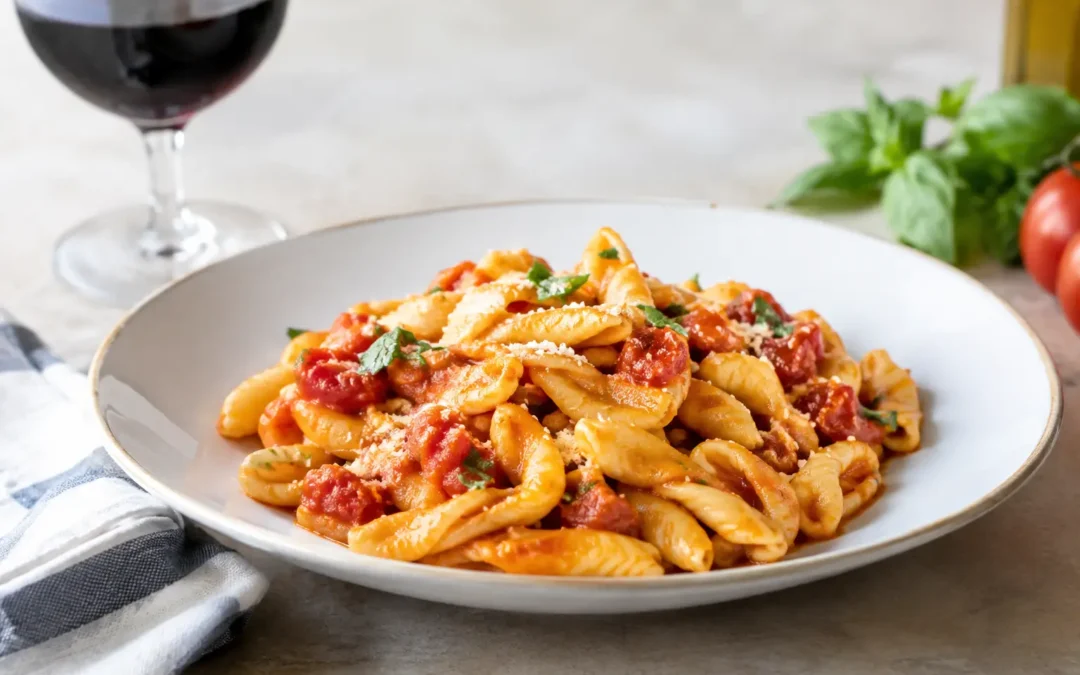
There is a plate of tagliatelle al ragù almost finished, a bit of sauce left on the plate, and a slice of bread waiting. What does scarpetta mean? It means not leaving the best part behind. It is the simple gesture of gathering the sauce with a piece of bread, without unnecessary ceremony and with the respect owed to a well-made sauce.
In Bologna, where cooking takes fresh pasta, broth, ragù, and bread seriously, the scarpetta is not a social media pose. It is a small sign of appetite, gratitude, and common sense. But like all good things at the table, it has its moment, its measure, and a few unwritten rules.
What scarpetta means, in practice
Making the scarpetta means using a morsel of bread to clean the plate of sauce, oil, the bottom of a roast, or a savory cream. The bread becomes the final tool of the meal: it does not replace the fork, but arrives when the fork has already done its work.
The name probably recalls the gesture of the bread “walking” across the plate, or its small, curved shape, similar to a miniature shoe. There is no single, indisputable explanation for the exact origin of the word. What matters is the use, widespread in many Italian regions and known with different nuances from family to family.
It is not just a way to clean the plate. When the sauce is good, the scarpetta extends the tasting and holds together two fundamental elements of Italian cooking: bread and sauce. A reduced tomato base, the well-measured fat of a braised dish, ragù cooked with patience: these are flavors that deserve attention to the last bite.
A popular gesture, not necessarily a rude one
For years the strictest etiquette has viewed the scarpetta with suspicion. The idea was clear: bread should not enter the plate directly, especially at a formal lunch. But the real Italian table is less severe than that. In homes, in osterias, in trattorias, and at meals with friends, making the scarpetta is perfectly normal.
The difference lies in how you do it. Taking a huge slice and rubbing it noisily across the plate is not necessary. Better to break off a small piece of bread, guide it with your fork, and gather the sauce discreetly. The pleasure remains intact, while the gesture becomes more composed.
Context also matters. At a very formal business dinner or in a fine-dining restaurant, it may be wiser to observe the atmosphere at the table and follow the tone of the other diners. At lunch with friends, in front of a lasagne made properly, holding back for fear of seeming inelegant would be almost a shame.
The scarpetta is not rudeness: it is familiarity with food. It becomes inelegant only when it forgets who is around, the place, and the measure. As often happens, the best etiquette is not a cage: it is attention.
Why bread matters as much as sauce
A good scarpetta does not happen by chance. If the bread is soft, sweetish, or too aromatic, it covers the sauce instead of accompanying it. If it is too hard, it scrapes the plate without truly gathering. You need bread with present crumb, proper crust, and clean flavor.
With a rich ragù, the bread must hold the base without stealing the scene. Ragù bolognese, for example, has a dense and deep structure: meat, vegetables, long cooking, and a balance that does not ask for special effects. At the end of a plate of pasta, a small morsel of bread can gather what remains without turning everything into an improvised sandwich.
Not every sauce, however, calls for the scarpetta in the same way. A very liquid sauce may ask for it more, but a concentrated roast base or a vegetable stew also deserves it. With tagliatelle al ragù, though, the pasta comes first: the fresh pasta must be dressed well, not drowned. The scarpetta arrives only at the end, for the little that remains on the plate.
There is also a question of balance. If bread has already been served abundantly throughout the meal, the scarpetta can feel heavy. If the lunch is quick and the plate is generous, instead, it can be precisely that final bite that closes the flavor well. No absolute rule: it depends on the dish, the hunger, and the bread.
The scarpetta in Bolognese cooking
Bolognese cooking does not live on shortcuts. A well-prepared ragù requires long times, fresh pasta requires skill, a tortellino requires precision. In this context the scarpetta has a very concrete value: not wasting a sauce that has cost work and care.
Be careful, though, not to turn it into an obligatory ritual. It is not a test of authenticity, nor must it be done after every dish. Those who prefer to leave the base on the plate are not offending anyone. Authenticity is not measured by copied gestures, but by respect for ingredients, for the recipe, and for one’s own appetite.
At home, bread can become part of the story of the meal. A shared pan of lasagne, a sauce prepared on Sunday, a meatball with its base: these are situations in which the scarpetta arrives spontaneously. Even with takeaway, seated at a table, on a bench, or back at the office, the same principle applies: if the plate still has something to say, good bread listens to the end.
At Ragù Bologna the work starts with fresh pasta and house-made sauces, because substance comes before the scene. A scarpetta done well, in the end, is exactly this: less posing, more flavor.
How to make the scarpetta naturally
No complicated instructions are needed, but a few considerations change everything. Wait until you have almost finished the plate and use a small piece of bread. If you are at the table with other people, you can help yourself with your fork to avoid bringing your hands too close to the plate and to gather the sauce without broad gestures.
Avoid using bread to chase every invisible trace. The scarpetta should not polish the ceramic. Just take the most flavorful base, the one that would be a shame to leave. It is a gesture of pleasure, not a cleaning mission.
The choice of bread is also decisive for texture. With a full-bodied sauce, rustic sliced bread with elastic crumb works well. With oil, fresh tomato, or vegetables, a lighter slice may be enough. Freshly baked bread is magnificent, but if it is too hot and yielding it risks breaking: here too, better to seek balance.
When it is better to skip it
There are moments when giving it up is the simplest choice. If the plate contains bones, fish bones, shells, or elements to separate, better not to mix everything with bread. If the sauce is excessively fatty or spicy for your taste, there is no duty to finish it. And if you are at a very formal event, observing the context first is a form of respect worth more than any rule learned by heart.
Bread also deserves respect. Using it for the scarpetta when it is good is a pleasure; using it only because “you must” is a senseless automatism. Italian cooking is full of living traditions precisely because they adapt to people, seasons, and tables.
The next time a spoonful of well-made sauce remains on the plate, do not ask yourself whether it is too inelegant. Ask yourself whether that flavor deserves one last bite. If the answer is yes, break the bread, gather with measure, and enjoy it to the end.
by | Sep 29, 2026 | Senza categoria
A well-made tortellone needs no special effects. It has a thin yet tenacious fresh pasta, a generous filling, and a balance that is felt from the very first bite. The question of “tortelloni how to serve them” starts here: choosing a condiment that accompanies without silencing the work done inside the pasta. Less posing, more substance.
Whether they are filled with ricotta and Parmigiano Reggiano, herbs, pumpkin, or potatoes, the principle is simple: the sauce must be at the service of the tortellone, not the other way around. The shape is large, the filling is the protagonist, so every choice—from cooking to the plate—really matters.
Tortelloni how to serve them: the right condiment
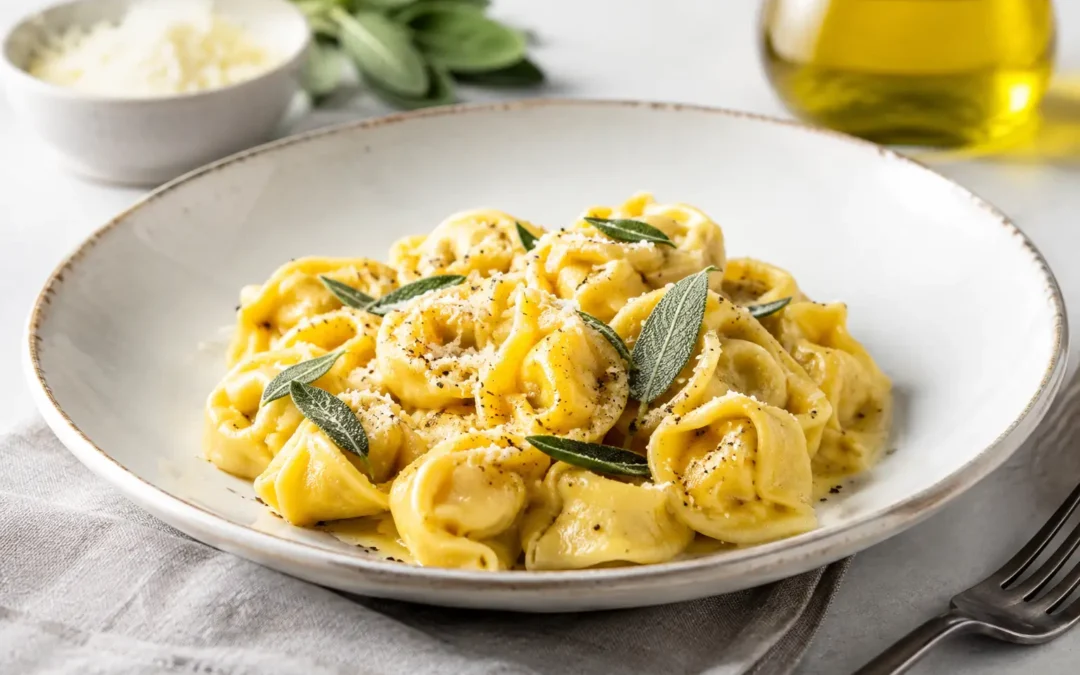
The classic butter and sage remains the safest starting point, especially for ricotta and herb tortelloni. Not because it is a convenient solution, but because it works: the butter binds the fresh pasta, the sage brings a clean fragrance, and the filling remains discernible. It must be prepared with care. The butter should melt and turn just slightly hazelnut, without burning; the sage leaves must release their aroma, not turn into a sad, dark decoration.
Finally, Parmigiano Reggiano grated with a light hand. If the filling is already rich in cheese, a mountain of Parmigiano covers everything. Better to leave a little on the table, so everyone can decide for themselves.
When the filling is sweeter, like pumpkin, a counterpoint is needed. Melted butter and sage are still a good path, but well-dosed amaretti, a grating of nutmeg, or a minimal touch of mostarda can also come into play. Minimal means minimal: the pumpkin has its own voice and should not be disguised as a dessert.
For tortelloni with potatoes, mushrooms, or more rustic fillings, a base of butter, rosemary, or thyme may be more suitable than sage. Even a well-made mushroom cream makes sense, provided it is not too liquid and does not submerge the pasta. The criterion remains the same: when you cut the tortellone, the filling must be recognizable.
Tomato? Yes, but with moderation
Tomato is not an error by definition. A fresh, smooth, and low-acid tomato sauce can accompany ricotta or vegetable tortelloni, especially in a more informal lunch. However, it must be a thick, reduced sauce, without heavy sautéed bases and without huge chunks that make eating difficult.
Ragù is another matter. It is an important sauce, with character and structure, perfect where the pasta is designed to welcome it. On a delicate tortellone, it risks taking command. If you want to serve it, do so with tortelloni that have a bold filling and in a limited quantity. In Bologna, tradition is not an excuse to put ragù everywhere: it is knowing how to understand where it gives its best.
Cooking comes before the condiment
A tortellone broken in the pot cannot be recovered by any sauce. Use a wide pot, with plenty of water and a steady, not violent, boil. The salt goes in the water, not in the condiment: the filling must remain balanced and the fresh pasta must have flavor from the first bite.
Fresh tortelloni cook in a few minutes, but the precise time depends on the thickness of the fresh pasta, the size, and the temperature of the pasta. Checking is smarter than blindly trusting the clock. When they float back to the surface, wait the necessary time indicated by the preparation and taste one gently.
Drain them with a skimmer or a slotted spoon, especially if they are large and fresh. The colander, with a move that is too quick, can tear them or make them bump into each other. Transfer them directly into the pan with the ready-made condiment, moving them slowly. A spoonful of cooking water helps create a glossy sauce, but it must not turn the dish into a soup.
If the tortelloni have to wait a few minutes, keep them in the warm condiment with the heat off. Cooking them too far in advance and then reheating them is the quickest way to lose texture, aroma, and pleasure. Fresh pasta wants real timing, not shortcuts.
Quantity, plate, and temperature
For a first course, a portion of fresh tortelloni varies based on the filling and the rest of the menu. Generally, 180-220 grams per person is a generous and sensible measure. If they are the main course, if you have hungry guests, or if the filling is light, you can increase it a little. If there is a substantial appetizer before or a second course after, it is better not to overdo it.
Serve them in warm plates, possibly deep and wide enough not to crowd the pasta. Five or six large tortelloni can already fill a plate well: there is no need to build a tower. The condiment should be distributed on the bottom and over the pasta, without flooding it.
Temperature makes more of a difference than it seems. Butter and cheese set quickly, so a cold plate kills the result before you even sit down. Warm the plates with hot water, dry them, and serve immediately. It is a simple gesture, typical of a well-run home kitchen.
What to put alongside tortelloni
Tortelloni are already a full dish. For this reason, they ask for essential side dishes, not a crowded table. A bitter salad with radicchio or chicory, cleanly dressed, cleanses the palate and balances the softness of the butter. In season, grilled or roasted vegetables work well, as long as they are not dressed with intrusive sauces.
If the menu includes a second course, choose something drier and lighter: roasted white meats, a herb frittata, stuffed vegetables. With very rich tortelloni, often the best choice is to stop there and close with fruit, a sorbet, or a dessert that is not too creamy.
Even for drinks, it is better to stay clean. A dry and fresh white wine supports ricotta, butter, and sage without weighing it down. With pumpkin or mushroom fillings, a white with more structure can work, or a young red with little tannin. If you prefer a non-alcoholic drink, cold sparkling water or a low-sugar soda are more serious allies than overly sweet drinks.
The mistakes that change everything
The first is adding cream to “make the dish creamy.” A good tortellone does not need to be covered by a cream: butter, cooking water, and cheese already do their job. The second is using too much condiment, perhaps thinking it makes the portion richer. You get the opposite effect: soggy fresh pasta and an indistinct filling.
Then there is the problem of dried herbs poured at the end without criteria. Fresh sage, rosemary, or thyme have vivid scents; dried ones should be used with care and, in many cases, it is better to avoid them. Finally, pay attention to the salt: between the water, filling, Parmigiano, and savory butter, a few extra grams are enough to ruin the balance.
At Ragù Bologna, we know this rule well: fresh pasta deserves respect until the very last step, even when it ends up in a quick dinner brought home. There is no need to turn the service into a ceremony. You need to do two things at the right time: cook well and season with judgment.
Next time, put the bare minimum in the pan, warm the plates, and bring the tortelloni to the table as soon as they are seasoned. If you can still taste the filling at the first bite, you are on the right track. Welcome home.
by | Sep 28, 2026 | Senza categoria
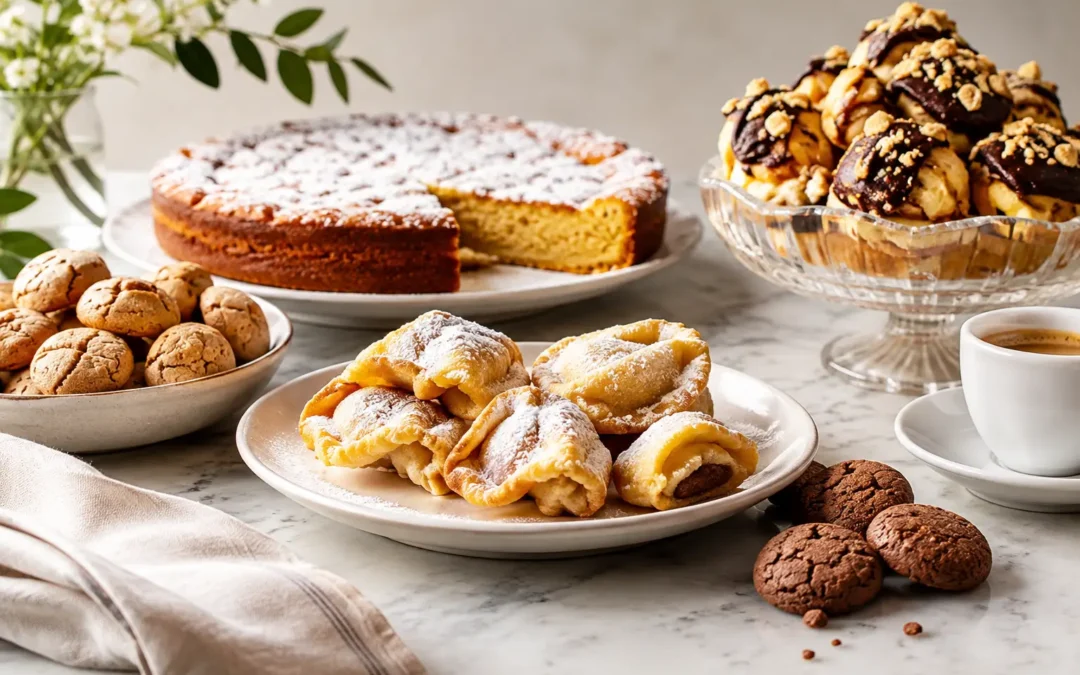
In Bologna, dessert is almost never just the end of a meal. It’s a well-cut slice, a tray brought home on Sunday, dough that smells of lemon zest and mostarda. The traditional Bolognese sweets speak of feast days, convents, countryside, and family tables: recipes born to last, to use available ingredients intelligently, and to be shared.
Don’t expect only showy creams or window-display decorations. Here what counts is rice cooked slowly in milk, almonds, cocoa, Alchermes, mostarda bolognese. Recognizable flavors, often full and measured together. Less special effect, more memory.
Traditional Bolognese sweets: few frills, real character
Bolognese pastry-making has a precise quality: it never fully separates the sweet from everyday life. Some preparations come from religious festivals, others from family snacks, still others from ovens and home kitchens. That’s why recipes change slightly from one area to another and even from one family to another.
Some add more almonds to the torta di riso, some prefer a more crumbly raviole, some want the certosino tall and compact. It’s not confusion: it’s living tradition. A local recipe is serious when it preserves its identity, not when it’s replicated like a regulation.
Seasonality matters too. The certosino calls for winter and Christmas; raviole bring back the feast of San Giuseppe; torta di riso is a crossover presence, perfect after an important meal but also able to turn up at a snack without ceremony. Knowing the right moment helps you taste better.
Torta di riso, the Bolognese that takes its time
Torta di riso is one of the city’s most representative sweets. Milk, rice, sugar, eggs, almonds, and aromatics build a dense, moist texture, almost creamy at the center. It shouldn’t be dry or resemble a fluffy cake: its point is precisely that gentle compactness, achieved by giving the rice time to cook and absorb.
In many versions candied citron, amaretti, almond liqueur, or lemon zest appear. Proportions make the difference. Too much aroma covers the milk, too much sugar flattens the almonds. A good torta di riso has a clear fragrance, clean cut, and a flavor that lingers without becoming heavy.
It’s also known as torta degli addobbi, tied to the popular feast of Corpus Domini and the drapes hung from windows. Today it’s found in different periods of the year, and rightly so: certain things deserve to step outside the feast day. But tasting it when it’s prepared with care, without shortcuts, makes clear why Bologna defends it so fiercely.
Certosino or panspeziale: Christmas with substance
The certosino is the Bolognese sweet that arrives when the air changes. Dark, rich, fragrant with honey, cocoa, spices, almonds, and candied fruit, it doesn’t seek lightness at all costs. It seeks balance. And that’s harder than it seems: one overpowering spice or mediocre candied fruit is enough to ruin everything.
The name recalls the Carthusians, while panspeziale points to the spice merchants, keepers of precious and aromatic ingredients. Two stories that tell the same character: an ancient sweet, born from materials that once held value and still today demand attention. The best certosino isn’t the one most loaded with ingredients, but the one in which every element is felt without making noise over the others.
It should be eaten in small slices, perhaps after dinner, without hurry. The next day it’s often even better, because aromas and textures have settled. It’s not a flaw if it’s compact: that’s part of its craft.
Raviole bolognesi: the feast-day snack
Raviole bolognesi have the shape of a half-moon and a filling that allows no distractions: mostarda bolognese, the dense, dark preserve made with slowly cooked fruit. The shell is a simple shortcrust, crumbly but not dry, designed to hold the filling without stealing its place.
They’re traditionally tied to San Giuseppe and Father’s Day, but waiting until March to eat them would be a shame. A well-made raviole works whenever something substantial is needed: at breakfast, with coffee, at the office during a break that deserves more than a vending machine, or brought to dinner at friends’.
Here the quality of the mostarda changes everything. It must taste of fruit, not only sugar, and have that slightly rustic edge that makes the raviole different from any filled biscuit. It’s a small sweet, but not timid.
Zuppa inglese, the red that divides and convinces
In Bologna, zuppa inglese is a serious matter. Sponge cake or biscuits soaked in Alchermes, pastry cream, and cocoa cream: an essential composition that lives on precision. If the Alchermes is too abundant, it covers everything. If the creams are soft or anonymous, the spoon sinks but the flavor doesn’t arrive.
Its red color is unmistakable, but that’s not enough to make tradition. You need cream made properly, with eggs, milk, and patience. And you need the contrast between the spiced and alcoholic note of the liqueur, the sweetness of the cream, and the light bitterness of the cocoa. It’s a generous sweet, to choose when you want to close the meal with something that has a voice.
The origins of zuppa inglese are disputed and cross Emilia-Romagna well beyond Bologna. There’s no need to force a flag to appreciate it: in Bolognese cooking it has found a real home, with a recognizable and beloved version.
Pinza and zuccherini: the sweets that taste of the oven
Bolognese pinza is fresh pasta or shortcrust rolled around mostarda, baked until golden and fragrant. It has a straightforward, almost homemade appearance, and that’s precisely why it wins you over. It’s cut into slices, shared easily, and improves when the filling is abundant but doesn’t overflow.
Zuccherini montanari come instead from the Bolognese Apennines and carry an ancient gesture: small sweet rings, often tied to baptisms, communions, and weddings. Crunchy, fragrant, and coated with icing, they ask only one thing: not to be treated like a confetti ornament. With a glass of sweet wine or with coffee, one leads to another.
They’re different preparations, but they share a common lesson. The pastry-making of the territory doesn’t need to fake elegance: it finds it in the hand of the person kneading, in the right baking, in the choice of a real filling.
How to recognize a good Bolognese sweet
A traditional sweet doesn’t have to look identical to the one in the perfect photo. But it must be readable at the first taste. In torta di riso you must recognize milk, almond, and rice; in raviole the mostarda must have character; in certosino the aromas must be present without turning into artificial perfume.
Beware of textures that are all the same and flavors that are too sweet. Sweetness, in Bolognese tradition, serves to support the ingredients, not to erase them. The same goes for portions: the richest sweets are better enjoyed in an honest slice than in a huge slab eaten in a rush.
If you get them to go, ask how to store them. Torta di riso must be respected in its moistness, certosino holds up well for a few days, while raviole and pinza give their best when the shortcrust keeps its crispness. A small practical detail can completely change the tasting.
In Bologna people gladly discuss fresh pasta, ragù, and tortellini. Make room for dessert too: choose one, bring it home, and eat it without hurry. Tradition, when it’s done well, doesn’t ask for filters. It only asks for another bite.

by | Sep 27, 2026 | Senza categoria
The meeting ends at 12:45 PM, someone only has twenty minutes, some eat vegetarian, and others want a proper pasta dish. Knowing how to order office lunch means solving these little complications before they turn into a confusing break full of waiting, wrong dishes, and not enough forks.
A good team lunch shouldn’t feel like an event that takes weeks to organize. You need a bit of a method, a reliable partner, and food designed to arrive at the table in good shape, even when that table is a meeting room. Less chaos, more substance. And, if possible, more ragù.
Before ordering office lunch, clarify three things
The first question isn’t “what are we eating?”, but how many people are actually eating? Ask for confirmation by a specific time and account for those on calls, off-site, or absent. Ordering extra can be a sensible choice if the group size varies, but doing it without a plan leads to waste and unnecessary costs.
Next, define the format of the break. A quick lunch between colleagues requires dishes that are easy to distribute and eat quickly. A meeting with clients, a training day, or an internal celebration might instead deserve a broader selection, with pasta dishes, something to share, and maybe a dessert. It’s not about making everything formal: it’s about choosing a pace that fits the occasion.
Finally, gather dietary requirements before looking at the menu. Allergies and intolerances should be reported precisely, not as a last-minute note. Vegetarian alternatives, meat-free preferences, or simpler requests also deserve their place. A well-placed order makes everyone feel considered without turning lunch into an endless Excel sheet.
Choosing a menu that actually works for a break
For an office, the best menu is one that stays good, is easy to serve, and pleases different people. This doesn’t mean choosing bland dishes. It means focusing on quality and getting rid of anything that complicates the break: fragile preparations, messy sauces, tiny portions, or dishes that take a long time to plate.
A fresh pasta dish is often a strong choice, especially when you want to offer something recognizable and satisfying. Tagliatelle al ragù, lasagne, tortellini, and tortelloni bring the idea of a real lunch, not just a snack in front of the computer. For mixed groups, it’s best to include a well-crafted vegetarian option: not an afterthought, but a dish anyone would happily choose.
If the break is very short, more practical formats also work well, with good bread, thoughtful fillings, and easy-to-grab portions. But be careful: practical doesn’t mean sad. A lunch on the go can have character, clear ingredients, and bold flavors.
Drinks are only a minor detail on paper. Still and sparkling water are the basics, but for an informal business lunch, it might make sense to add sodas or a more interesting non-alcoholic selection. Alcohol depends on the context: for a working break, it’s better to keep it light; for a project wrap-up or an after-work drink, that changes.
Portions: no underestimating, no mountains of leftovers
The quantity depends on the time, duration, and type of menu. At lunch, a generous pasta dish can be enough for many; if you add bread, sides, and dessert, portions can be more balanced. For a group working late or coming off an intense morning, it’s better not to underestimate their hunger.
The most organized solution is to choose a common base and a few pre-declared variations. Ten completely different dishes might seem democratic, but they increase the risk of mix-ups, oversights, and delays. Two or three main options, with dedicated alternatives for specific needs, are usually the sweet spot between choice and management.
When to order and what time to set
Planning ahead is the best ally for anyone ordering office lunch. For small groups, booking a few hours in advance might be enough, if the place is available. For large groups, custom orders, or busy days, moving the day before is a sign of respect toward the kitchen and your team.
Always indicate the time the lunch needs to be ready, not the time you plan to start eating. If it takes ten minutes to get back to the office, set the table, and hand out the dishes, factor that in. A pickup set for 1:00 PM for a break that starts at 1:00 PM is the easiest way to have everyone arrive at the table hungry and frustrated.
It’s worth appointing a single person as the contact for the order. Whoever calls or writes must be able to confirm the number of people, menu, allergies, time, and payment method. Decisions made in a chat with eighteen people have their own charm, but they rarely help with punctuality.
Pickup, distribution, and details that avoid problems
When possible, organize the pickup so that one person doesn’t have to cross half the city alone with bags and drinks. If the place is nearby, one or two people are enough; for larger orders, ask in advance how the dishes are packaged and if you need to bring anything for transport.
In the office, clear a table before the food arrives. It seems obvious, but a surface covered in computers, documents, and cables isn’t a good place to hand out fresh pasta. Also, check that you have plates, cutlery, napkins, and space to separate portions with special labels.
Lunch should be eaten at the right time. Hot dishes shouldn’t sit for too long, while items that need refrigeration should be handled carefully. If the meeting looks like it will run over, it’s better to move the order time than to leave the food waiting. Quality isn’t a detail to be sacrificed for the schedule.
In Bologna, office lunch can have more character
Here, lunch isn’t just a technical break between one email and the next. It’s a moment where a well-made dish puts things back in order. Fresh pasta, a ragù prepared with patience, artisanal bread, and the flavors of Emilian tradition make sense even away from the home table: in a coworking space, an office, or a shop, after a busy morning.
Ragù Bologna was born from this very idea: Bolognese cuisine prepared in-house, ready for the city and its pace, without turning tradition into a stage set. For a lunch among colleagues, choosing recognizable and carefully made dishes is a concrete way to level up the break without losing convenience.
You don’t need to make every office lunch special. But when you need to make a group feel good, welcome a client, or simply break up an intense day, it’s worth ordering with a clear idea: good food, respected times, and people who leave the table a little happier than before.
by | Sep 25, 2026 | Senza categoria
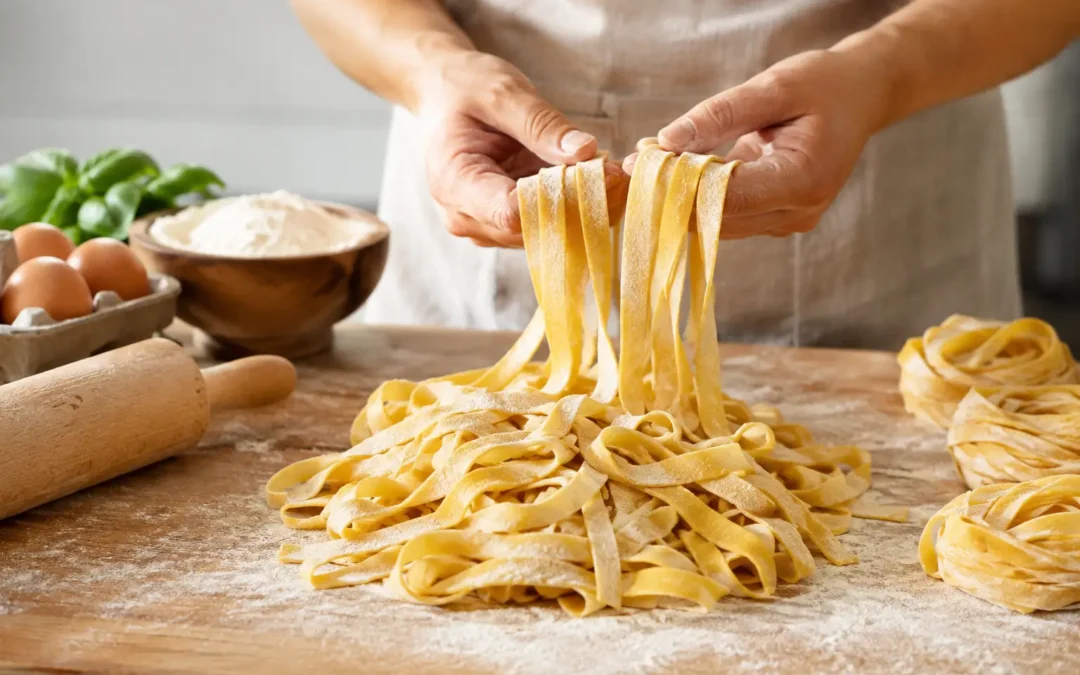
A tagliatella isn’t judged when it leaves the pasta machine. It is judged when it catches the ragù, stays al dente, and reaches the fork with that full texture that needs no special effects. Daily fresh pasta starts here: from respect for a living dough, prepared with care and worked at the right moment.
In Bologna, fresh pasta is not a side note to culinary history. It is the history. Making it every day isn’t just a phrase for the window: it is a precise work choice that requires organization, skill, timing, and constant attention. For those with little time for lunch or who want to take home a dinner done right, the result must be easy to recognize: real fresh pasta, sauce done right, no shortcuts.
What daily fresh pasta really means
It means the dough is prepared and transformed into pasta during the day, not produced in advance to sit waiting for days. Flour, eggs, and technique: the ingredients are few, so every detail matters. The quality of the eggs, the flour’s absorption, the lab temperature, and the air humidity can all change how the fresh pasta responds under the rolling pin or in the machine.
However, it doesn’t mean that pasta must be made five minutes before cooking it. Even fresh pasta needs its time. The dough must rest to relax, and the cut pasta must settle just enough to hold its shape. The point is working it within a correct window of freshness, without pushing it further for the sake of convenience.
You can taste the difference. Well-managed fresh pasta has elasticity, a slightly rough surface, and a structure capable of embracing the sauce. It shouldn’t be rubbery, nor should it give way immediately in the pot. It must have character without becoming heavy.
Bolognese fresh pasta isn’t just a matter of thickness
Saying “thin pasta” isn’t enough. A well-made fresh pasta must be proportioned to the shape and the sauce. Tagliatelle demand a texture that supports the ragù and makes every bite complete. Tortellini require precision: a pasta that is too thick covers the filling, one that is too fragile risks opening during cooking. Tortelloni must be generous, but never coarse.
This is where the craft comes in. The fresh pasta must be uniform, with a consistent hold, without dry spots or tears. It isn’t a technical detail for insiders: it is what separates a dish that tastes like a kitchen from one that looks like it came off a production line.
Egg pasta brings a recognizable flavor, but it must not dominate everything else. Its job is to accompany. With a slow-cooked ragù, it must hold the sauce without turning into an indistinct mass. With butter and sage, it must leave room for the delicacy of the filling. With a Parmigiano Reggiano cream, it must maintain balance and cleanliness.
Tagliatelle and ragù: a pair with its own rules
Tagliatelle al ragù is a direct dish, and for that very reason, it is unforgiving. If the pasta is too smooth, the ragù slides off. If it is overcooked, it breaks and flattens the dish. If the sauce is poured on top at the last minute, instead of being tossed together, each element stays on its own.
The best practice is to toss the pasta in the sauce, with heat and a little cooking water when needed. This way, the ragù enters the texture of the fresh pasta and doesn’t just stay on the surface. You don’t need mountains of sauce: you need proportion. Less hashtags, more ragù, but the right kind.
Why daily production changes the dish
Freshness primarily influences the cooking. Daily pasta cooks quickly but requires presence. A few minutes are enough, depending on the shape and thickness, and waiting too long can change everything. This is why there is no single valid time: the cook must taste, observe, and know their fresh pasta.
It also changes the pasta’s ability to handle transport. In takeaway, this really matters. A dish shouldn’t just be perfect at the pass, but arrive well at the desk, at home, or in the park. Fresh pasta worked correctly, cooked with care, and packaged sensibly retains texture and heat much better than pasta treated without criteria.
Then there is a less visible but decisive aspect: daily production forces you to deal with what is actually needed. Quantities, shapes, and service rhythms are planned. It isn’t an automatic guarantee of quality—even fresh food can be made poorly—but it is the most serious ground on which to build it.
Fresh doesn’t always mean identical
Those looking for industrial perfection are often looking for the opposite of artisanal cooking. Pasta made every day can vary imperceptibly: a more intense shade of yellow, a fresh pasta that requires a few extra seconds, a different humidity. These are not defects when they stay within a controlled process. They are the sign that on the other side there is a kitchen, not a button.
Naturally, artisanal must never mean approximate. Tradition is not an excuse for serving overcooked pasta, irregularly shaped edges without reason, or unbalanced fillings. The know-how lies precisely in holding together manual skill and consistency, respecting the product without useless romanticism.
Sometimes the best choice depends on the occasion. For a quick lunch, tagliatelle al ragù are immediate and complete. For a shared dinner, lasagne and tortelloni give more room for conviviality. For those who want a piece of Bologna to take away, tortellini and homemade sauces allow you to finish the dish in your own kitchen. Every shape has its moment, but the base doesn’t change: a fresh pasta that deserves the sauce it meets.
How to recognize it on the plate and at home
You don’t need the title of sfoglina to understand if the pasta has been treated well. Look at how it presents itself: it must be intact, not stuck together, with sauce distributed uniformly. To the bite, it must offer a slight resistance without being hard. And after the first mouthful, the flavor of the dish should remain, not a sensation of flour or excess salt.
If you take home fresh pasta to cook, keep it in the refrigerator and follow the instructions provided. Cook it in plenty of already salted water, without straying too far from the stove. Prepare the sauce beforehand: with fresh pasta, there is no time to improvise while the water boils. Drain it gently and finish it in the pan without stressing it.
Even reheating a ready-made dish deserves attention. Moderate heat and a few extra minutes are better than an aggressive flame that dries everything out. If the sauce has thickened, a spoonful of water can help bring it back to the right consistency. A little at a time: we aren’t making soup.
A daily choice, not a pose
Making fresh pasta every day means accepting that the work starts over every morning. Kneading, rolling, cutting, closing, cooking. It is a concrete discipline, made of repeated and never automatic gestures. At Ragù Bologna, this idea takes shape in dishes you can eat immediately or take home: local cuisine, urban rhythm, substance in the container.
Next time you choose a lunch on the fly, look beyond the speed of service. A forkful of well-made tagliatelle can be quick without being rushed. And a takeaway dinner can still taste like home, if the fresh pasta was truly prepared for real.
by | Sep 23, 2026 | Senza categoria
A well-made fresh tortellino asks for little: the right liquid, careful cooking, and the gentle hand of someone who’s in no rush to rough it up. Understanding how to cook fresh tortellini means above all respecting the thin fresh pasta and the filling, avoiding two classic mistakes: water that’s too aggressive and randomly decided cooking times.
In Bologna, tortellini have a precise home: broth. But lunch doesn’t always allow for it, and there’s nothing wrong with cooking them in water and dressing them with a delicate sauce. The difference comes down to the quality of the pasta, temperature, and attention to the moment the tortellini enter the pot. Fewer special effects, more common sense.
Before Cooking: Fresh Tortellini, Not Fridge-Cold
Take the tortellini out of the refrigerator while you put the broth or water on the stove. They don’t need to sit at room temperature for hours, but letting them breathe for 10-15 minutes avoids too sharp a temperature shock and helps the pasta cook more evenly.
Don’t separate the tortellini one by one with your fingers, especially if the fresh pasta is very thin. If they’re arranged on a floured tray and a few have stuck together, lift them gently using a flat spatula or by moving the container slowly. Pulling the pasta from the edge is the quickest way to open the cap or let the filling escape.
Also check the label or the instructions from whoever made them. An artisanal tortellino can have thinner or thicker fresh pasta, a tighter seal, and a different filling. That’s why the time indicated by the producer comes before any general rule.
How to Cook Fresh Tortellini in Broth
In Bolognese tradition, the natural destination for tortellini is clear, well-made meat broth. It doesn’t need to be heavy: it should have flavor, but also clarity. If it’s too fatty or too salty, it covers the filling and weighs down the dish.
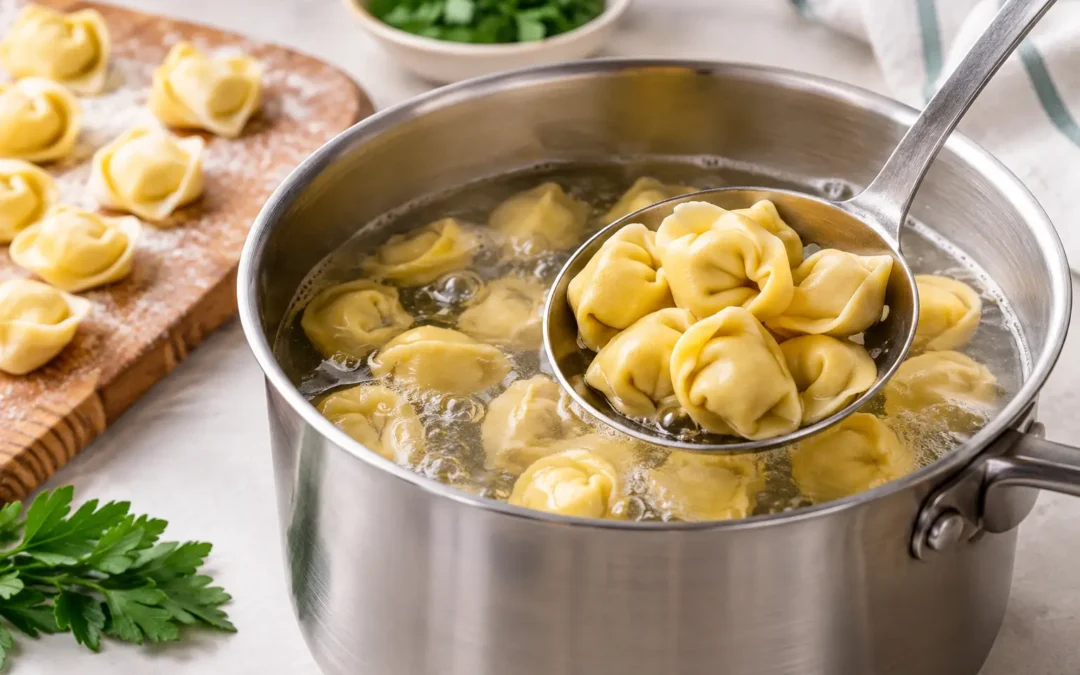
Bring the broth to a boil, then lower the heat slightly. It shouldn’t stop simmering, but it shouldn’t boil with the force of a washing machine either. Add the tortellini a few at a time, distributing them across the surface. A wide pot helps a lot, because it gives the pasta space and limits collisions.
After adding them, make just one slow movement with a wooden spoon or skimmer, just to make sure none are stuck on the bottom. Then leave them alone. Stirring constantly doesn’t speed up cooking: it only increases the risk of breaking the fresh pasta.
How Long Should They Cook in Broth
On average, fresh tortellini require 2 to 5 minutes, but this should be read with judgment. Small ones with thinly rolled pasta can be ready very quickly; fuller ones or those with slightly thicker fresh pasta may need a few more minutes.
When they float to the surface, they’re not automatically ready. It’s a good sign, not a verdict. Wait about another minute, then taste one. The fresh pasta should be soft but not mushy, the filling hot all the way through, and the tortellino still perfectly sealed.
Serve them immediately, with broth that’s hot but not furious. If they wait too long in the pot, they keep absorbing liquid and risk losing precision. Tortellini in broth is a dish that’s simple only in appearance: it arrives at the table when it’s at its peak, not ten minutes later.
Cooking in Water: When and How to Do It Right
If you want to dress the tortellini with melted butter, cream, a Parmigiano Reggiano sauce, or a light sauce, cook them in water. Choose a large pot and fill it with plenty of water, without overdoing the salt: the filling is already flavorful and the dressing can add more.
For a generous portion, allow at least one liter of water per 100 grams of pasta. When the water boils, salt it, wait for it to return to a boil, and lower the heat just slightly before adding the tortellini. The same rule applies here: vigorous boil yes, aggressive vortex no.
Cook them generally for 2-4 minutes, tasting before draining. Use a skimmer instead of pouring them into a colander, especially if they’re very delicate. This way you lift them out without having them knock against each other and you can transfer them directly to the pan with the dressing.
Never rinse them under water. It doesn’t stop the cooking and it washes away that light starch that helps the dressing cling. If you need to wait a moment, keep them in a warm bowl with a spoonful of their cooking water, not piled up dry.
The Dressing Should Be Prepared First
Fresh tortellini don’t wait. Before dropping them in the pot, the dressing must already be ready, hot, and soft enough to welcome them. The passage from pot to plate must be quick: this is where filled pasta stays glossy, intact, and pleasant to bite.
With butter and Parmigiano Reggiano, little is needed: melt the butter over low heat, add a spoonful of cooking water, and add the tortellini very gently. Tossing energetically in the pan, as you would with spaghetti, is a bad idea. Better to move the pan with small gestures or turn gently with a spatula.
With a ragù, choose a modest amount and a consistency that’s not too dry. The tortellino already has a distinct identity: a heavy sauce risks turning it into a mute base. At Ragù Bologna, fresh pasta is meant to be recognizable at first bite, not drowned.
Mistakes That Make Tortellini Open
The first cause of broken tortellini is violent boiling. Large bubbles push them against the walls and bottom of the pot, and a delicate seal can give way. The second is a pot that’s too small, where the pasta clumps together and moves poorly.
Then there’s excessive cooking time. An overcooked fresh tortellino doesn’t become more tender: it becomes fragile, with swollen fresh pasta and a filling that loses definition. Tasting is always more reliable than relying only on the timer.
Storage also matters. Fresh tortellini should be kept in the refrigerator and consumed by the indicated date. If you need to freeze them, do so spread out on a tray, then transfer them to a container when they’re hard. From frozen they should be cooked directly, without thawing, generally adding one or two minutes and checking by tasting anyway.
The Right Amount and Serving
In broth, 100-120 grams of fresh tortellini per person is a balanced portion if the dish is followed by something else. If they become the center of the meal, increase according to appetite and the size of the tortellini. In water with dressing, consider that the dish is richer and adjust accordingly.
Warm the plates or bowls, especially for serving in broth. It’s a concrete detail: a cold bowl immediately lowers the temperature and takes away the dish’s momentum. For Parmigiano, grate it at the last moment and let everyone decide how much to add.
Next time you have a tray of fresh tortellini in front of you, make room in the pot and give yourself three minutes of real attention. The fresh pasta, the filling, and the broth will do the rest. Welcome home.
by | Sep 21, 2026 | Senza categoria
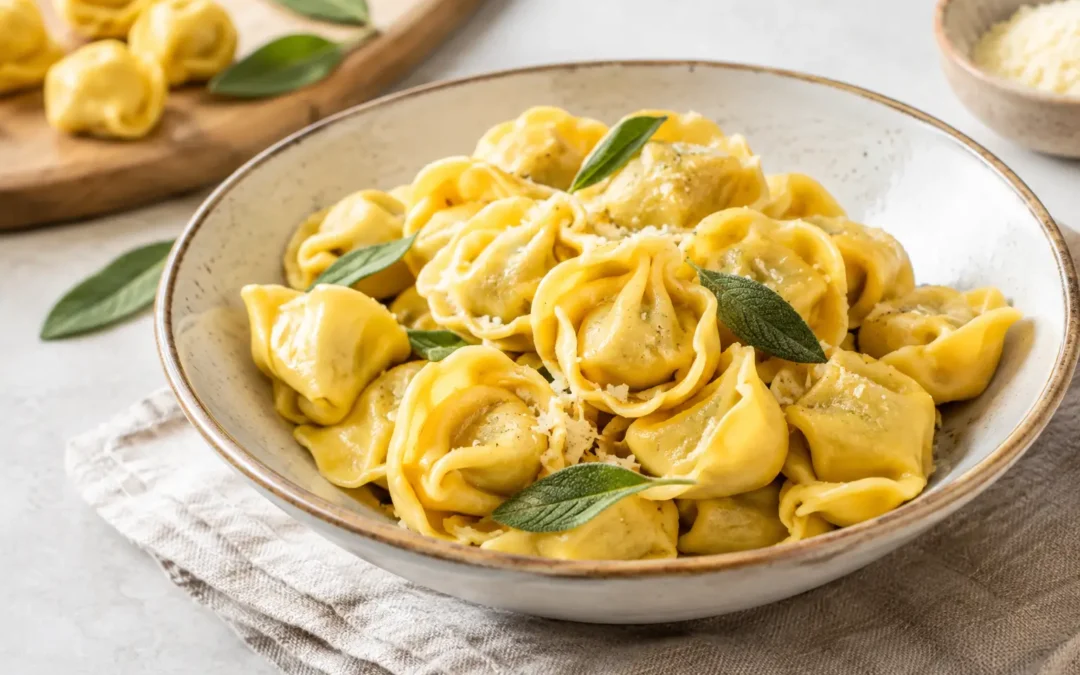
A useful artisanal tortellini review doesn’t stop at a photo of the dish or the number of tortellini in the bowl. It starts with a much more concrete question: is there craftsmanship here, quality ingredients, and respect for a recipe that in Bologna allows no shortcuts? Tortellini are small, certainly. But inside there’s technique, time, and a precise idea of cooking.
Those seeking well-made tortellini want one thing above all: to recognize the difference between a product prepared with care and one that’s merely well presented. No complicated words needed. Just knowing where to look, what to taste, and which compromises make sense when buying fresh pasta to take away.
Artisanal tortellini review: where to start
Artisanal tortellini aren’t automatically good just because they carry this label. Artisanal means the production preserves controlled steps, fresh pasta worked with care, a balanced filling, and cooking that doesn’t betray the work done before. The result, however, is judged on the plate.
The first test is visual, but it shouldn’t turn into a perfection contest. Tortellini rolled and closed by hand can have slight differences in size and shape: that’s normal. What’s not acceptable are open pieces, thick edges, dry fresh pasta, or sloppy folds. Consistency serves the cooking, not the photograph.
Then comes the decisive moment: the bite. Good tortellini must stay intact, offer a thin but present fresh pasta, and release a recognizable filling. If the pasta dominates everything, it’s too thick. If it disappears, it was probably rolled too thin or cooked too long. Balance lies in the middle, as often happens with things done seriously.
Fresh pasta: thin, elastic, never bland
In Bologna, egg fresh pasta isn’t a frame. It’s half the conversation. Flour and eggs, trained hands, dough resting, and the right thickness: few elements that leave very little room for error.
In your review, observe whether the pasta has a vibrant, natural color, without that pale effect of old product or excessive flouring. After cooking it must remain elastic, not rubbery. Well-made fresh pasta holds the filling without becoming a barrier between the eater and the taste of the tortellini.
There’s also a less obvious detail: durability. In broth, tortellini shouldn’t fall apart after a few minutes. In takeaway this aspect matters even more, because time passes between preparation, transport, and service. If the pasta arrives already deteriorated, the problem isn’t with the customer who chose to eat outside the restaurant: it’s a preparation that didn’t truly consider the service.
The filling: rich without being heavy
Traditional Bolognese filling requires precision, not special effects. Meat, mortadella, cheese, hint of nutmeg: ingredients that must speak to each other without one shouting over the others. When everything tastes only of cheese or, conversely, of spice, balance is missing.
A well-worked filling is fine and compact, never dry or grainy. It must be generous for the size of the tortellini, but without swelling it to the point of making closure difficult. On the palate it gives depth, not heaviness. And above all it leaves you wanting the next spoonful.
Personal taste comes into play here. Some love a more pronounced presence of mortadella and others seek greater intensity of aged cheese. These are legitimate preferences. An honest review should distinguish them from a real flaw: saying a filling is more delicate than you prefer is different from saying it’s bland, unbalanced, or prepared with little care.
Quantity and size aren’t enough
Very large tortellini can seem generous, but it’s not always good news. The classic size also serves to maintain a sensible ratio between fresh pasta and filling and to ensure even cooking. Ten well-made tortellini can say more than an abundant portion without precision.
Price should be read the same way. You’re not only paying for the weight of the pasta: you’re paying for the workmanship, the raw materials, the time needed to close each piece, and the ability to deliver it to the counter or home in good condition. This isn’t an invitation to accept any price, but to compare comparable products. Artisanal fresh pasta can’t compete with an industrial product on cost, and it shouldn’t try by giving up its identity.
Broth or cream? Context changes the judgment
For many Bolognese the answer is simple: tortellini in broth. A clear, fragrant, well-skimmed broth that’s savory to just the right degree highlights the tortellini without covering them. If it’s too salty, too fatty, or flat, every flaw is amplified.
That said, judging a proposal outside of broth only because it doesn’t follow the most traditional service would be limiting. Tortellini served with cream, Parmigiano sauce, or more contemporary dressings can work, as long as they’re not a way to mask weak pasta. The question to ask is always the same: does the dressing enhance the tortellini or hide them?
In takeaway, broth requires extra care. Pasta and liquid, if they stay together too long, continue to influence each other. Separating them until the moment of consumption is often the smartest choice. It’s not less authentic: it’s respect for texture and for those who will eat perhaps twenty minutes after purchase.
The takeaway test: the most honest proof
Tortellini can be excellent just drained and disappointing after a short journey. For those lunching between classes, returning to the office, or bringing dinner home, quality also includes what happens after the counter.
Good packaging protects the heat without turning the fresh pasta into a soggy mass. Instructions must be clear, especially if broth and pasta are separate: few steps, realistic timing, no laboratory language. Portions matter too. They must be designed for a real meal, not for a photo or to force ordering more.
This is where a kitchen like Ragù Bologna truly measures its promise: tradition doesn’t mean immobility. It means doing things as they should be done and adapting service to city life, without sacrificing the dish in transit.
How to write a review that helps someone
A useful review tells facts. Instead of limiting yourself to a generic “delicious,” it’s worth indicating whether the fresh pasta was thin, whether the filling was balanced, whether the broth was clean, and whether the product held up during transport. Timing matters too: rushed lunch, dinner at home, portion eaten immediately or reheated later.
If something didn’t work, better to be specific. “Tortellini overcooked and broth excessively salty” helps both those preparing and those reading much more than a dismissal without details. The same goes for compliments: noting excellent fresh pasta or a well-balanced filling acknowledges the concrete work behind a dish that’s often taken for granted.
Don’t look for fake perfection. Look for consistency, care, and taste. Tortellini with a slight difference in closure can be handmade; flawless but characterless tortellini can tell much less.
Next time you dip your spoon into the broth, take an extra minute. If fresh pasta, filling, and service hold together, you’re not just eating fresh pasta: you’re tasting Bologna, without frills.
by | Sep 19, 2026 | Senza categoria
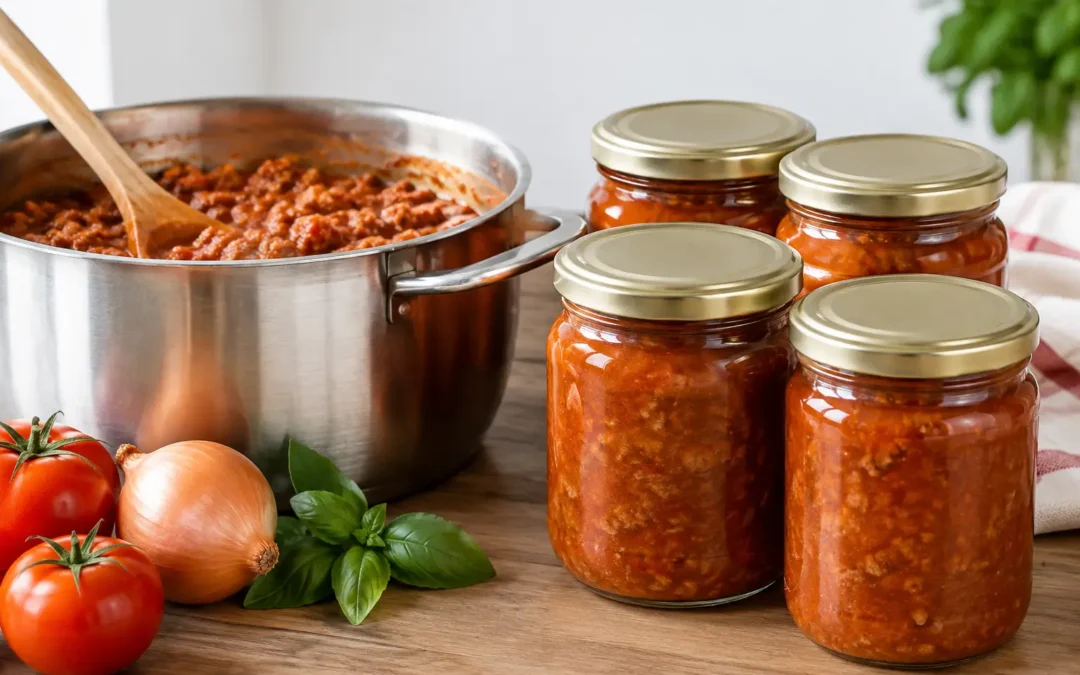
A well-made ragù isn’t improvised: it starts with a patient soffritto, meat chosen with criteria, and cooking that lets time do the work. Jarring ragù deserves the same attention. Because a jar isn’t just a convenient way to bring Bologna home: it’s a preservation method that, if handled poorly, can become risky.
The first rule is simple and worth more than any social media shortcut: ragù is a low-acid food and contains meat. It’s not enough to fill a boiling jar, close it, and wait for the classic vacuum “click” to make it safe at room temperature. That sound means the lid has created a vacuum, not that the product has been sterilized as necessary.
No magic here. Less hashtags, more ragù. And more care.
Why ragù requires special attention
Tomatoes, wine, and long cooking provide flavor, but they don’t automatically turn ragù into an acidic preserve. The pH generally remains too high to rely solely on home pasteurization in boiling water. In an oxygen-free environment, like a closed jar, some microorganisms can find favorable conditions if the heat treatment is inadequate.
The critical point is botulism. It has no smell, doesn’t necessarily change the color of the contents, and doesn’t always make the lid bulge. This is why you don’t judge a jar by sight or taste. You prevent it with a correct process, not with the hope that “we’ve always done it this way” is enough.
Controlled acidification and validated professional procedures can make some preserves shelf-stable. But for a home-cooked meat ragù, there is no reliable shortcut based on a little more tomato, vinegar added by eye, or prolonged boiling of the jars. The acidity must be measured and the recipe must be designed for that purpose.
Jarring ragù at home: the two safest choices
If you prepare ragù at home and don’t use specific equipment and procedures for low-acid preserves, the most prudent path is to keep it in the refrigerator or freeze it. These are two simple, concrete methods, perfect for protecting the work done at the stove.
In the refrigerator, the ragù should be transferred to clean, well-sealed containers and cooled quickly. Consume it within a few days. The fridge slows microbial growth, but it doesn’t stop time: don’t turn leftover dinner into a preserve to be forgotten on the shelf.
The freezer is the best solution when you want to prepare a good amount of sauce. It maintains quality and safety longer, allows you to organize lunches and dinners without sacrificing taste, and avoids filling the pantry with uncertain jars. Portions for two people or for a tray of lasagne are more practical than a single huge container: you only thaw what you need.
If you want a pantry-stable preserve
To store ragù at room temperature, you need a specific process for low-acid foods, with pressure treatment, times, and temperatures defined by reliable technical sources and adapted to the recipe, container size, and equipment. A simple water bath pot does not reach the conditions necessary to safely process a meat sauce.
In a professional kitchen, a preserved product requires standardized recipes, process controls, rigorous hygiene, and verified parameters. It’s a different job from putting away Sunday’s ragù. If you don’t have a validated process, the refrigerator and freezer remain the right answer.
How to prepare ragù before storing it
Preservation begins while you cook. Use fresh ingredients, meat always kept cold, and clean utensils. Cook the ragù thoroughly and don’t leave it for hours on the kitchen counter after service. The hot pot is convenient, but it’s not a refrigerator.
When the ragù is ready, divide it into shallow portions. A large mass in a tall container cools slowly at the center, exactly where you don’t want to leave food too long in the temperature range favorable to bacterial proliferation. Shallow trays or several small jars work better.
You can aid cooling by placing the container, tightly closed, in a cold water and ice bath, stirring the ragù with a clean utensil until it loses heat. Then transfer it to the refrigerator or freezer. There’s no need to wait for it to reach room temperature: in fact, it’s better to shorten that step.
Glass jars are perfectly fine for the refrigerator, provided they are intact, clean, and suitable for thermal shock. For the freezer, always leave free space at the top: ragù, like any water-rich food, increases in volume when freezing. Filling to the brim means risking cracks, deformed lids, and an unwanted cleanup.
Portions, labels, and timing: the less romantic part that saves dinner
Writing a label takes ten seconds and resolves many doubts. Indicate what the container contains, the date of preparation and, if it helps, the number of portions. “Ragù October 12” is much more useful than a mysterious red jar at the back of the freezer.
For daily use, organize the ragù based on what you actually cook: one portion for seasoning tagliatelle, two portions for a quick dinner, a larger dose for lasagne or baked pasta. This way you aren’t forced to thaw everything, take a part, and refreeze the rest.
Refreezing isn’t always absolutely forbidden, but it complicates quality and safety. If the ragù has thawed in the refrigerator and hasn’t stayed out of temperature for too long, it can be recooked and frozen again, but the result tends to worsen. Better to avoid the unnecessary cycle: portioning well at the start is smarter.
In the freezer, ragù remains safe if kept constantly frozen, but the flavor doesn’t stay still forever. To enjoy the texture and aroma at their best, use it within a few months. It’s not an endurance test: it’s a promise of a good dinner.
How to thaw and reheat ragù
The safest way to thaw is to leave the container in the refrigerator from the night before. If you’re in a hurry, you can use the microwave with the defrost function or go directly to the saucepan over low heat, adding a splash of water if the sauce is very thick. In both cases, the ragù must then be heated evenly until it is piping hot at the core.
Avoid leaving a jar on the table all afternoon. It may seem harmless, but it causes the ragù to sit too long at an unsafe temperature. And don’t taste a product that has a strange smell, an abnormal lid, leaks, or mold. When in doubt, throw it out: no sauce is worth a risk.
If you open a container stored in the refrigerator, use a clean spoon and close it again immediately. Small habits matter. They are what keep the ragù good until the last forkful, without turning the fridge into an experiment.
The taste of ragù deserves the right method
An authentic ragù needs fresh pasta, bread ready to scoop up the sauce, and a table without haste. But it also needs sensible storage. At Ragù Bologna, we work every day on the value of home-made preparations, knowing that quality isn’t just in the recipe: it’s in the respect for every step, from the saucepan to the container.
If you want to keep a stock ready, choose the freezer without feeling it’s a fallback. A well-frozen ragù preserves the character of a proper lunch and waits for you when the day is rushing. Just thaw it calmly, put the water on, and let the aroma do the rest.