by | Aug 18, 2026 | Senza categoria
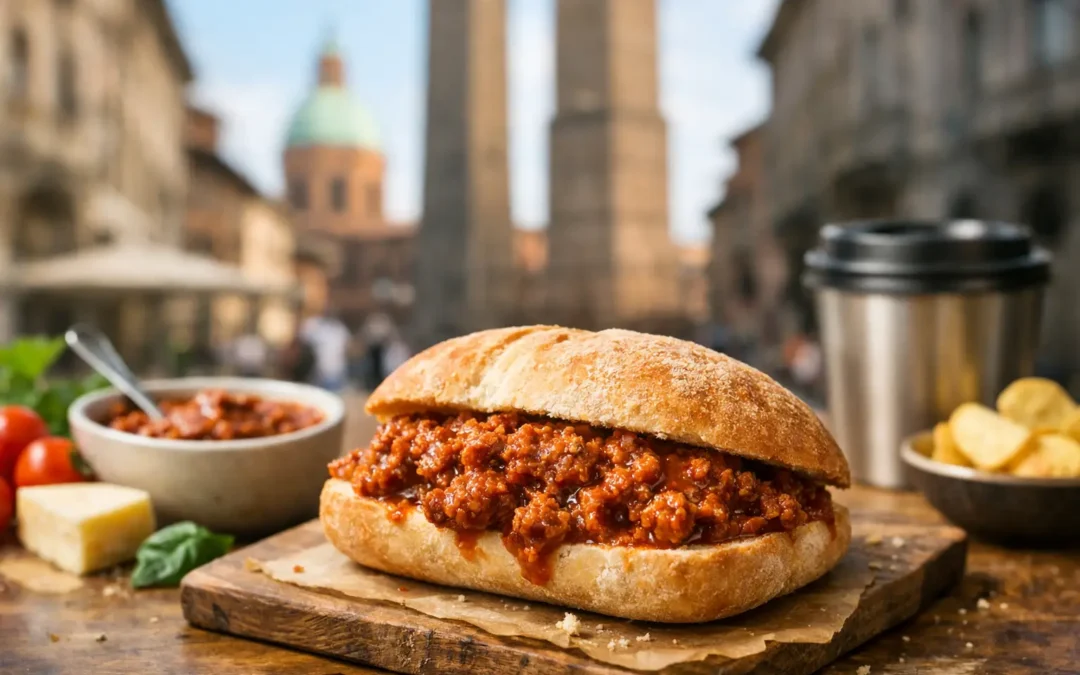
In Bologna, the ragù sandwich shouldn’t pretend to be a Sunday dish. It’s something else: a serious answer to hunger between classes, a tight lunch break, a walk downtown, or an aperitivo that deserves more than just a few chips. The point isn’t just putting a sauce in bread. The point is taking the character of ragù out of the plate, without watering it down or turning it into a window-dressing gimmick.
Bolognese ragù has its own timing, its own ingredients, and a density that can’t be faked. The sandwich, on the other hand, demands rhythm, practicality, and the ability to be eaten with your hands. Making these two needs coexist is a matter of cooking, not special effects. Less hashtags, more ragù.
The ragù sandwich is not a shortcut
Bolognese tradition is well acquainted with ragù paired with fresh pasta, especially tagliatelle. That is its most natural pairing: the sfoglia holds the sauce, accompanies it, and picks up every bit. The ragù sandwich belongs to a more urban and contemporary language, but it’s no less legitimate for it.
It’s a street food format that can remain deeply local. It all depends on how it’s built. If the ragù is prepared with care, using well-chosen meat, vegetables, balanced tomato, and slow cooking, it keeps its identity even between two slices of bread. If, instead, it’s a generic sauce—too liquid or too sweet—the bread won’t save it: it just makes it easier to eat.
There’s a clear difference between adapting a recipe to a new way of eating and simplifying it until it’s lost. The first case is living cuisine. The second is fast food disguised as Emilia.
How to recognize a well-made sandwich
The first sign is the aroma. Even before tasting it, a good ragù must smell of patiently cooked soffritto, browned meat, and concentrated sauce. It shouldn’t overpower everything with tomato, nor leave a sugary note in the mouth. Ragù doesn’t need to shout: it needs to have depth.
Then comes the texture. In a sandwich, the filling must be soft but compact. Too dry and it becomes stringy; too fluid and it escapes the bread at the first bite. The balance is that dense consistency that coats, stays in place, and leaves the bread still recognizable.
The bread matters as much as the filling. It must have crust and structure, but without turning lunch into an endurance test. A well-baked artisanal bread supports the ragù, absorbs just enough, and offers contrast. Soft bread falls apart. Bread that’s too dry breaks the rhythm and makes the filling disappear behind an overbearing crust.
Finally, there are the proportions. A ragù sandwich isn’t a contest to see who can put in the most sauce. An exaggerated filling might seem generous, but it often ends up being messy and confusing. The right portion leaves room for the bread, ensures ragù in every bite, and doesn’t force you to eat with ten napkins in hand.
Ragù must remain the star
Cheese, vegetables, extra sauces: everything can work, but nothing should mask the ragù. A cream that’s too salty, a dominant mayonnaise, or ingredients added just for volume completely change the dish. Sometimes a single detail is enough, especially if it brings freshness or a slightly acidic note. But the center must remain clear.
This also applies to more creative versions. Innovating doesn’t mean throwing random ingredients together. It means understanding which element adds something to the bite: a texture, a scent, a contrast. If it adds nothing, it’s better to leave it out.
When to choose it and how to eat it
The beauty of the ragù sandwich is that it doesn’t require a formal occasion. It’s great for lunch when you’re looking for a real meal without sitting down for two hours. It’s great in the evening, before a movie or after work. It’s also great for sharing during an aperitivo, if there are people at the table who prefer substance over the usual offerings that are all crunch and no memory.
However, it’s not always the only choice. If you have time, want to experience ragù in its most classic form, and are looking for a dish that requires a fork and calm, tagliatelle al ragù remains a choice that’s hard to beat. The sandwich wins when you need freedom and speed without sacrificing quality. They are two different ways of enjoying the same gastronomic heritage.
Eating it right away is almost always the best choice. The heat of the ragù softens the bread over time, and it’s in the first few minutes that you find the most pleasant contrast between crust, crumb, and sauce. If you take it to go, keep it closed for as little time as possible: steam is useful for warming, but it’s no friend to crispness.
To accompany it, a fresh and not-too-sweet drink helps cleanse the palate. A beer with a good bitter vein can work very well. Even a draft cocktail, built with balance and without excess, can be an interesting companion: ragù has character, so it doesn’t need to be overpowered by sugar or aggressive aromas.
The value of serious takeaway
For years, takeaway food has been associated with compromises: standard ingredients, fast preparation, identical flavors everywhere. Bologna can do things differently. A lunch picked up at the counter can contain hand-rolled pasta, carefully produced bread, well-sourced meats, and sauces prepared as they should be.
This is where a sandwich stops being just a sandwich. It becomes a concrete way to eat the city, even when the day doesn’t allow for a long table gathering. You don’t need to make it complicated. You need to respect the product, organize the service well, and deliver a bite that makes sense from the first to the last mouthful.
At Ragù Bologna, this idea comes from our internal kitchen: ragù, sfoglia, bread, and preparations are born to give takeaway the same dignity as a dish served at the table. Not mothballed nostalgia, but Bolognese recipes ready to fit into the real rhythm of the city.
A small bite, a big responsibility
Talking about tradition doesn’t mean freezing Bologna in a postcard. Habits change, breaks are shorter, people eat on the move and often look for a credible alternative to cookie-cutter formats. The ragù sandwich can meet this need without losing its Bolognese accent, provided there are real hands, time, and ingredients behind it.
Next time you choose one, look beyond the name on the sign. Ask yourself if the bread holds up, if the ragù speaks clearly, and if every ingredient has a reason to be there. If the answer is yes, you’re not just having a snack: you’re giving your hurry a much more serious flavor.
by | Aug 16, 2026 | Senza categoria
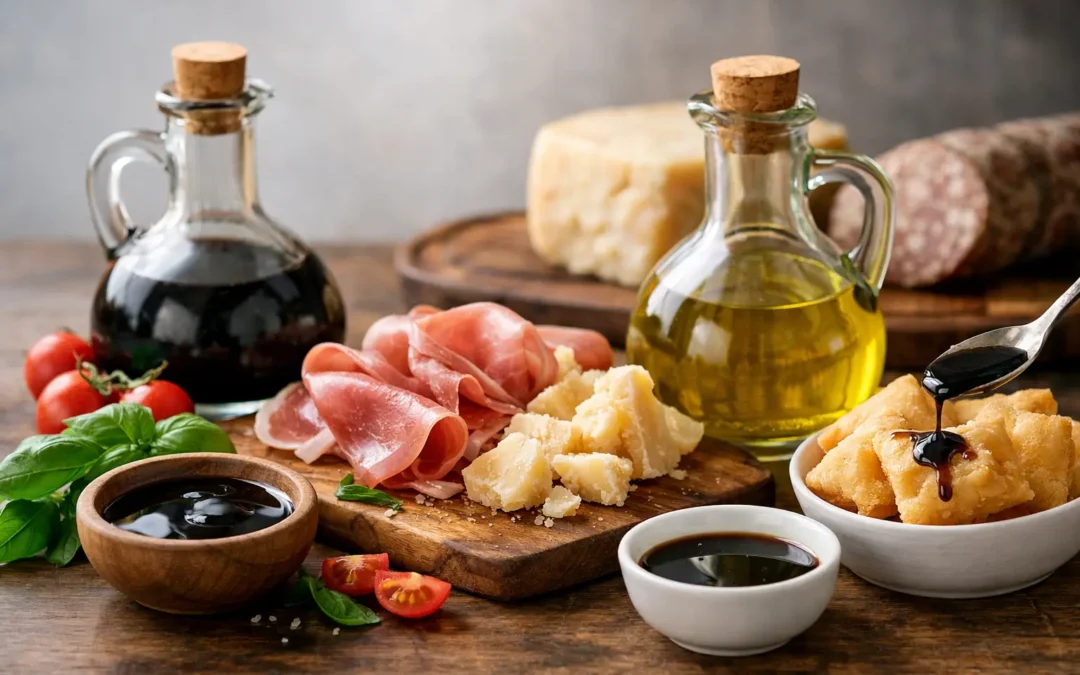
Fresh pasta doesn’t ask for special effects. It asks for a sauce made well, with the right timing and recognizable ingredients. The best traditional Emilian sauces are born right here: from respect for fresh pasta, from seasonality, and from cooking that doesn’t cover up, but accompanies.
In Emilia, every shape has its own path. Tagliatelle want a ragù that clings to the pasta; tortellini ask for a clear, fragrant broth; tortelloni pair well with butter and Parmigiano, but can change character with a seasonal sauce. There’s no universal sauce. There’s the pairing made with good judgment.
The Best Traditional Emilian Sauces for Fresh Pasta
Ragù alla Bolognese: Time Inside the Sauce
When you talk about Bologna, ragù comes first. It’s not a quick red sauce, nor a meat sauce carelessly tossed over pasta. It’s a preparation built in layers: soffritto base or ground meat, aromatics, tomato in the right measure, milk, and a slow cooking that brings all the flavors together.
Ragù alla bolognese needs balance. The tomato should support, not dominate. The meat should stay present without becoming dry. The right result is intense, enveloping, never aggressive. On fresh tagliatelle it finds its natural format: the rough surface of the pasta holds the sauce and every forkful stays complete.
Lasagne alla bolognese also lives on ragù, but with different logic. Here layering comes into play: pasta sheets, ragù, béchamel, and Parmigiano Reggiano must work together without turning into a heavy block. The ragù is the backbone, but it shouldn’t take over the whole show.
One detail matters more than many slogans: the ragù should be tossed with the pasta, not simply poured on top. That’s where a portion goes from good to memorable.
Melted Butter and Parmigiano Reggiano: Few Ingredients, Zero Shortcuts
Tortelloni with ricotta and spinach, chard, or squash: in many cases the right sauce remains the most essential. Melted butter and Parmigiano Reggiano aren’t a fallback solution. They’re a quality test. If the filling is made well and the pasta is fresh, there’s no need to hide it under a mountain of flavors.
The butter should be measured with a light hand, just hazelnut-brown if you want a more toasted note, but never burnt. The Parmigiano should be chosen for its ability to give savoriness and depth, not to cover everything. A bit of pasta water can help create a natural cream that coats the tortelloni without weighing them down.
This sauce works especially when you’re looking for the clean taste of fresh pasta. At lunch, in a quick break, it can be perfect: it’s comforting, straightforward, and doesn’t tire you out. But precisely for this reason it doesn’t allow mediocre ingredients.
Broth for Tortellini: A Sauce You Don’t See
Calling it just broth is reductive. For tortellini, broth is as much part of the recipe as the filling and the hand-folding. It should be clean on the palate, rich without becoming greasy, fragrant without tasting only of celery or bouillon cube. Its function isn’t to steal space from the tortellini: it’s to make them even better.
The Bolognese tradition calls for meat broth, obtained through patient cooking. Served piping hot, it keeps the tortellini soft and immediately brings to the table that sense of home that needs no explanation. It’s the holiday dish, sure, but it shouldn’t be locked away in the December calendar.
There’s also a question of season. In the cold, tortellini in broth are hard to beat. In warmer months, instead, many prefer other shapes and drier sauces. Tradition isn’t a cage: it’s understanding what truly brings out the dish in front of you.
Béchamel: The Creaminess That Holds Lasagne Together
In Emilia they often say besciamella, but béchamel is a precise gesture of home cooking. Milk, butter, flour, salt, and a grating of nutmeg, when needed. No mysteries, but it requires attention: a consistency that’s too liquid soaks the pasta; one that’s too thick makes the lasagna compact and heavy.
In lasagne verdi alla bolognese, the béchamel brings softness and binds the ragù to the pasta. It shouldn’t be the star. If when you cut into it you see a dominant white layer, something’s off. Good lasagna maintains a balance: recognizable pasta sheets, present ragù, delicate cream, a crust of Parmigiano on the surface.
It’s one of the most underrated Emilian sauces because it seems simple. In reality it’s what decides the structure of the dish. A lasagna can have excellent ragù and still fail if the béchamel isn’t made with care.
Traditional Emilian Sauces That Change with the Season
Emilian cuisine is famous for hearty dishes, but it also knows how to be precise with vegetables, herbs, and lighter flavors. The right sauce depends on the filling, the temperature, and how much you want to stay faithful to a local habit rather than a codified recipe.
Tortelloni with ricotta and spinach can meet butter and sage, especially when the sage is fresh and used without overdoing it. Squash tortelloni find in melted butter, Parmigiano, and sometimes amaretti a sweeter, more aromatic path, typical of the Mantua area but loved on Emilian tables too. Here balance is fundamental: squash is delicate and it takes little to push the dish toward overly sweet.
In spring, peas, asparagus, and herbs can give life to soft sauces for filled pasta or tagliatelle. In autumn come mushrooms, sausage, and radicchio, with more depth but no obligation of heaviness. The rule remains one: the sauce must have a consistency suited to the pasta. A sauce that’s too watery slides off; one that’s too thick smothers the fresh pasta.
How to Choose the Right Sauce
First you look at the shape. Wide tagliatelle hold a meat ragù; pappardelle can welcome even more rustic sauces; tortellini give their best in broth; tortelloni ask for sauces that let the filling speak. It seems obvious, but many wrong pairings come from putting the same sauce on everything.
Then you consider the moment. A container of tagliatelle al ragù is a sure thing for a lunch that needs to be quick but serious. Lasagne solve a dinner to share. Tortellini in broth require more calm, a set table, and maybe an evening that asks for comfort. Bringing home a ready-made artisanal sauce doesn’t mean giving up on good cooking: it means having already made the right choice.
Storage also matters. A ragù prepared with care maintains its character if it’s cooled and reheated properly, over low heat and without rushing. Fresh pasta, instead, should be treated with respect: a few minutes of cooking and sauce ready to meet it, not the other way around.
Real Tradition, Not a Postcard
The best sauces aren’t the ones with the most ingredients or with a fancy name. They’re the ones that know where to stop. A ragù should taste like ragù, not like marketing. The Parmigiano should give character, not cover up. The broth should smell like cooking, not like a shortcut.
In Bologna, Ragù Bologna works on this idea every day: fresh pasta, homemade sauces, and recipes that stand up even outside Sunday dinner. Because tradition isn’t keeping everything under a glass dome. It’s being able to eat well today, even between a class, a work shift, and an impromptu dinner.
Next time you choose an Emilian pasta, start with the sauce but also look at what it needs to accompany. If the fresh pasta remains the star, you’re already on the right path. Fewer special effects, more ragù.
by | Aug 14, 2026 | Senza categoria
Handmade Bolognese pasta sheets aren’t just a backdrop for ragù. They’re the starting point for everything: tagliatelle that holds the sauce, tortelloni with a thin but present edge, lasagne that stands firm and doesn’t surrender at the first cut. In Bologna you recognize it before even tasting it: from the warm color of the egg, from the matte surface, from that lively texture that has nothing standardized about it.
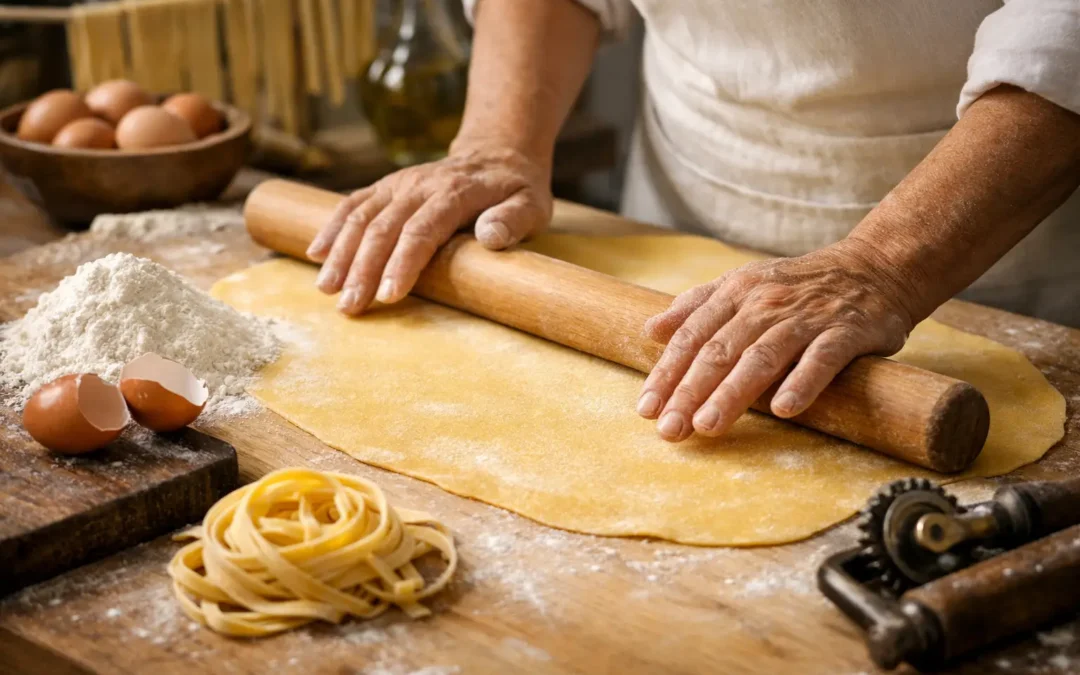
Making pasta sheets requires few ingredients and plenty of attention. Flour, eggs, a work surface, and a rolling pin. The rest is hand, eye, and time. Fewer special effects, more precision.
What Makes Handmade Bolognese Pasta Sheets Special
The recipe seems essential precisely because it can’t hide mistakes. If the dough is too dry, the pasta breaks during rolling and cooks poorly. If it’s too soft, it sticks, loses structure, and struggles to hold the sauce. If the sheet is rolled unevenly, the same dish will have pieces that are overcooked and others still tough.
The best-known reference is one egg per 100 grams of flour, but it’s not written in stone. Eggs vary in size, the day’s humidity matters, flour absorbs differently. Those who make fresh pasta every day don’t just weigh: they look at the dough, feel it under their fingers, and adjust accordingly.
Flour matters too. Flour that’s too weak can make the pasta fragile; flour that’s too strong risks producing a tough sheet, difficult to roll and less delicate to bite. The choice depends on the format, the filling, and the desired result. For tagliatelle you need elasticity and hold, for tortellini you need a sheet that can close well without becoming thick.
Then there are the eggs. They’re not there to color the pasta like a well-filtered photograph. They’re there for structure, flavor, and texture. A rich yolk gives the sheet that natural yellow that changes slightly with the seasons and with the raw materials. That’s fine: handmade pasta doesn’t need to be identical every day, it needs to be good every day.
From Cutting Board to Rolling Pin: The Work You Don’t See
The flour well on the cutting board is a recognizable gesture, but it’s not enough to make tradition. The eggs must be incorporated gradually, gathering flour from the edges until you get a compact dough. At first it may seem rough, even uncooperative. That’s normal. The dough must be worked until the mass becomes smooth, elastic, and uniform.
This is where the real kneading comes in, done with the palm of the hand and with a repeated, firm movement, without rushing. It’s not about mistreating the dough: it’s about developing its structure. Kneading that’s too brief leaves an irregular dough; distracted kneading creates weak points that the rolling pin will reveal later.
Resting is part of the work, not an optional pause. After being kneaded, the dough needs to relax covered, so the moisture distributes and the dough’s network stops resisting. Rolling it immediately means fighting with a sheet that springs back. Waiting the right amount of time allows you to roll it with more precision and less working flour.
The rolling pin doesn’t simply flatten. It guides the dough from the center outward, rotates it, lengthens it, and thins it little by little. The sheet must remain even, but not sterile. A slight variation tells the story of the human gesture; a wrong thickness, however, shows up on the plate. They’re two very different things.
That’s why you don’t judge a pasta sheet only by how thin it is. For certain formats, pasta that’s too thin breaks during cooking or doesn’t support the filling. For others, a thicker sheet covers the flavor of the sauce. The right measure always depends on where that pasta needs to go.
Tagliatelle: The Right Width, The Right Roughness
Tagliatelle al ragù calls for an elastic sheet, dry on the surface and cut evenly. They shouldn’t be just any ribbons. Their width has a purpose: to catch the ragù and distribute it well with every forkful, without leaving the sauce at the bottom of the container.
The cutting must also be done at the right moment. If the sheet is too fresh, the strips tend to stick together; if it’s too dry, they break and lose softness. It’s a brief balance, to be caught. That’s why fresh pasta isn’t just a list of ingredients, but a sequence of correct timings.
Tortellini and Tortelloni: When Thickness Decides Everything
In filled formats the sheet has an extra responsibility. It must wrap the filling without falling apart, seal the edges well, and leave room for the internal flavor. A tortellino with heavy pasta tires the palate. A tortellone with a sheet that’s too fragile risks opening in the water, wasting the work done before.
Sealing requires confident hands and little excess moisture. If the edge is too wet, the pasta slips; if it’s dry, it doesn’t stick. These are details that only seem small. In a pasta workshop, they’re the details that separate a well-made format from one that needs redoing.
How to Recognize Good Fresh Pasta on the Plate
You don’t need to be a pasta maker to tell if the pasta in front of you has been treated well. Just observe and taste with a bit of attention. Good pasta sheets have a clear aroma of egg and flour, not a flat or overly floury smell. After cooking they remain soft but not limp, with a full and clean bite.
The sauce should cling, not float. In the case of ragù, this means the pasta shouldn’t be shiny as if it had been forcibly oiled, nor completely smooth. A slight natural roughness helps the sauce stay where it belongs: on the tagliatelle.
Watch the color too. A yellow that’s too bright and perfectly uniform isn’t always a virtue. Artisanal pasta sheets change based on the eggs and the processing. What matters more is their texture: they should have character, not look like a film without memory.
The final test comes a few minutes after serving, especially with takeaway. Well-made pasta must maintain dignity even during the trip home or to the office. It won’t be identical to pasta eaten freshly drained, because heat and sauce continue to work, but it shouldn’t turn into a soft mass. That’s why how it’s dressed, portioned, and packaged also matters.
Fresh Pasta Sheets Aren’t Nostalgia
Talking about Bolognese pasta sheets doesn’t mean putting tradition under a glass dome. It means bringing into the present a method that works: recognizable ingredients, daily preparation, formats designed for their sauce, and attention to every step.
In Bologna, this culture fits perfectly into a quick lunch break, a dinner taken home, or an aperitivo that calls for something more than a distracted snack. At Ragù Bologna, fresh pasta comes from exactly this idea: local cuisine done right, ready to follow the city’s rhythm without becoming impersonal food.
Next time you choose a plate of tagliatelle, don’t stop at the amount of ragù. Look at how the pasta supports it, taste the edge, feel if the bite stays lively. That’s where a pasta sheet tells the story of the work done before. And when it’s done well, it doesn’t need to raise its voice: one forkful is enough.
by Marco Vastola | Aug 13, 2026 | Senza categoria
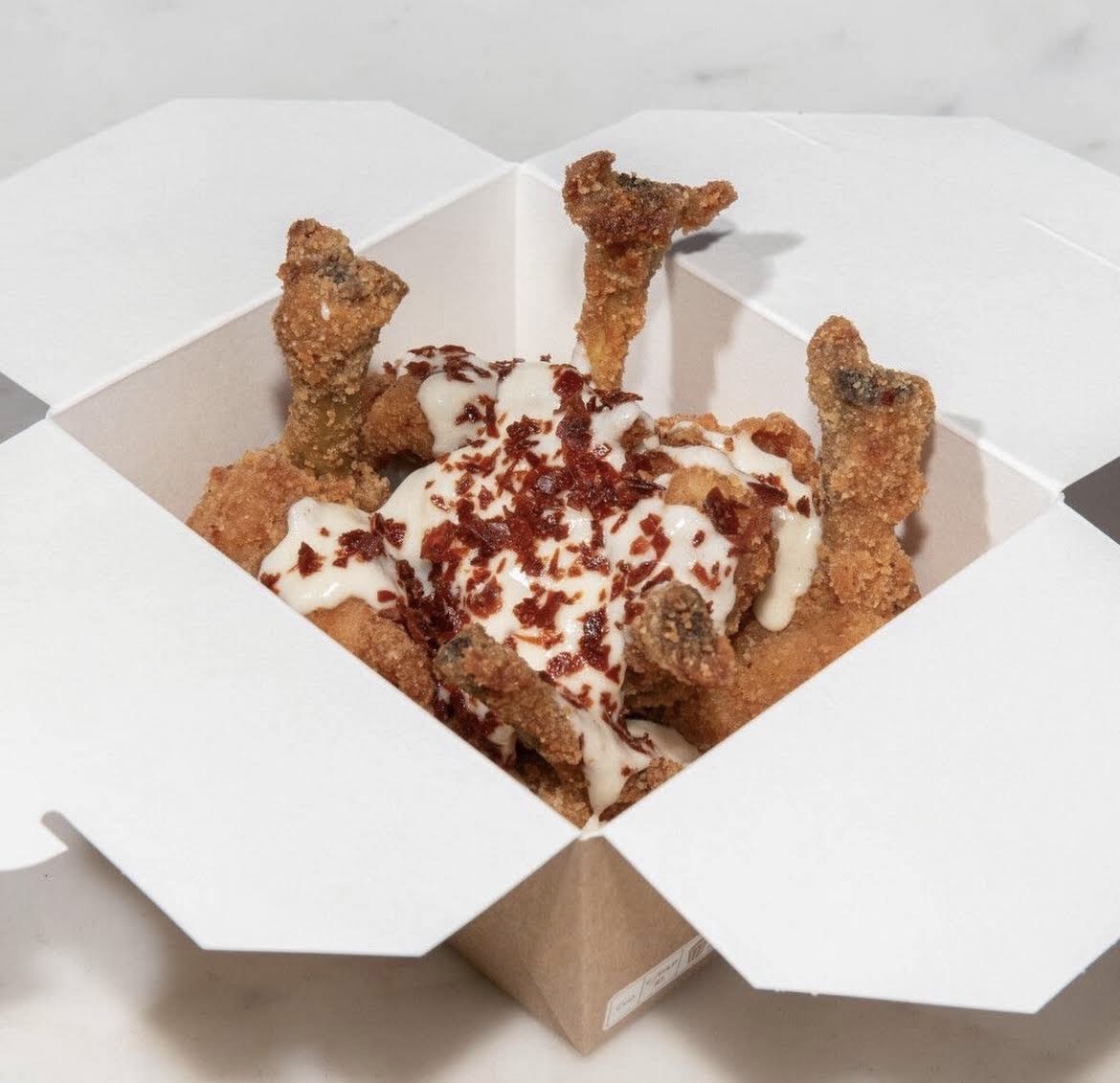
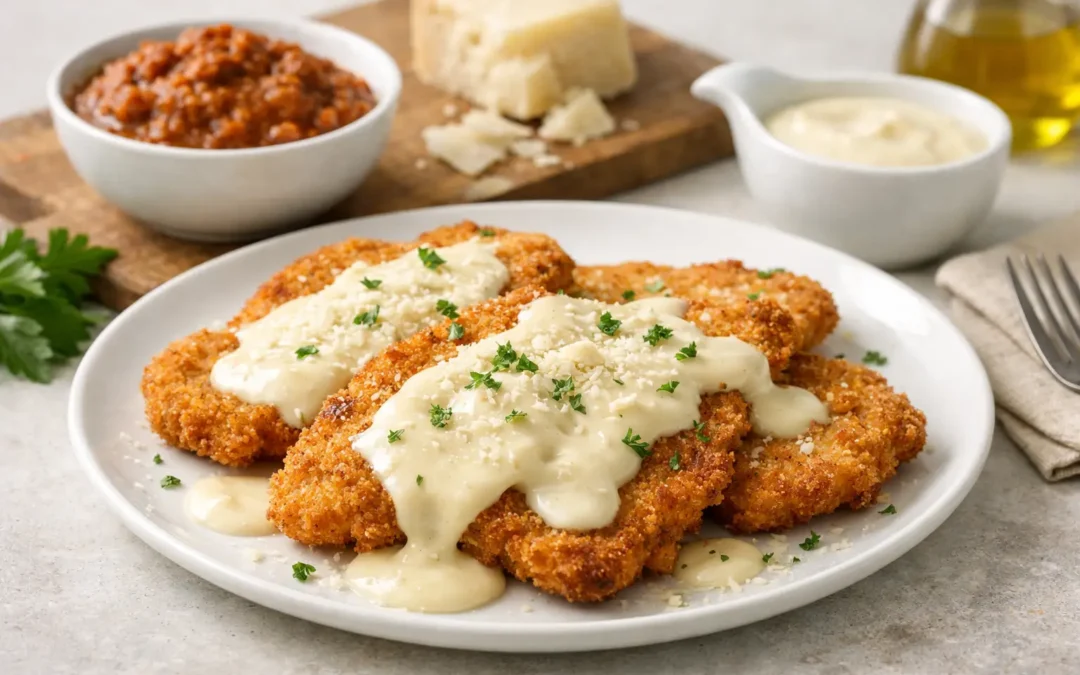
Cotolettine with Parmigiano cream from Ragù Bologna aren’t a second course to eat absentmindedly between one thing and another. They’re the clean crunch of breading under your teeth, the tenderness of the meat, and that warm, savory, enveloping cream that tastes of Emilia without needing special effects. A recipe that’s simple only in appearance, made for those who want to eat well even when time is short.
Cutlets are appealing because they’re straightforward. They don’t ask for explanations, don’t follow trends, don’t need to convince anyone. But a properly made cotolettina requires precision: the right cut, well-adhered breading, controlled cooking, and a topping that accompanies without covering. Parmigiano Reggiano cream does exactly that. It brings depth, roundness, and that unmistakable character that in Bolognese cooking isn’t a detail.
Cotolettine with Parmigiano Cream: The Strength Lies in Balance
The risk with a dish like this is overdoing it. A cream that’s too thick weighs down the breading; one that’s too thin soaks it until it loses its crispness. Even the cheese needs to be measured with respect: Parmigiano Reggiano has intensity, structure, and a natural savoriness that doesn’t need to be pushed further.
Balance comes from contrast. On one side there’s the golden cotolettina, with dry, fragrant breading. On the other there’s the cream, smooth and warm, resting on the meat without hiding the work done before. The result shouldn’t be heavy: it should be generous, yes, but clean on the palate.
Size matters. Cotolettine have a different rhythm compared to the classic large cutlet: they’re more practical, easier to share, perfect for a quick lunch or an informal dinner to take home. One leads to another, but they’re not a snack without identity. They’re substantial cooking in an urban format.
Breading Isn’t a Side Note
When talking about cutlets, the first attention often goes to the meat. Fair enough, but the breading deserves the same respect. It must protect, not smother. It must stay adhered during cooking and create a golden surface, never a hard, greasy shell.
The point is finding a crust that holds the bite and leaves room for the meat. If it’s too thick, everything tastes of breadcrumbs. If it’s too thin or poorly cooked, it detaches and loses its function. Good breading is a matter of technique and timing, not luck.
Temperature also makes a difference. Rushed cooking can leave the cutlet pale and loaded with oil; excessive cooking dries out the meat and stiffens the crust. The right golden color has a vibrant hue, a clean aroma, and a texture that remains pleasant until the last bite.
Parmigiano Reggiano Cream: Soft, Not Intrusive
A well-made Parmigiano Reggiano cream shouldn’t resemble a shortcut. It’s not simply melted cheese poured on top. It’s a sauce built to have a velvety consistency, to adhere to the cotolettina and leave in your mouth the taste of milk, aging, and Emilian cooking.
Parmigiano Reggiano brings umami, that savory fullness that extends the flavor without making it aggressive. That’s why it pairs well with meat and breading: it gathers the toasted notes of the crust and accompanies them with a creaminess that makes you want to mop up. Here bread also has its role, better if made with care and used without haste.
Not all creams need to be identical. The aging level of the cheese changes the result: a younger Parmigiano tends to be sweeter and more milky, a more aged one has bolder notes and a more pronounced savoriness. There’s no single right choice. It depends on the cut of meat, the type of breading, and the character you want to give the dish.
A Dish That Really Works for Takeaway
Takeaway doesn’t forgive approximations. A dish can be excellent when just served and arrive home without strength, especially when there’s a crispy component. Cotolettine demand attention even in packaging: they need to be protected from steam and condensation, otherwise the breading quickly loses its best part.
That’s why the cream needs to be managed carefully. Serving it in the right amount lets you immediately savor the contrast between hot, creamy, and crispy. If you want to preserve the breading’s crispness longer, the smartest choice is to add it little by little, without drowning everything from the start.
At home a simple gesture is enough to enjoy the dish at its best: arrange the cotolettine on the plate as soon as possible, distribute the cream, and eat them while they’re still hot. No need to turn dinner into a complicated ritual. You just need to not wait too long. Crispness has its timing, and it must be respected.
When to Choose Cotolettine
They’re a concrete answer to many different hungers. They work well at lunch when tagliatelle can wait for a longer evening, they work for a dinner on the couch that doesn’t want to be sad, and they lend themselves to being shared during an aperitivo with something well-made to drink. The format helps: it’s convivial, immediate, with no dishes to build at the table.
Alongside a fresh side dish, cotolettine find a nice counterpoint. A vegetable component, slightly acidic or crunchy, lightens the cream and rebalances each bite. If instead the hunger is serious, bread is the natural companion: it collects what remains on the plate and closes the circle without shame.
The drink pairing also depends on the occasion. A fresh, dry beverage cleans the palate from the creaminess of the Parmigiano; a well-balanced drink, with a bitter or citrus note, can give the dish a more contemporary step. No rigid rules, though: the criterion is simple. Drinking should accompany the food, not show off.
Tradition, But with the City’s Pace
In Bologna, home cooking isn’t a pose. It’s concrete memory: a well-rolled sheet of pasta, a ragù that requires time, a hand-closed tortellino, a sauce made with patience. Cotolettine with Parmigiano cream speak the same language, even if they choose a faster, more immediate format.
This is the interesting part: tradition doesn’t mean repeating the same gesture in the same way every time. It means knowing the fundamentals and taking them where they’re really needed. On a full day, between classes, offices, walks downtown, or late returns, eating well must remain possible. No need to make everything complicated to make it authentic.
Cotolettine with Parmigiano cream are this: a recognizable recipe, built with respect and served without theater. Crispy when they need to be, creamy at the right point, ready to bring order to hunger. Fewer effects, more flavor. And when a bit of cream remains on the plate, bread isn’t optional: it’s common sense.
by Marco Vastola | Aug 11, 2026 | Senza categoria
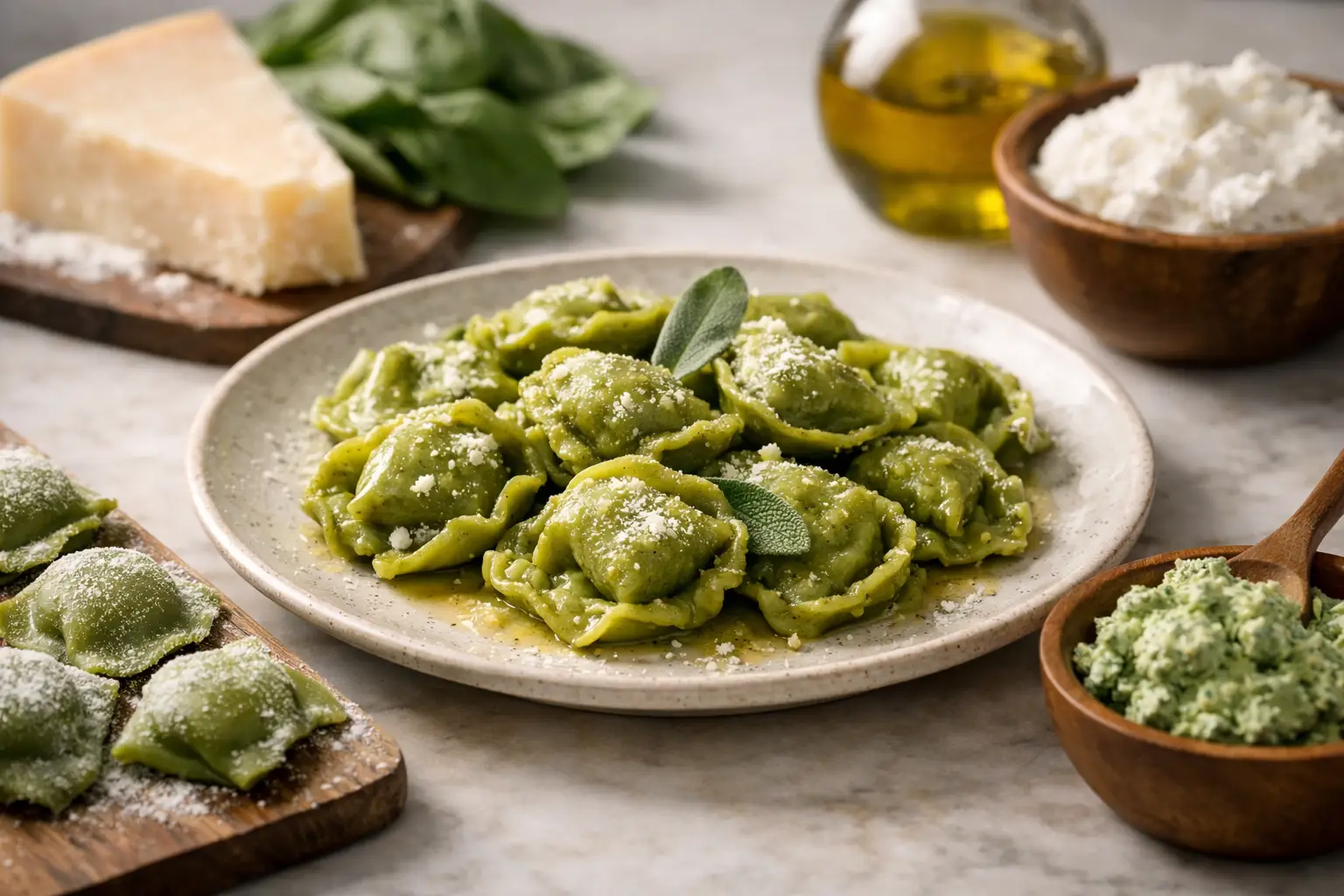 Balanzoni are not a shortcut in the Bolognese repertoire. They are generous filled pasta, green in dough and full of character: a dish that calls for good ingredients, skilled hands, and the desire to eat slowly. In a city that often talks about tortellini and tagliatelle al ragù, they deserve a precise place at the table.
What Are Balanzoni
Balanzoni are a fresh filled pasta from Bolognese tradition, recognizable even before the first bite. The green dough, traditionally made with spinach, holds a soft and flavorful filling in which ricotta, mortadella, Parmigiano Reggiano, and eggs find a very Emilian balance: dairy, cured meat, aged cheese, and pasta-making craft.
The shape often resembles a large tortellone, sealed in a half-moon or with folded edges. There is no single mandatory fold, because home cooking has never needed uniforms. What cannot be missing is proportion: enough dough to hold the filling, but not so much as to cover its flavor.
Their name recalls Balanzone, the Bolognese mask from Commedia dell’Arte. Pompous doctor, full belly, abundant speech: a perfect reference for a pasta that does not try to be minimal. Balanzoni arrive on the plate without making a scene, but they do not go unnoticed.
A Tradition That Leaves Room for Variations
As with many local dishes, claiming a single recipe for balanzoni would be dishonest. Proportions change between families, sfogline, and professional kitchens. Some prefer a drier ricotta, some increase the Parmigiano for a more assertive filling, some use mortadella with a light hand and others make it the star.
The origin is often traced back to 20th-century Bologna and the desire to create a green, festive, and recognizable filled pasta. But in the kitchen what matters most is what the dish continues to say today: local ingredients, intelligent recovery of traditional knowledge, and no need for special effects. Less posing, more substance.
The Green Dough Is Not a Detail
In balanzoni, the green is identity, not decoration. The spinach must be cooked, carefully squeezed, and finely chopped before entering the dough with flour and eggs. If it releases too much water, the dough becomes difficult to roll out and risks breaking during cooking. If there is too little, the color remains timid and the flavor disappears.
A good green dough must be elastic, thin, and resistant. These are three qualities that must coexist. Rolling it too thick leads to a heavy bite, especially with such a rich filling. Rolling it too thin can make it give way in boiling water. The sfoglina’s hand serves precisely this purpose: understanding the dough by touch, not just following a number written in a notebook.
The color can vary from bright green to a darker shade. It is not an automatic defect. It depends on the spinach, its moisture, and the resting of the dough. Seeking an artificially bright green would be a mistake: here you are not eating a photograph.
The Filling: Rich, but Never Confused
The heart of balanzoni is balance. Ricotta, mortadella, and Parmigiano Reggiano are intense ingredients, but they must speak to each other without overpowering one another. Fresh, well-drained ricotta gives creaminess; mortadella brings aroma and roundness; Parmigiano Reggiano adds savory depth. The egg binds the mixture, while nutmeg and pepper can complete it with discretion.
The most common risk is a filling that is too wet. In that case the seal does not hold, water gets in, and the pasta falls apart. The other risk is the opposite: a dry, compact, almost dry and dense mixture. The right filling must remain soft after cooking and have a full consistency, not mushy.
Mortadella deserves a separate note. It must be chosen well and worked carefully, without turning it into an indistinct cream. It must be present in the aroma and flavor, not become the only voice of the dish. In balanzoni, richness does not come from accumulation: it comes from harmony.
The Size Changes How You Eat Them
A large balanzone can be satisfying, but it requires flawless dough and precise cooking. Smaller pieces are convenient to serve and easier to manage, especially when the dish needs to travel or arrive home still at the right point. It is not a question of the best size in absolute terms. It depends on the occasion, the sauce, and how much filling you want to taste in each forkful.
For a quick lunch, a well-calibrated portion avoids that heaviness often attributed to filled pasta without reason. For a family dinner or a holiday table, however, the more generous balanzone has every right to take up space.
How to Dress Balanzoni Without Covering Them
The most natural dressing is melted butter and sage. It is simple only in appearance: the butter must be fragrant without browning too much, the sage must release aroma without becoming bitter. A sprinkle of Parmigiano Reggiano at the end completes the dish and leaves the filling in the leading role.
A light Parmigiano cream can also work, especially if the dough is thin and the filling has delicate mortadella. Here caution is necessary: a sauce that is too thick or too salty flattens everything. Balanzoni already have their own voice, they do not need a megaphone.
Bolognese ragù, as beloved as it is, is not always the most suitable choice. It can be a delicious variation, but it shifts the center of gravity of the dish and tends to cover the ricotta and the green of the dough. If you want to try it, better a well-balanced ragù, not overly concentrated, and a measured amount. Tradition is not fragile, but it must be treated with respect.
Cooking and Serving: A Few Minutes That Count
Fresh balanzoni should be plunged into plenty of salted water that simmers steadily. Too aggressive a boil can open the seals and knock the pasta against the pot. When they rise to the surface it does not always mean they are ready: the time depends on the thickness of the dough and the size of the format.
They should be drained gently, better with a slotted spoon than with abrupt movements, and immediately tossed in the sauce. Waiting too long makes them dull and dries out the surface. Filled pasta does not like unnecessary pauses.
At home, the advice is the same as for any good fresh takeout pasta: organize plates, sauce, and water beforehand. Do not leave the package on the table while deciding what to do. The work of the kitchen reaches the door, then the final minutes are in the hands of whoever serves.
Why Balanzoni Still Speak of Bologna
Balanzoni tell a less stereotypical but deeply true Bologna. There is hand-rolled dough, spinach, mortadella, Parmigiano Reggiano, and that Emilian ability to transform concrete ingredients into a dish that feels festive without becoming pretentious.
For those who live in the city, they are a way to change from the usual lunch without giving up something done well. For those who visit, they are a choice that goes beyond the most photographed dish. At Ragù Bologna we believe that local cuisine should remain everyday, accessible, and precise: tradition matters when it truly ends up on the fork.
Next time you are looking for a full Bolognese flavor, look beyond the sauce and start with the dough. If it is green, thin, and holds a filling made properly, you are already on the right track.
by | Aug 10, 2026 | Senza categoria
In Bologna, ragù is not a simple meat and tomato sauce. It’s a slow preparation, built in layers, that must smell of soffritto, well-browned meat, and patience. The ingredients of traditional ragù are few, but each has a precise role: changing one, overdoing another, or rushing the timing can shift the result far from that full, familiar flavor we know well.
The point is not to chase a rigid laboratory formula. Ragù changes slightly from one kitchen to another, as happens with all recipes that live in homes and trattorias. But there are foundations that are not up for debate: meat, vegetables, fat, wine, tomato used with restraint, milk, and a long cooking time. Less hashtags, more ragù.
Traditional Ragù Ingredients
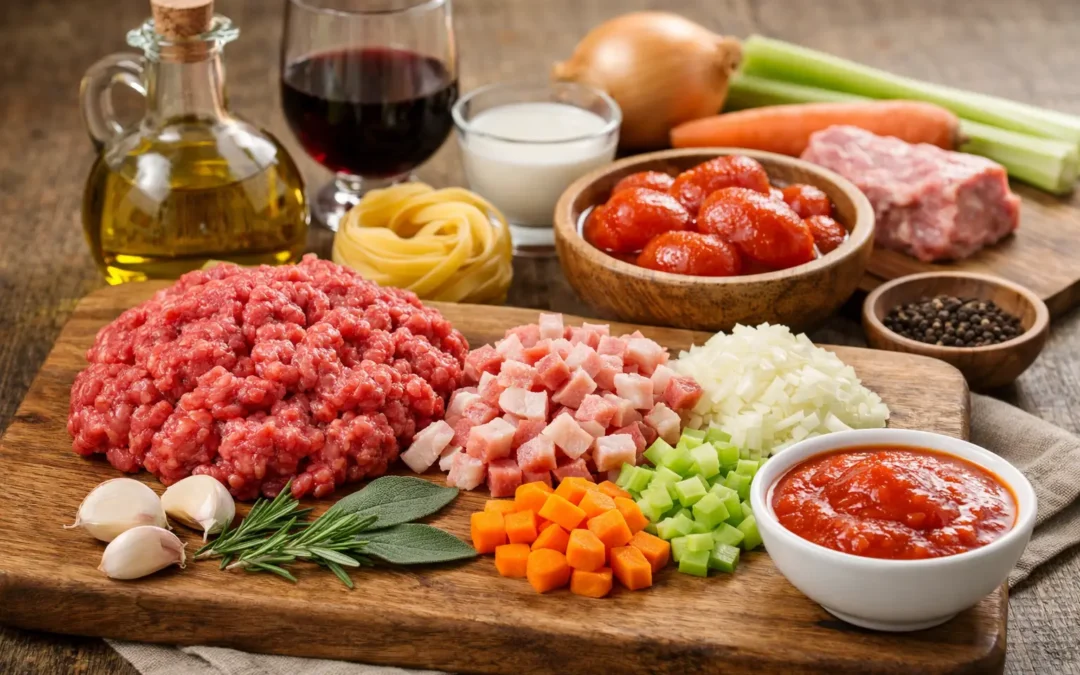
Bolognese ragù starts with the soffritto, not the tomato. Celery, carrot, and onion are finely chopped and cooked gently in a fat that can provide depth. Fresh pancetta, ground or knife-chopped, is an important presence: it brings savoriness, roundness, and that tasty foundation that oil alone cannot reproduce in the same way.
Then comes the ground beef. The best choice is not meat that’s too lean: a grind with the right amount of fat stays softer after hours of cooking and develops a fuller flavor. In many traditional preparations, a cut of beef for braising or a front portion is used, ground not too finely. Dry meat produces dry ragù, even if the sauce seems plentiful.
The essential ingredients, in a Bolognese kitchen, are these:
- ground beef and fresh pancetta;
- celery, carrot, and onion for the soffritto;
- wine, broth, and a small amount of tomato;
- whole milk, salt, and pepper.
Depending on the cook’s hand, a bit of tomato paste may appear in place of some of the passata. There’s no need to turn the pot into a vegetable garden: the tomato should bind, color, and provide slight acidity, not cover the meat. A bright red, very liquid ragù can be good, but it tells a different story.
The Soffritto: The Base You Don’t See, But You Taste
Celery, carrot, and onion must be present without being recognizable as chunks on the plate. The fine cut is a matter of balance, not aesthetics. When the vegetables cook slowly, they release sweetness and moisture, building the foundation on which the meat can brown without burning.
Rushing here has a price. If the heat is too high, the onion takes on an aggressive taste and the carrot tends to caramelize unevenly. If instead the soffritto stays too pale, the ragù loses depth. You need medium-low heat and an attentive eye: it should soften, become fragrant and glossy, not fry noisily like a cutlet.
The pancetta goes in early, to melt some of its fat and coat the vegetables. Its job is not to dominate. A ragù that tastes only of pancetta is heavy, just as one without pancetta can feel a bit flat. Proportions matter more than dietary trends: if you decide to reduce the fat, you have to accept that the result will have a different character.
Browned Meat, Not Boiled
The meat should be added when the base is ready and the pot can support it. It should be broken up and allowed to truly brown, without immediately adding liquids. This step creates the most intense flavor of the ragù: the meat loses water, changes color, and develops toasted notes that cannot be recovered later.
A pot that’s too small is a common mistake. If you pack in too much meat, the temperature drops and the ground meat cooks in its own steam. Better to use a wide pot, or work in two batches when the quantities are generous. It’s not a dramatic gesture, it’s practical cooking.
After browning, the wine serves to deglaze the pan and add lift. White or red? Both choices have a history in Emilian kitchens. White keeps the profile cleaner and more direct; a light red can add a darker note. What matters is letting the alcohol evaporate well before continuing: the wine should remain as aroma, not as a sharp edge.
Tomato and Milk: Little of the First, Just Right of the Second
Here traditional ragù distinguishes itself from many meat sauces. Tomato is not the star. Passata, strained peeled tomatoes, or concentrate should be used with restraint, according to the density and sweetness of the product. An excessive amount takes the ragù toward a tomato sauce with meat, while the Bolognese character comes from the opposite balance.
Milk, added during cooking or toward the end depending on habit, softens the acidity and makes the base more harmonious. It shouldn’t turn the ragù into a cream or leave an obvious milky taste. It’s a bridging ingredient, like good pasta dough: when it’s done well, it doesn’t demand attention but changes the whole experience.
Broth also has a precise function. It’s poured in a little at a time, only when the ragù dries out too much. The goal is not to thin the sauce, but to allow the meat to cook slowly while maintaining controlled moisture. Water, broth, and tomato are not interchangeable: each brings its own intensity.
Time Is Part of the Recipe
A ragù doesn’t improve because it’s forgotten on the stove. It improves because it cooks gently, monitored and stirred when needed. Two hours can be enough for a good home preparation; three hours, over very gentle heat, allow the meat to yield and the flavors to blend with greater precision. It depends on the quantity, the pot, the grind, and how much liquid was used at the start.
The right signal is not the clock, but the consistency. The ragù should be thick, glossy, and coating. It shouldn’t float in liquid, nor reduce to a dry mixture. When you lift it with a spoon, it stays compact but not stiff. It’s that density that allows it to embrace the tagliatelle and build distinct layers in lasagne.
Resting helps. Like many meat sauces, ragù often becomes even more balanced the next day, when the fat and aromas have settled. It should be cooled properly and stored in the refrigerator, then reheated gently with a splash of broth or water if needed. Aggressive reheating risks separating it and drying out the meat.
What to Leave Out of the Pot
Garlic, chili pepper, basil, oregano, and intrusive spices are not necessary for traditional Bolognese ragù. They’re not wrong ingredients in absolute terms: they simply shift the dish toward another language. The same goes for smoked cured meats, ready-made sauces, and sugar used to correct overly acidic tomato. If sugar is needed, it almost always means revisiting the quality of the tomato or the cooking time.
Also be careful with cheese inside the ragù. Parmigiano Reggiano has a magnificent place on the plate, especially on tagliatelle, but it’s not essential in the pot. Its flavor should arrive fresh at the moment of eating, without confusing the reading of the meat and soffritto.
From Pot to Plate
Traditional ragù doesn’t call for just any pasta. Fresh tagliatelle is its natural companion: porous, elastic, able to hold the sauce without leaving it at the bottom of the bowl. For lasagne, the ragù must be even more well-bound, because it will need to work together with béchamel, pasta sheets, and cheese without making the layer soggy.
At Ragù Bologna we prepare it the way it should be prepared here: starting from the kitchen, not from a shortcut. It’s a difference you can taste in a quick lunch, in a dinner brought home, or in a jar kept ready for when you need a proper dish.
If the ragù is made with chosen ingredients and respected timing, it doesn’t need special effects. Just heat it carefully, dress the pasta the right way, and sit down at the table: Bologna, for a moment, is already there.