by | Sep 25, 2026 | Senza categoria
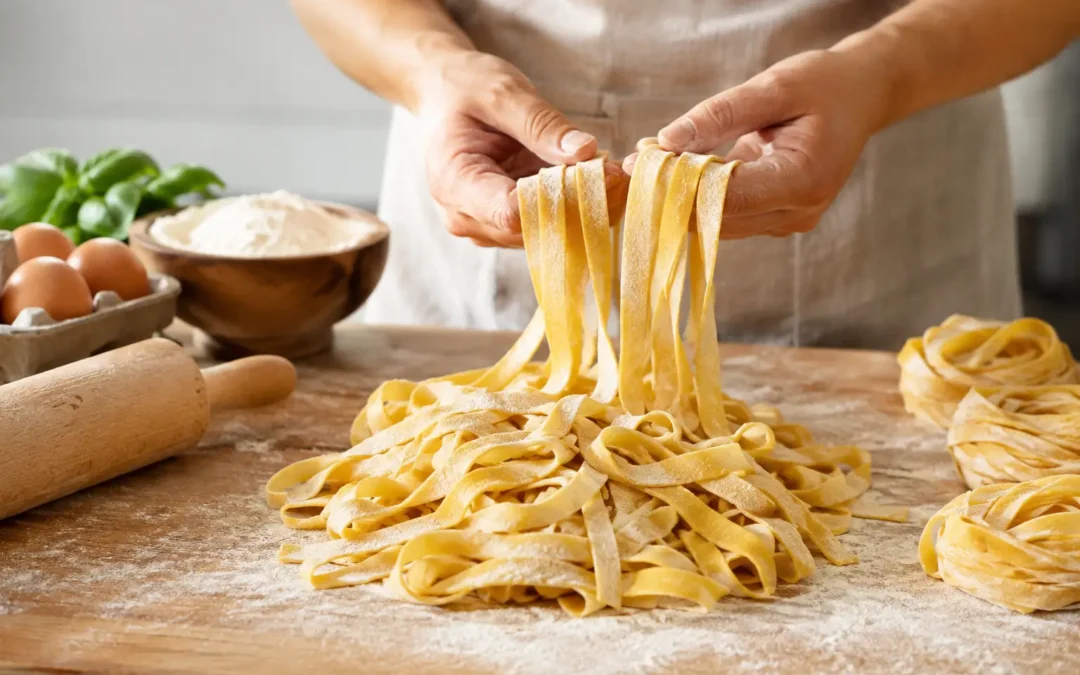
A tagliatella isn’t judged when it leaves the pasta machine. It is judged when it catches the ragù, stays al dente, and reaches the fork with that full texture that needs no special effects. Daily fresh pasta starts here: from respect for a living dough, prepared with care and worked at the right moment.
In Bologna, fresh pasta is not a side note to culinary history. It is the history. Making it every day isn’t just a phrase for the window: it is a precise work choice that requires organization, skill, timing, and constant attention. For those with little time for lunch or who want to take home a dinner done right, the result must be easy to recognize: real fresh pasta, sauce done right, no shortcuts.
What daily fresh pasta really means
It means the dough is prepared and transformed into pasta during the day, not produced in advance to sit waiting for days. Flour, eggs, and technique: the ingredients are few, so every detail matters. The quality of the eggs, the flour’s absorption, the lab temperature, and the air humidity can all change how the fresh pasta responds under the rolling pin or in the machine.
However, it doesn’t mean that pasta must be made five minutes before cooking it. Even fresh pasta needs its time. The dough must rest to relax, and the cut pasta must settle just enough to hold its shape. The point is working it within a correct window of freshness, without pushing it further for the sake of convenience.
You can taste the difference. Well-managed fresh pasta has elasticity, a slightly rough surface, and a structure capable of embracing the sauce. It shouldn’t be rubbery, nor should it give way immediately in the pot. It must have character without becoming heavy.
Bolognese fresh pasta isn’t just a matter of thickness
Saying “thin pasta” isn’t enough. A well-made fresh pasta must be proportioned to the shape and the sauce. Tagliatelle demand a texture that supports the ragù and makes every bite complete. Tortellini require precision: a pasta that is too thick covers the filling, one that is too fragile risks opening during cooking. Tortelloni must be generous, but never coarse.
This is where the craft comes in. The fresh pasta must be uniform, with a consistent hold, without dry spots or tears. It isn’t a technical detail for insiders: it is what separates a dish that tastes like a kitchen from one that looks like it came off a production line.
Egg pasta brings a recognizable flavor, but it must not dominate everything else. Its job is to accompany. With a slow-cooked ragù, it must hold the sauce without turning into an indistinct mass. With butter and sage, it must leave room for the delicacy of the filling. With a Parmigiano Reggiano cream, it must maintain balance and cleanliness.
Tagliatelle and ragù: a pair with its own rules
Tagliatelle al ragù is a direct dish, and for that very reason, it is unforgiving. If the pasta is too smooth, the ragù slides off. If it is overcooked, it breaks and flattens the dish. If the sauce is poured on top at the last minute, instead of being tossed together, each element stays on its own.
The best practice is to toss the pasta in the sauce, with heat and a little cooking water when needed. This way, the ragù enters the texture of the fresh pasta and doesn’t just stay on the surface. You don’t need mountains of sauce: you need proportion. Less hashtags, more ragù, but the right kind.
Why daily production changes the dish
Freshness primarily influences the cooking. Daily pasta cooks quickly but requires presence. A few minutes are enough, depending on the shape and thickness, and waiting too long can change everything. This is why there is no single valid time: the cook must taste, observe, and know their fresh pasta.
It also changes the pasta’s ability to handle transport. In takeaway, this really matters. A dish shouldn’t just be perfect at the pass, but arrive well at the desk, at home, or in the park. Fresh pasta worked correctly, cooked with care, and packaged sensibly retains texture and heat much better than pasta treated without criteria.
Then there is a less visible but decisive aspect: daily production forces you to deal with what is actually needed. Quantities, shapes, and service rhythms are planned. It isn’t an automatic guarantee of quality—even fresh food can be made poorly—but it is the most serious ground on which to build it.
Fresh doesn’t always mean identical
Those looking for industrial perfection are often looking for the opposite of artisanal cooking. Pasta made every day can vary imperceptibly: a more intense shade of yellow, a fresh pasta that requires a few extra seconds, a different humidity. These are not defects when they stay within a controlled process. They are the sign that on the other side there is a kitchen, not a button.
Naturally, artisanal must never mean approximate. Tradition is not an excuse for serving overcooked pasta, irregularly shaped edges without reason, or unbalanced fillings. The know-how lies precisely in holding together manual skill and consistency, respecting the product without useless romanticism.
Sometimes the best choice depends on the occasion. For a quick lunch, tagliatelle al ragù are immediate and complete. For a shared dinner, lasagne and tortelloni give more room for conviviality. For those who want a piece of Bologna to take away, tortellini and homemade sauces allow you to finish the dish in your own kitchen. Every shape has its moment, but the base doesn’t change: a fresh pasta that deserves the sauce it meets.
How to recognize it on the plate and at home
You don’t need the title of sfoglina to understand if the pasta has been treated well. Look at how it presents itself: it must be intact, not stuck together, with sauce distributed uniformly. To the bite, it must offer a slight resistance without being hard. And after the first mouthful, the flavor of the dish should remain, not a sensation of flour or excess salt.
If you take home fresh pasta to cook, keep it in the refrigerator and follow the instructions provided. Cook it in plenty of already salted water, without straying too far from the stove. Prepare the sauce beforehand: with fresh pasta, there is no time to improvise while the water boils. Drain it gently and finish it in the pan without stressing it.
Even reheating a ready-made dish deserves attention. Moderate heat and a few extra minutes are better than an aggressive flame that dries everything out. If the sauce has thickened, a spoonful of water can help bring it back to the right consistency. A little at a time: we aren’t making soup.
A daily choice, not a pose
Making fresh pasta every day means accepting that the work starts over every morning. Kneading, rolling, cutting, closing, cooking. It is a concrete discipline, made of repeated and never automatic gestures. At Ragù Bologna, this idea takes shape in dishes you can eat immediately or take home: local cuisine, urban rhythm, substance in the container.
Next time you choose a lunch on the fly, look beyond the speed of service. A forkful of well-made tagliatelle can be quick without being rushed. And a takeaway dinner can still taste like home, if the fresh pasta was truly prepared for real.
by | Sep 23, 2026 | Senza categoria
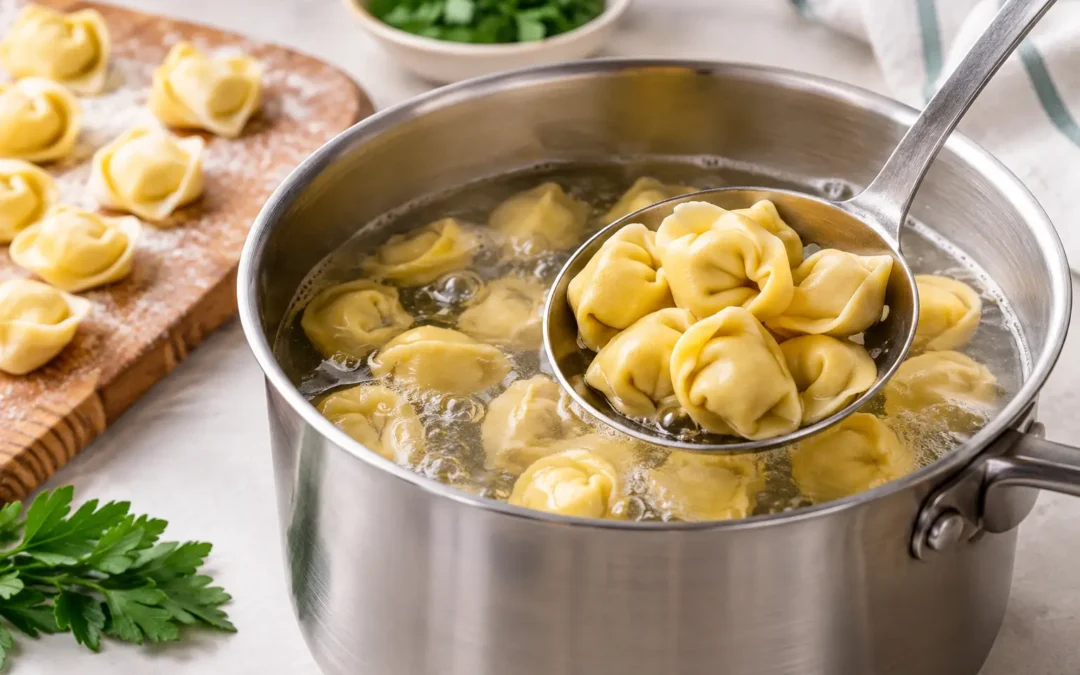
A well-made fresh tortellino asks for little: the right liquid, careful cooking, and the gentle hand of someone who’s in no rush to rough it up. Understanding how to cook fresh tortellini means above all respecting the thin fresh pasta and the filling, avoiding two classic mistakes: water that’s too aggressive and randomly decided cooking times.
In Bologna, tortellini have a precise home: broth. But lunch doesn’t always allow for it, and there’s nothing wrong with cooking them in water and dressing them with a delicate sauce. The difference comes down to the quality of the pasta, temperature, and attention to the moment the tortellini enter the pot. Fewer special effects, more common sense.
Before Cooking: Fresh Tortellini, Not Fridge-Cold
Take the tortellini out of the refrigerator while you put the broth or water on the stove. They don’t need to sit at room temperature for hours, but letting them breathe for 10-15 minutes avoids too sharp a temperature shock and helps the pasta cook more evenly.
Don’t separate the tortellini one by one with your fingers, especially if the fresh pasta is very thin. If they’re arranged on a floured tray and a few have stuck together, lift them gently using a flat spatula or by moving the container slowly. Pulling the pasta from the edge is the quickest way to open the cap or let the filling escape.
Also check the label or the instructions from whoever made them. An artisanal tortellino can have thinner or thicker fresh pasta, a tighter seal, and a different filling. That’s why the time indicated by the producer comes before any general rule.
How to Cook Fresh Tortellini in Broth
In Bolognese tradition, the natural destination for tortellini is clear, well-made meat broth. It doesn’t need to be heavy: it should have flavor, but also clarity. If it’s too fatty or too salty, it covers the filling and weighs down the dish.
Bring the broth to a boil, then lower the heat slightly. It shouldn’t stop simmering, but it shouldn’t boil with the force of a washing machine either. Add the tortellini a few at a time, distributing them across the surface. A wide pot helps a lot, because it gives the pasta space and limits collisions.
After adding them, make just one slow movement with a wooden spoon or skimmer, just to make sure none are stuck on the bottom. Then leave them alone. Stirring constantly doesn’t speed up cooking: it only increases the risk of breaking the fresh pasta.
How Long Should They Cook in Broth
On average, fresh tortellini require 2 to 5 minutes, but this should be read with judgment. Small ones with thinly rolled pasta can be ready very quickly; fuller ones or those with slightly thicker fresh pasta may need a few more minutes.
When they float to the surface, they’re not automatically ready. It’s a good sign, not a verdict. Wait about another minute, then taste one. The fresh pasta should be soft but not mushy, the filling hot all the way through, and the tortellino still perfectly sealed.
Serve them immediately, with broth that’s hot but not furious. If they wait too long in the pot, they keep absorbing liquid and risk losing precision. Tortellini in broth is a dish that’s simple only in appearance: it arrives at the table when it’s at its peak, not ten minutes later.
Cooking in Water: When and How to Do It Right
If you want to dress the tortellini with melted butter, cream, a Parmigiano Reggiano sauce, or a light sauce, cook them in water. Choose a large pot and fill it with plenty of water, without overdoing the salt: the filling is already flavorful and the dressing can add more.
For a generous portion, allow at least one liter of water per 100 grams of pasta. When the water boils, salt it, wait for it to return to a boil, and lower the heat just slightly before adding the tortellini. The same rule applies here: vigorous boil yes, aggressive vortex no.
Cook them generally for 2-4 minutes, tasting before draining. Use a skimmer instead of pouring them into a colander, especially if they’re very delicate. This way you lift them out without having them knock against each other and you can transfer them directly to the pan with the dressing.
Never rinse them under water. It doesn’t stop the cooking and it washes away that light starch that helps the dressing cling. If you need to wait a moment, keep them in a warm bowl with a spoonful of their cooking water, not piled up dry.
The Dressing Should Be Prepared First
Fresh tortellini don’t wait. Before dropping them in the pot, the dressing must already be ready, hot, and soft enough to welcome them. The passage from pot to plate must be quick: this is where filled pasta stays glossy, intact, and pleasant to bite.
With butter and Parmigiano Reggiano, little is needed: melt the butter over low heat, add a spoonful of cooking water, and add the tortellini very gently. Tossing energetically in the pan, as you would with spaghetti, is a bad idea. Better to move the pan with small gestures or turn gently with a spatula.
With a ragù, choose a modest amount and a consistency that’s not too dry. The tortellino already has a distinct identity: a heavy sauce risks turning it into a mute base. At Ragù Bologna, fresh pasta is meant to be recognizable at first bite, not drowned.
Mistakes That Make Tortellini Open
The first cause of broken tortellini is violent boiling. Large bubbles push them against the walls and bottom of the pot, and a delicate seal can give way. The second is a pot that’s too small, where the pasta clumps together and moves poorly.
Then there’s excessive cooking time. An overcooked fresh tortellino doesn’t become more tender: it becomes fragile, with swollen fresh pasta and a filling that loses definition. Tasting is always more reliable than relying only on the timer.
Storage also matters. Fresh tortellini should be kept in the refrigerator and consumed by the indicated date. If you need to freeze them, do so spread out on a tray, then transfer them to a container when they’re hard. From frozen they should be cooked directly, without thawing, generally adding one or two minutes and checking by tasting anyway.
The Right Amount and Serving
In broth, 100-120 grams of fresh tortellini per person is a balanced portion if the dish is followed by something else. If they become the center of the meal, increase according to appetite and the size of the tortellini. In water with dressing, consider that the dish is richer and adjust accordingly.
Warm the plates or bowls, especially for serving in broth. It’s a concrete detail: a cold bowl immediately lowers the temperature and takes away the dish’s momentum. For Parmigiano, grate it at the last moment and let everyone decide how much to add.
Next time you have a tray of fresh tortellini in front of you, make room in the pot and give yourself three minutes of real attention. The fresh pasta, the filling, and the broth will do the rest. Welcome home.
by | Sep 21, 2026 | Senza categoria
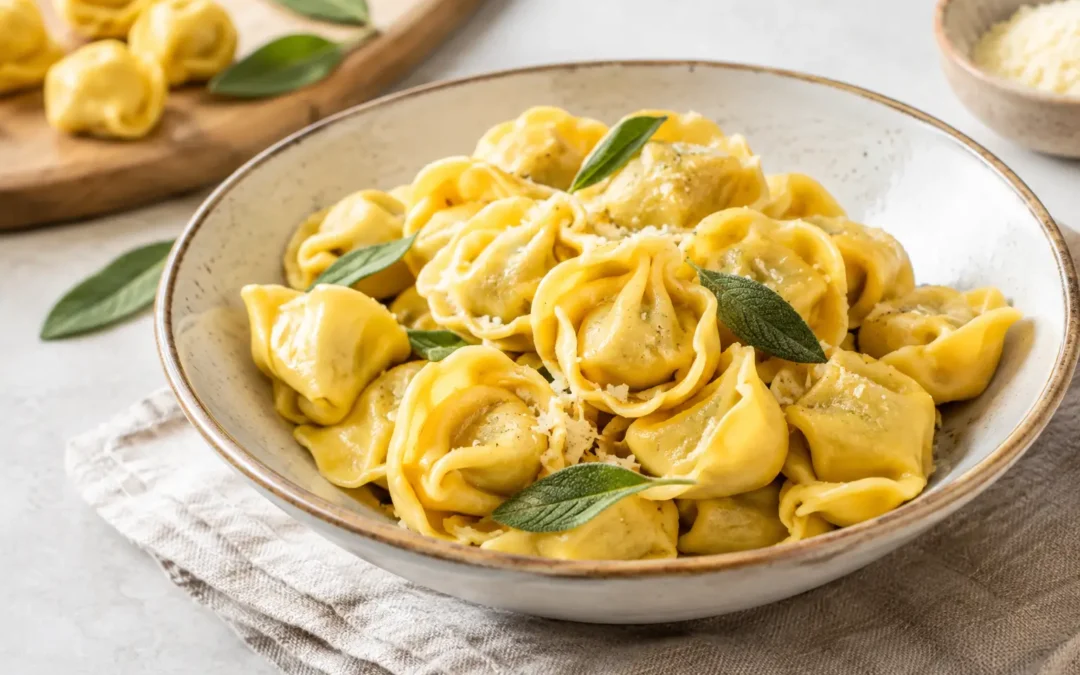
A useful artisanal tortellini review doesn’t stop at a photo of the dish or the number of tortellini in the bowl. It starts with a much more concrete question: is there craftsmanship here, quality ingredients, and respect for a recipe that in Bologna allows no shortcuts? Tortellini are small, certainly. But inside there’s technique, time, and a precise idea of cooking.
Those seeking well-made tortellini want one thing above all: to recognize the difference between a product prepared with care and one that’s merely well presented. No complicated words needed. Just knowing where to look, what to taste, and which compromises make sense when buying fresh pasta to take away.
Artisanal tortellini review: where to start
Artisanal tortellini aren’t automatically good just because they carry this label. Artisanal means the production preserves controlled steps, fresh pasta worked with care, a balanced filling, and cooking that doesn’t betray the work done before. The result, however, is judged on the plate.
The first test is visual, but it shouldn’t turn into a perfection contest. Tortellini rolled and closed by hand can have slight differences in size and shape: that’s normal. What’s not acceptable are open pieces, thick edges, dry fresh pasta, or sloppy folds. Consistency serves the cooking, not the photograph.
Then comes the decisive moment: the bite. Good tortellini must stay intact, offer a thin but present fresh pasta, and release a recognizable filling. If the pasta dominates everything, it’s too thick. If it disappears, it was probably rolled too thin or cooked too long. Balance lies in the middle, as often happens with things done seriously.
Fresh pasta: thin, elastic, never bland
In Bologna, egg fresh pasta isn’t a frame. It’s half the conversation. Flour and eggs, trained hands, dough resting, and the right thickness: few elements that leave very little room for error.
In your review, observe whether the pasta has a vibrant, natural color, without that pale effect of old product or excessive flouring. After cooking it must remain elastic, not rubbery. Well-made fresh pasta holds the filling without becoming a barrier between the eater and the taste of the tortellini.
There’s also a less obvious detail: durability. In broth, tortellini shouldn’t fall apart after a few minutes. In takeaway this aspect matters even more, because time passes between preparation, transport, and service. If the pasta arrives already deteriorated, the problem isn’t with the customer who chose to eat outside the restaurant: it’s a preparation that didn’t truly consider the service.
The filling: rich without being heavy
Traditional Bolognese filling requires precision, not special effects. Meat, mortadella, cheese, hint of nutmeg: ingredients that must speak to each other without one shouting over the others. When everything tastes only of cheese or, conversely, of spice, balance is missing.
A well-worked filling is fine and compact, never dry or grainy. It must be generous for the size of the tortellini, but without swelling it to the point of making closure difficult. On the palate it gives depth, not heaviness. And above all it leaves you wanting the next spoonful.
Personal taste comes into play here. Some love a more pronounced presence of mortadella and others seek greater intensity of aged cheese. These are legitimate preferences. An honest review should distinguish them from a real flaw: saying a filling is more delicate than you prefer is different from saying it’s bland, unbalanced, or prepared with little care.
Quantity and size aren’t enough
Very large tortellini can seem generous, but it’s not always good news. The classic size also serves to maintain a sensible ratio between fresh pasta and filling and to ensure even cooking. Ten well-made tortellini can say more than an abundant portion without precision.
Price should be read the same way. You’re not only paying for the weight of the pasta: you’re paying for the workmanship, the raw materials, the time needed to close each piece, and the ability to deliver it to the counter or home in good condition. This isn’t an invitation to accept any price, but to compare comparable products. Artisanal fresh pasta can’t compete with an industrial product on cost, and it shouldn’t try by giving up its identity.
Broth or cream? Context changes the judgment
For many Bolognese the answer is simple: tortellini in broth. A clear, fragrant, well-skimmed broth that’s savory to just the right degree highlights the tortellini without covering them. If it’s too salty, too fatty, or flat, every flaw is amplified.
That said, judging a proposal outside of broth only because it doesn’t follow the most traditional service would be limiting. Tortellini served with cream, Parmigiano sauce, or more contemporary dressings can work, as long as they’re not a way to mask weak pasta. The question to ask is always the same: does the dressing enhance the tortellini or hide them?
In takeaway, broth requires extra care. Pasta and liquid, if they stay together too long, continue to influence each other. Separating them until the moment of consumption is often the smartest choice. It’s not less authentic: it’s respect for texture and for those who will eat perhaps twenty minutes after purchase.
The takeaway test: the most honest proof
Tortellini can be excellent just drained and disappointing after a short journey. For those lunching between classes, returning to the office, or bringing dinner home, quality also includes what happens after the counter.
Good packaging protects the heat without turning the fresh pasta into a soggy mass. Instructions must be clear, especially if broth and pasta are separate: few steps, realistic timing, no laboratory language. Portions matter too. They must be designed for a real meal, not for a photo or to force ordering more.
This is where a kitchen like Ragù Bologna truly measures its promise: tradition doesn’t mean immobility. It means doing things as they should be done and adapting service to city life, without sacrificing the dish in transit.
How to write a review that helps someone
A useful review tells facts. Instead of limiting yourself to a generic “delicious,” it’s worth indicating whether the fresh pasta was thin, whether the filling was balanced, whether the broth was clean, and whether the product held up during transport. Timing matters too: rushed lunch, dinner at home, portion eaten immediately or reheated later.
If something didn’t work, better to be specific. “Tortellini overcooked and broth excessively salty” helps both those preparing and those reading much more than a dismissal without details. The same goes for compliments: noting excellent fresh pasta or a well-balanced filling acknowledges the concrete work behind a dish that’s often taken for granted.
Don’t look for fake perfection. Look for consistency, care, and taste. Tortellini with a slight difference in closure can be handmade; flawless but characterless tortellini can tell much less.
Next time you dip your spoon into the broth, take an extra minute. If fresh pasta, filling, and service hold together, you’re not just eating fresh pasta: you’re tasting Bologna, without frills.
by | Sep 19, 2026 | Senza categoria
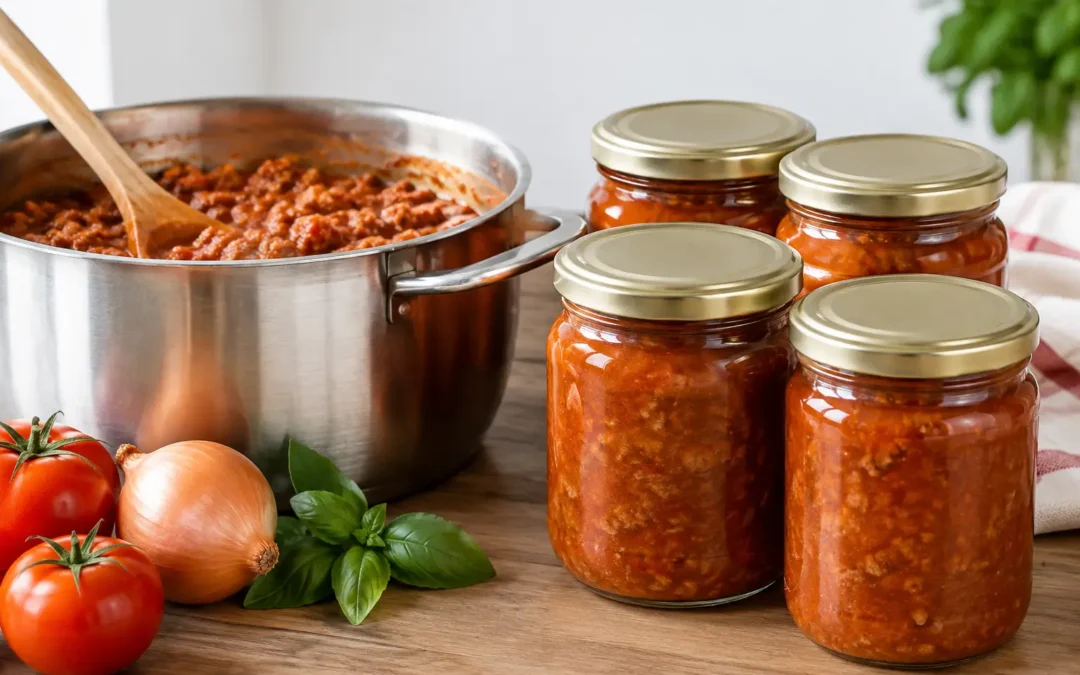
A well-made ragù isn’t improvised: it starts with a patient soffritto, meat chosen with criteria, and cooking that lets time do the work. Jarring ragù deserves the same attention. Because a jar isn’t just a convenient way to bring Bologna home: it’s a preservation method that, if handled poorly, can become risky.
The first rule is simple and worth more than any social media shortcut: ragù is a low-acid food and contains meat. It’s not enough to fill a boiling jar, close it, and wait for the classic vacuum “click” to make it safe at room temperature. That sound means the lid has created a vacuum, not that the product has been sterilized as necessary.
No magic here. Less hashtags, more ragù. And more care.
Why ragù requires special attention
Tomatoes, wine, and long cooking provide flavor, but they don’t automatically turn ragù into an acidic preserve. The pH generally remains too high to rely solely on home pasteurization in boiling water. In an oxygen-free environment, like a closed jar, some microorganisms can find favorable conditions if the heat treatment is inadequate.
The critical point is botulism. It has no smell, doesn’t necessarily change the color of the contents, and doesn’t always make the lid bulge. This is why you don’t judge a jar by sight or taste. You prevent it with a correct process, not with the hope that “we’ve always done it this way” is enough.
Controlled acidification and validated professional procedures can make some preserves shelf-stable. But for a home-cooked meat ragù, there is no reliable shortcut based on a little more tomato, vinegar added by eye, or prolonged boiling of the jars. The acidity must be measured and the recipe must be designed for that purpose.
Jarring ragù at home: the two safest choices
If you prepare ragù at home and don’t use specific equipment and procedures for low-acid preserves, the most prudent path is to keep it in the refrigerator or freeze it. These are two simple, concrete methods, perfect for protecting the work done at the stove.
In the refrigerator, the ragù should be transferred to clean, well-sealed containers and cooled quickly. Consume it within a few days. The fridge slows microbial growth, but it doesn’t stop time: don’t turn leftover dinner into a preserve to be forgotten on the shelf.
The freezer is the best solution when you want to prepare a good amount of sauce. It maintains quality and safety longer, allows you to organize lunches and dinners without sacrificing taste, and avoids filling the pantry with uncertain jars. Portions for two people or for a tray of lasagne are more practical than a single huge container: you only thaw what you need.
If you want a pantry-stable preserve
To store ragù at room temperature, you need a specific process for low-acid foods, with pressure treatment, times, and temperatures defined by reliable technical sources and adapted to the recipe, container size, and equipment. A simple water bath pot does not reach the conditions necessary to safely process a meat sauce.
In a professional kitchen, a preserved product requires standardized recipes, process controls, rigorous hygiene, and verified parameters. It’s a different job from putting away Sunday’s ragù. If you don’t have a validated process, the refrigerator and freezer remain the right answer.
How to prepare ragù before storing it
Preservation begins while you cook. Use fresh ingredients, meat always kept cold, and clean utensils. Cook the ragù thoroughly and don’t leave it for hours on the kitchen counter after service. The hot pot is convenient, but it’s not a refrigerator.
When the ragù is ready, divide it into shallow portions. A large mass in a tall container cools slowly at the center, exactly where you don’t want to leave food too long in the temperature range favorable to bacterial proliferation. Shallow trays or several small jars work better.
You can aid cooling by placing the container, tightly closed, in a cold water and ice bath, stirring the ragù with a clean utensil until it loses heat. Then transfer it to the refrigerator or freezer. There’s no need to wait for it to reach room temperature: in fact, it’s better to shorten that step.
Glass jars are perfectly fine for the refrigerator, provided they are intact, clean, and suitable for thermal shock. For the freezer, always leave free space at the top: ragù, like any water-rich food, increases in volume when freezing. Filling to the brim means risking cracks, deformed lids, and an unwanted cleanup.
Portions, labels, and timing: the less romantic part that saves dinner
Writing a label takes ten seconds and resolves many doubts. Indicate what the container contains, the date of preparation and, if it helps, the number of portions. “Ragù October 12” is much more useful than a mysterious red jar at the back of the freezer.
For daily use, organize the ragù based on what you actually cook: one portion for seasoning tagliatelle, two portions for a quick dinner, a larger dose for lasagne or baked pasta. This way you aren’t forced to thaw everything, take a part, and refreeze the rest.
Refreezing isn’t always absolutely forbidden, but it complicates quality and safety. If the ragù has thawed in the refrigerator and hasn’t stayed out of temperature for too long, it can be recooked and frozen again, but the result tends to worsen. Better to avoid the unnecessary cycle: portioning well at the start is smarter.
In the freezer, ragù remains safe if kept constantly frozen, but the flavor doesn’t stay still forever. To enjoy the texture and aroma at their best, use it within a few months. It’s not an endurance test: it’s a promise of a good dinner.
How to thaw and reheat ragù
The safest way to thaw is to leave the container in the refrigerator from the night before. If you’re in a hurry, you can use the microwave with the defrost function or go directly to the saucepan over low heat, adding a splash of water if the sauce is very thick. In both cases, the ragù must then be heated evenly until it is piping hot at the core.
Avoid leaving a jar on the table all afternoon. It may seem harmless, but it causes the ragù to sit too long at an unsafe temperature. And don’t taste a product that has a strange smell, an abnormal lid, leaks, or mold. When in doubt, throw it out: no sauce is worth a risk.
If you open a container stored in the refrigerator, use a clean spoon and close it again immediately. Small habits matter. They are what keep the ragù good until the last forkful, without turning the fridge into an experiment.
The taste of ragù deserves the right method
An authentic ragù needs fresh pasta, bread ready to scoop up the sauce, and a table without haste. But it also needs sensible storage. At Ragù Bologna, we work every day on the value of home-made preparations, knowing that quality isn’t just in the recipe: it’s in the respect for every step, from the saucepan to the container.
If you want to keep a stock ready, choose the freezer without feeling it’s a fallback. A well-frozen ragù preserves the character of a proper lunch and waits for you when the day is rushing. Just thaw it calmly, put the water on, and let the aroma do the rest.
by | Sep 17, 2026 | Senza categoria
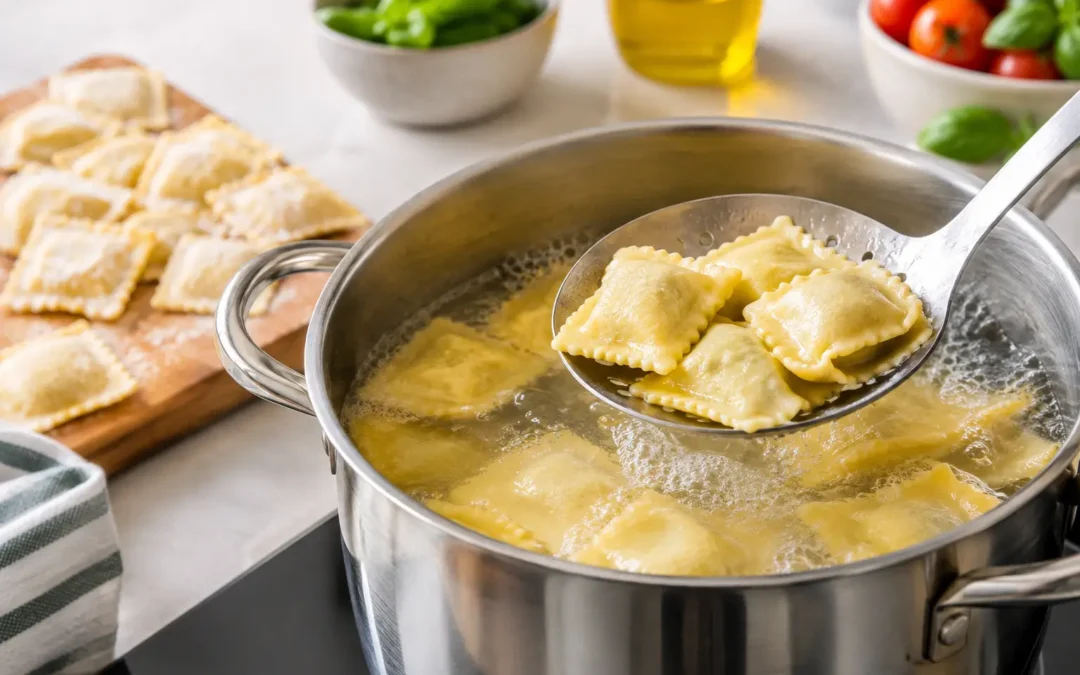
Well-made filled pasta deserves respect even in the final step: the pot. This filled pasta cooking guide starts here, from a seemingly simple gesture that can either keep a tortellino intact or open it, empty it, and ruin hours of dough and filling. You don’t need chef-level acrobatics. You need plenty of water, carefully timed cooking, and a gentle hand.
Tortellini, tortelloni, ravioli, cappelletti: each shape has its own size, but the rule remains the same. Filled pasta doesn’t cook with haste or distraction. It’s fresh, delicate, and already carries the seasoning that matters inside.
Guide to Cooking Filled Pasta: Before the Pot
Let’s start with what seems obvious. Choose a wide, roomy pot, especially if you’re cooking tortelloni or large ravioli. The pieces need to move freely without being pressed against each other: fewer collisions, less risk of the edges opening.
The water must be plentiful. As a practical reference, consider about one liter for every 100 grams of pasta. It’s not a rigid formula, but it helps maintain the boil when the pasta enters the pot. If there’s too little water, the temperature drops too much and the pieces tend to stick.
Salt when the water boils. For filled pasta to be served with butter and parmesan, or with a light sauce, the water can be flavorful without overdoing it. If the filling is already bold, like the classic tortellini with meat and cheese, go a bit lighter. The point is to complement the flavor, not cover it.
No oil in the water. It doesn’t really prevent the pasta from sticking and can make it harder for the sauce to adhere to the dough. To keep the pieces from sticking together, the simplest thing is enough: add them properly and move them gently in the first few seconds.
Fresh Pasta: The Boil Shouldn’t Be Aggressive
When the water reaches a rolling boil, lower the heat slightly before adding the pasta. You’re not looking for a still pot, but not a furious boil that slams tortellini and ravioli against the sides and bottom either.
Add the pasta a little at a time, distributing it over the surface. Give one gentle movement with a wooden spoon or slotted spoon, just to separate any pieces that are close together. Then let it work. Stirring constantly is one of the most common mistakes: fresh dough is thin and the sealed edges don’t need to be tested every ten seconds.
Times depend on the thickness of the dough, the size of the shape, and the starting temperature. Fresh pasta just made or kept in the refrigerator cooks in a few minutes. Small tortellini may need about 2-4 minutes, tortelloni 3-5 minutes, while very large ravioli or those with thicker dough can take 5-7 minutes.
These are guidelines, not verdicts. The timer is useful, but tasting is what decides. Take a piece with the slotted spoon, wait a moment to avoid burning yourself, and taste a corner of the dough. It should be cooked, soft but not mushy, with a barely perceptible resistance. If the pasta stays in the water too long, the filling continues to heat, the dough loses tension, and the risk of opening increases.
A signal to read intelligently is when they float to the surface. Many filled shapes rise when they’re close to being done, but that doesn’t automatically mean they’re ready. Consider it a bell: from that moment, check the time and taste.
Tortellini in Broth: A Gentler Cooking
Tortellini in broth deserve separate discussion. The broth shouldn’t boil violently: it should simmer. A steady simmer protects the shape of the tortellini and keeps the serving liquid cleaner.
Cook them directly in the broth you’ll bring to the table, if the quantity and quality of the broth allow. This way the dough absorbs flavor and the dish arrives with that full balance that in Bologna doesn’t need special effects. If you need to cook large quantities, you can use a separate pot with light broth and transfer the tortellini to the serving broth shortly before plating. It’s a practical solution, but requires care not to cook them twice.
Frozen Filled Pasta: Don’t Thaw It
Frozen filled pasta should almost always be placed in water or broth directly from the freezer. Thawing it on the counter is a bad idea: moisture makes the dough fragile, pieces can stick together, and the filling risks deteriorating.
Bring the liquid to a boil, lower the heat slightly, and add the product while still frozen. At first the boil will stop: that’s normal. Wait for it to resume calmly, without raising the heat to maximum to make up time. From that moment, generally allow a few more minutes compared to fresh pasta, often 4-7 minutes for small shapes and 6-9 for larger ones. Here too, the package remains the first reference if it indicates specific times.
Don’t break any pieces stuck together by forcing them with a fork. Leave them in the water for a few moments and separate only when they come apart on their own. Haste is costly, especially when there’s a well-made filling inside.
Draining Without Breaking Everything
A classic colander works, but for ravioli, tortelloni, and very delicate shapes, a slotted spoon is often the better choice. Remove the pasta a little at a time, let excess water drain, and transfer it directly to the pan with the sauce or to the plate.
If you use a colander, make a quick, confident gesture. Don’t shake vigorously and don’t leave the pasta sitting to dry: the dough sticks, cools, and loses that lively texture you were looking for. Set aside a small cup of cooking water, especially if the sauce is melted butter, parmesan cream, or ragù. A little is enough to make it more fluid and coating.
With filled pasta, tossing doesn’t mean roughing it up. Let the sauce slide over the pieces with soft movements, perhaps moving the pan by the handle. A spoon can help, but without pressing on the edges. The raviolo doesn’t have to prove it’s sturdy: it has to arrive intact on the plate.
The Sauce Also Determines the Temperature
A ricotta and spinach tortellone often calls for butter, sage, and parmesan. A pumpkin raviolo goes well with brown butter, amaretti, or a touch of mostarda, but each addition should be measured. If the sauce is too dry, the dough sticks. If it’s too abundant, the flavor of the filling disappears.
With ragù the discussion changes: the sauce must be hot and already ready, not waiting for the pasta in a cold pan. Transfer the cooked pasta into the sauce for just the time needed to coat it. Tortelloni aren’t tagliatelle: they don’t need a long toss in the pan.
The plate matters too. Serve on warm plates, especially in cold months or when the sauce is butter and cheese. Filled pasta loses heat quickly and, with the heat, also loses some of its softness.
Mistakes That Open Ravioli and Tortellini
Almost always the problem isn’t a single gesture, but a sum of small oversights. Too little water, aggressive boiling, overcrowded pot, pasta stirred too energetically, or cooked beyond necessary: this is enough to go from a generous dish to an emptied dough.
Also pay attention to storage. Fresh pasta should be kept in the refrigerator and cooked within the recommended times. If it’s been heavily floured, remove the excess before cooking: a small amount is normal, too much flour dirties the water and weighs down the result. If instead you’ve made the pasta at home and want to freeze it, first arrange it well spaced on a tray. Only after it’s hard can you gather it in a container.
Good cooking doesn’t make noise and doesn’t ask for filters. It brings to the table thin dough, a filling still in its place, and that first bite that says everything. At that point do just one thing: serve immediately, with parmesan available and without letting the pasta wait for you.
by | Sep 15, 2026 | Senza categoria
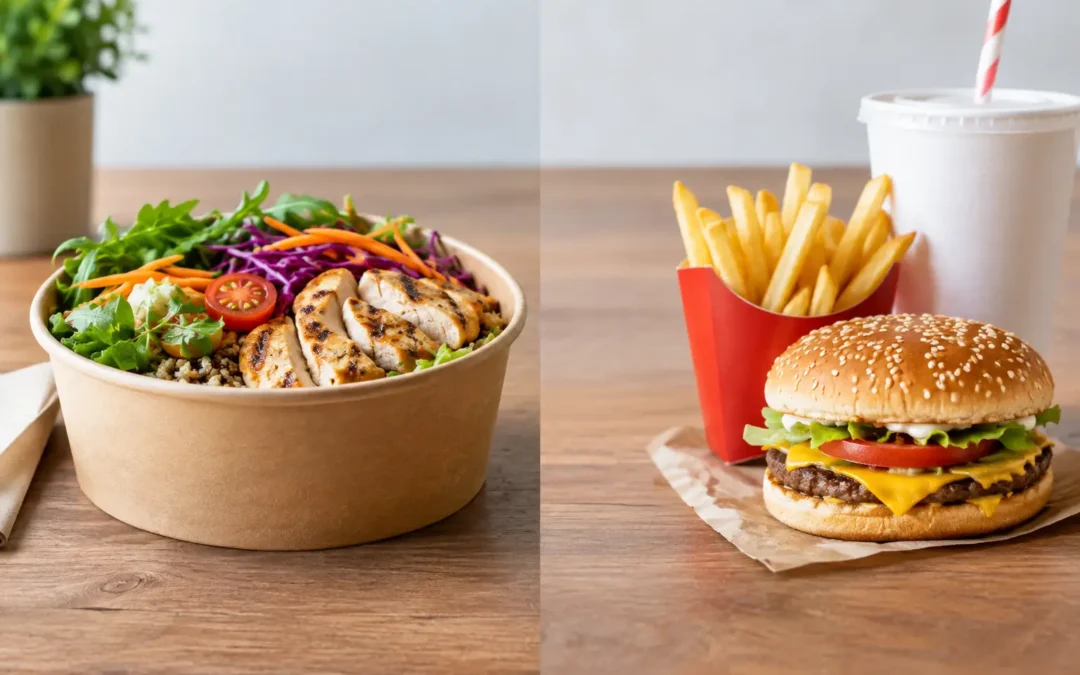
At 1:20 PM, between a lecture, an office shift, and a train to catch, hunger doesn’t wait. The comparison between artisan takeaway versus fast food starts right here: not from a race to see who’s faster, but from the most concrete question of all. What are you really eating, and what do you want that lunch to do for your day?
A standardized sandwich and a plate of tagliatelle al ragù can both solve a quick lunch. But they arrive in the container by very different routes. On one side, there are processes designed to repeat the same result on a large scale. On the other, there are hands, cooking times, recognizable ingredients, and recipes that belong to a place. Convenience doesn’t have to taste like haste.
Artisan takeaway vs. fast food: the difference starts in the kitchen
The first difference isn’t in the packaging or the price on the menu. It’s behind the counter. Classic fast food works on standardization: calibrated portions, often pre-processed ingredients, procedures designed to serve many people in the shortest time possible. It’s an efficient, predictable model and, in certain situations, practical.
Artisan takeaway starts instead from preparation. The fresh pasta dough is rolled, the ragù cooks in its own time, the bread is made in-house, the sauces are born in the kitchen that serves them. This doesn’t mean every wait has to be long or that a quick lunch has to become a three-hour ritual. It means speed comes after the work, not instead of the work.
A ready-to-go lasagna can be served quickly because it was prepared well beforehand, not because it came from an anonymous system. It’s a simple difference, but decisive: craftsmanship makes a thoughtfully made dish accessible, even when you only have half an hour for lunch.
The ingredients aren’t a detail
When the ingredients are few, you taste them all. In tagliatelle al ragù, the texture of the pasta matters, the balance of the sauce, the quality of the meat, the cooking base. An Italian name on the sign or an appetizing photo isn’t enough to get that result.
In artisan food, the ingredients don’t need to put on a show: they need to carry the dish. A well-sealed tortellino, a tortellone with a clean filling, a slice of bread with a real crust tell a precise story. These are details that might not end up in a story, but they end up in the taste. Fewer hashtags, more ragù.
Time: fast doesn’t mean rushed
There’s a misconception to leave behind: choosing artisan doesn’t mean always having more time to waste. For those who live, work, or study downtown, the point is exactly the opposite. You need a place that knows how to be quick without treating the customer like a number and lunch like indistinct fuel.
Fast food has built its strength on immediacy. You order, pick up, eat. It’s a clear promise, and it would be pointless to deny its usefulness when you have few minutes, a tight budget, or want a choice without surprises. But craftsmanship can offer a different kind of speed: that of an organized kitchen, with fresh preparations and a menu that knows what it wants to be.
A good takeaway doesn’t ask you to slow down your life. It keeps you from slowing down the taste. You can take away a complete dish, eat it at the office, on a bench when the sun allows, or at home in the evening. The difference is that, opening the container, you still recognize a meal and not just an emergency solution.
The price tells only part of the story
The economic comparison should be made without slogans. Fast food can seem more affordable because it works on volume, very large supply chains, and highly standardized products. Sometimes it really is the least expensive choice in the moment. If your only criterion is spending as little as possible, that difference matters.
But it’s worth looking at the value of the meal too. A portion of fresh pasta with a sauce prepared in the kitchen, selected ingredients, and a local recipe isn’t evaluated just by counting euros. Satisfaction matters, how pleasantly the dish stays with you matters, whether you’re buying something generic or the work of someone who cooks matters.
Artisan isn’t automatically better just because it’s artisan. It can be expensive without reason, confused, or not very careful. That’s why it’s worth observing concrete signs: is the menu clear? Do the dishes have identity? Can you tell what’s actually made? Can the cook explain what they’re serving? Quality doesn’t need complicated words, but it must be verifiable on the plate.
Taste and memory: when takeaway speaks of place
In Bologna, eating isn’t just choosing between hungry and not hungry. It’s also recognizing a language made of fresh pasta dough, broth, ragù, mortadella, bread, and conviviality. For those arriving from elsewhere, it’s the most direct way to meet the city beyond the shop windows. For those who live here, it’s a matter of expectations: certain things must be done right.
Fast food tends to be the same everywhere, and that’s precisely its promise. You already know what you’ll find. Artisan takeaway, instead, can change from neighborhood to neighborhood, from kitchen to kitchen, from recipe to recipe. It won’t always be identical, and it shouldn’t be. A ragù has a signature, not a serial number.
This identity is useful even when you want to bring something home. A jar of well-made ragù or a portion of fresh pasta aren’t just shelf products: they’re a concrete way to extend a lunch, organize a dinner without giving up the character of the dish, or give a gift that tastes like Bologna.
It’s not just about calories
Talking about food without moralizing is possible. No single meal defines a person’s habits, and no one needs to feel judged for a quick choice. But frequency matters. If the quick lunch becomes daily, it’s worth looking for alternatives with more readable ingredients and preparations less dependent on industrial formulas.
An artisan dish isn’t automatically light, nor should it pretend to be. Lasagna is lasagna, ragù is ragù. The question is different: sensible portions, full flavors without unnecessary excess, recipes that don’t have to compensate for weak ingredients with sugars, salt, or overpowering sauces.
Variety helps too. One day tortellini, another a well-prepared meat dish, a sandwich made with good bread, a dinner to share. Eating well away from home doesn’t mean chasing nutritional perfection. It means having options that don’t force you to choose between pleasure, practicality, and recognizability.
Service and waste: the part you often don’t see
The takeaway container is necessary, but it’s not neutral. Those who prepare food for takeaway have a responsibility to reduce waste where they can, without compromising hygiene and quality. This concerns packaging, certainly, but also the organization of production, the use of ingredients, and the way a beverage offering is built.
In the case of draft cocktails, for example, a well-designed system can reduce single-use glass and transport compared to many separate bottles, while maintaining attention to ingredients and recipe. It’s not a medal to pin on your chest: it’s operational work done better.
Here too, there are no absolute formulas. A small place isn’t sustainable by definition and a large chain isn’t irresponsible by nature. The useful question is whether the place takes seriously what it buys, prepares, and discards. Credible craftsmanship passes through here too.
When to choose one or the other
There are days when you want the quickest, most economical, and most predictable solution possible. No taste tribunal will come looking for you. But if you’re looking for a lunch or dinner that has the rhythm of the city without losing its substance, artisan takeaway changes the perspective.
Ragù Bologna was born from this idea: Bolognese cuisine made in-house, ready to be eaten immediately or taken home, without turning tradition and fresh pasta into a postcard. A quick dish can have deep roots.
Next time you’re hungry and short on time, look beyond the minute of waiting. Choose the place you’d want to return to even if you weren’t in a hurry: that’s often where a good lunch begins.