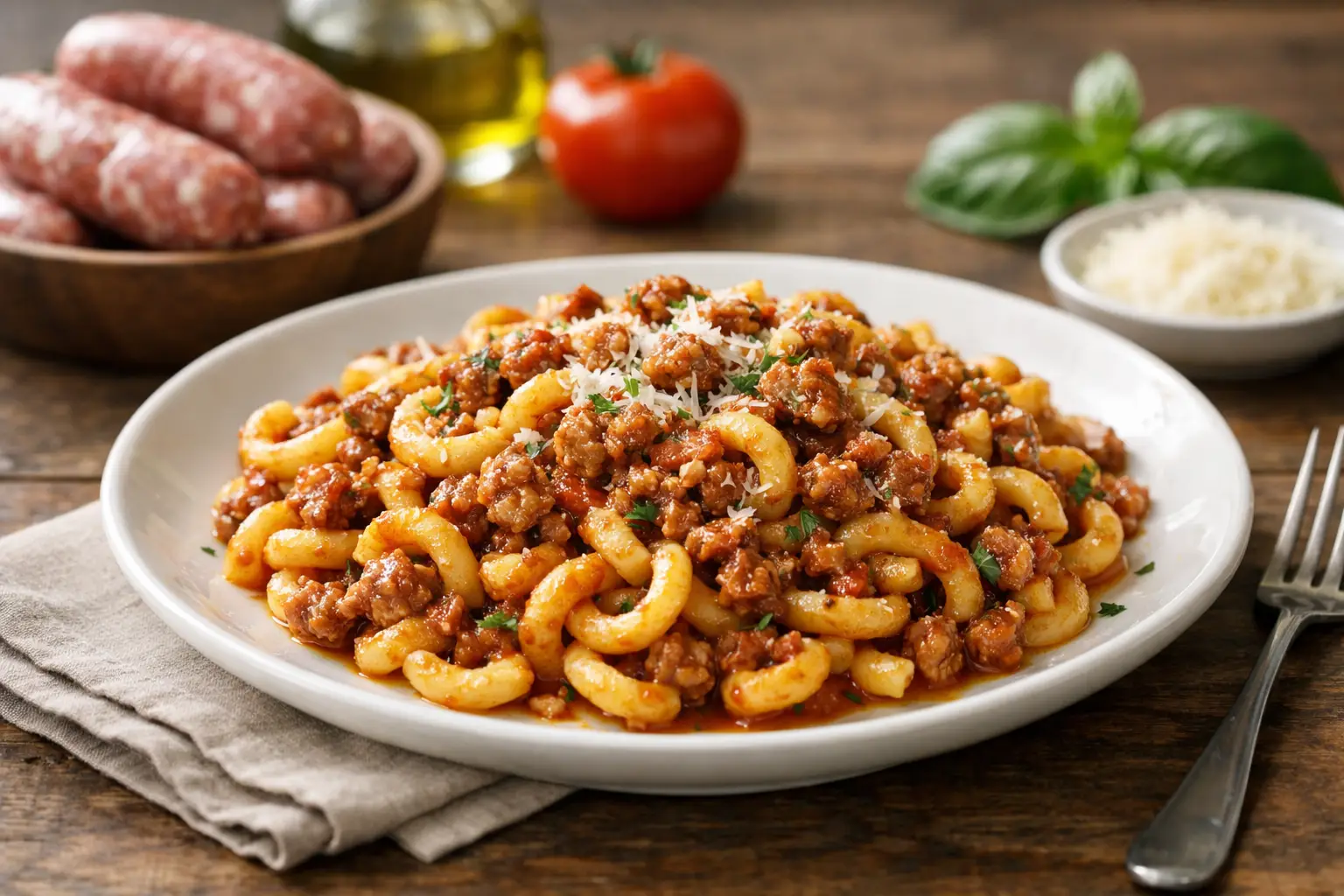
 Gramigna with Bolognese sausage ragù doesn’t need special effects: just the aroma of browned sausage, simmering tomato, and that short, curly pasta capable of holding every spoonful of sauce. It’s a straightforward, generous, deeply Emilian dish. The kind you happily eat for lunch, dinner, at the family table, or during a proper quick break.
In Bologna, gramigna with sausage is a trattoria staple, a family kitchen classic, and a leisurely Sunday favorite. Don’t confuse it with classic tagliatelle al ragù: here the character changes. The meat is more rustic, the flavor more immediate, the pasta short and lively. Less ceremony, more ragù.
What is gramigna with Bolognese sausage ragù
Gramigna is a semolina pasta, short and curved, with a shape resembling small curls or twisted strands. It doesn’t come from egg-based dough like tagliatelle and tortellini, but belongs to that practical Emilian cooking tradition that knows how to choose the right format for each sauce.
Its natural partner is sausage ragù. A sauce prepared starting with a well-made soffritto, fresh sausage removed from its casing and crumbled, browned, tomato purée or crushed tomatoes, and enough cooking time to truly bring all the ingredients together. No shortcuts: if the soffritto is pale or the meat is tossed into the sauce without browning, the result will be correct but lacking depth.
It’s a popular dish in the best sense of the word. Accessible, recognizable, full of flavor. Gramigna doesn’t demand a studied presentation: it asks for a ragù that coats it well and a ready fork.
Sausage ragù and Bolognese ragù: they’re not the same thing
In Bologna, calling everything simply “ragù” can create confusion. Traditional Bolognese ragù has a precise structure, slow cooking, and a balance built over time between meat, vegetables, milk, and tomato. It’s the sauce for tagliatelle, lasagne, and many dishes that tell the city’s story with rigor.
Sausage ragù follows another path. Sausage brings with it fat, spices, and a more pronounced savoriness. That’s why its sauce tends to be livelier and less delicate than a classic ragù. It’s not a lesser version or a shortcut: it’s a different recipe with a distinct personality.
The quality of the sausage makes an enormous difference. Meat that’s too lean risks staying dry; sausage that’s too heavily spiced covers the soffritto and tomato. The goal is to find balance: meat that’s present but not aggressive; sauce that’s rich but not heavy.
How to build a ragù that tastes like Bologna
The starting point is the soffritto. Finely chopped onion, celery, and carrot, gently cooked in a little oil or with a carefully chosen fat component. They shouldn’t burn or stay crunchy: they need to become soft and sweet, almost melting into the sauce base.
At this point the sausage enters, removed from its casing and crumbled by hand. It should be browned patiently, letting it take on color. This is where that toasted note develops that separates an anonymous ragù from one that makes you hungry as soon as you lift the lid. If the pan is too crowded or the heat too low, the meat will boil instead of brown. Better to work calmly and give the ingredients space.
A splash of wine can help gather the flavors left on the bottom, but it shouldn’t dominate. When the alcohol has evaporated, add the tomato. Purée, crushed tomatoes, or a combination of the two: it depends on the desired consistency and the season. Purée gives a more uniform result; crushed tomatoes leave a more rustic texture.
Then comes time. Sausage ragù doesn’t need the very long hours required by other preparations, but it’s not ready in ten minutes. Gentle cooking allows the tomato to lose its acidity, the meat to soften, and the fats to become part of the sauce instead of remaining separated on the surface.
Does milk go in or not?
It depends on the family recipe and the desired effect. A small addition of milk can round out the tomato and make the ragù softer, especially if the sausage is very savory. It’s not mandatory. If you choose a balanced sausage and good tomato, the sauce can be complete even without it.
The same rule applies to pepper, nutmeg, or aromatic herbs: use them with a light hand. Gramigna with sausage ragù should taste like meat, soffritto, and tomato, not like a spice drawer emptied into the pot.
The pasta matters as much as the sauce
The shape of gramigna isn’t a decorative detail. Its curves catch the ragù and make every bite rich without requiring an excessive amount of sauce. That’s why it’s important to cook it al dente and toss it directly in the sauce with a little pasta water.
The starchy water binds pasta and ragù. It doesn’t turn the dish into a cream and doesn’t serve to hide flaws: it helps the sauce adhere. The final toss in the pan, even if brief, changes everything. The gramigna shouldn’t float in the sauce but should be coated down to the last curl.
Parmigiano Reggiano can come to the table, freshly grated. Here there’s no rigid rule that applies to everyone: some want it generous and others prefer to taste the sausage without other savory pushes. The only wrong choice is covering a well-prepared ragù with cheese that’s already tired or pre-grated too long ago.
The mistakes that make the dish heavy
Gramigna with sausage ragù is substantial, but it shouldn’t leave the palate fatigued. The first mistake is using too much oil: the sausage already releases its own fat. The second is overdoing the tomato paste, which can make the sauce dark and cloying. The third is cooking everything over high heat to shorten the time, resulting in a poorly blended flavor.
The choice of pasta also deserves attention. Overcooked gramigna loses consistency and no longer supports the sauce. If instead it’s undercooked and not tossed in the ragù, it remains separate from the sauce. The right measure is in the middle: lively pasta, well-bound ragù, dish served immediately.
A home-style dish, even away from home
There’s a reason gramigna with sausage remains so beloved in Bologna: it manages to be comfort food without becoming packaged nostalgia. It’s a dish that speaks of working kitchens, real ingredients, and gestures repeated well. It works for a work lunch, after a day of classes, at an informal dinner, or when you want to bring home something that tastes like cooking done right.
At Ragù Bologna this idea guides every preparation: tradition doesn’t mean immobility, but respect for raw materials, for timing, and for the taste of those who eat. A portion of well-dressed gramigna doesn’t seek approval on social media. It arrives hot, smells like ragù, and does what it’s supposed to do.
When you choose or prepare this dish, start here: good sausage, patient soffritto, pasta cooked with care. The rest is already on the plate, fork in hand.